
Reading a Plant Label: What All Those Terms and Numbers Actually Mean

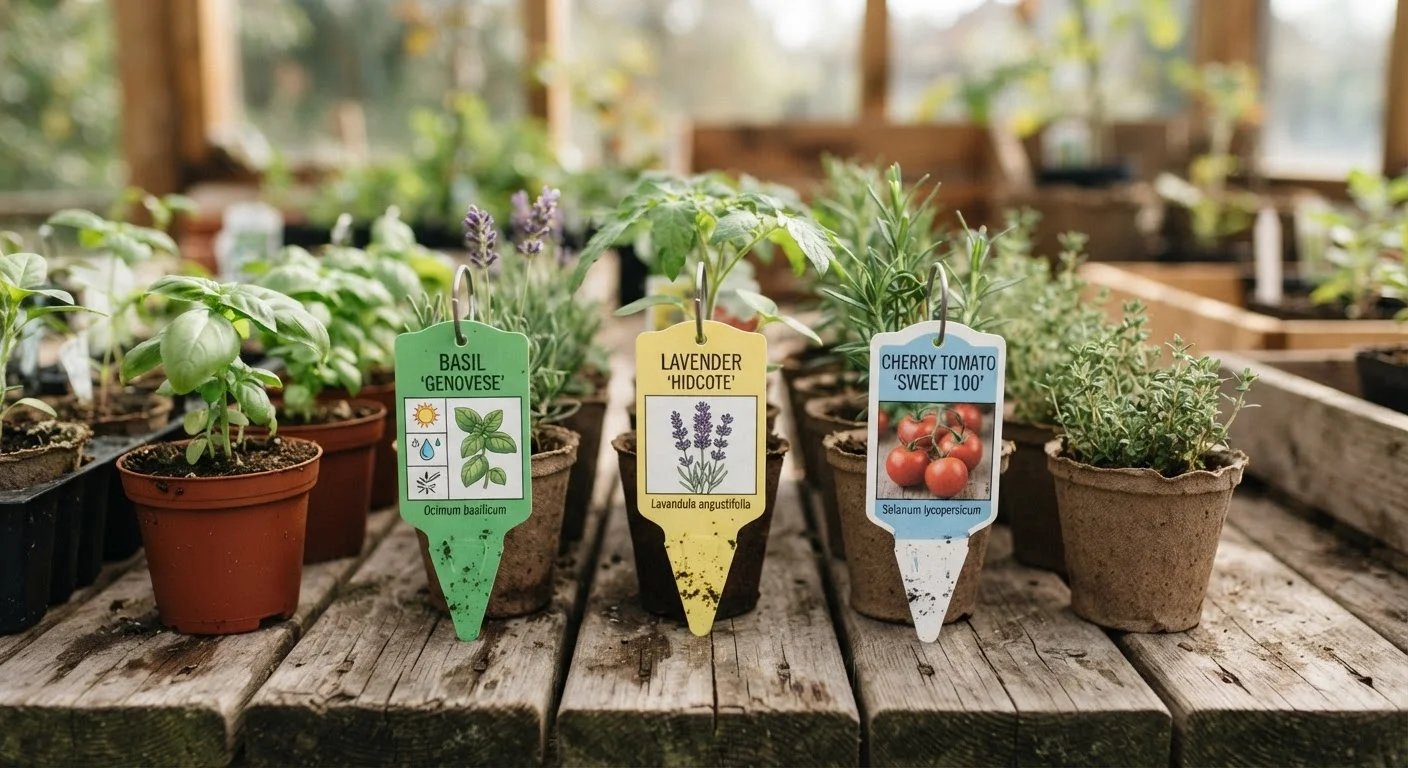
Hardiness zones, spacing, sun symbols, and pH ranges — a plain-language guide to decoding the information on plant tags and seed packets.
Why Plant Labels Matter More Than You Think
That small plastic tag tucked into a pot or printed on a seed packet is essentially a care contract. It tells you what conditions the plant expects, how much room it needs to thrive, and whether your yard can actually support it long-term. Skipping over the details — or misreading them — is one of the most common reasons plants struggle or fail in otherwise attentive gardens.
This guide breaks down every major term and symbol you'll encounter on plant labels and seed packets, in plain language, so you can make confident decisions before anything goes in the ground. If you're still deciding whether to start from seed or buy starts, our companion piece on seeds vs. seedlings walks through the trade-offs in detail.
USDA Hardiness Zone
A geographic designation based on average annual minimum winter temperatures, used to determine which plants can survive outdoors year-round in a given location. The US is divided into zones numbered 1 (coldest) to 13 (warmest).
Days to Maturity
An estimate of the number of days from transplanting (or sometimes germination) until a plant produces a harvestable crop. Actual timing varies based on climate, soil, and care.
Soil pH
A measure of how acidic or alkaline the soil is, on a scale from 0 to 14. Most edible and ornamental plants prefer a slightly acidic to neutral range of 6.0 to 7.0.
N-P-K
The three primary plant nutrients listed on fertilizer labels — nitrogen (N), phosphorus (P), and potassium (K) — shown as percentages by weight. Each nutrient supports different aspects of plant growth.
Perennial
A plant that lives for more than two years, dying back in winter (in cold climates) and re-sprouting each spring within its hardiness zone.
Mature Spread
The horizontal width a plant is expected to reach at full size, typically listed alongside its mature height on the label. Used to plan spacing and avoid overcrowding.
Hardiness Zones, Annual vs. Perennial, and Days to Maturity
USDA Hardiness Zone — You'll see a range like "Zones 4–8" on most perennial plant tags. This refers to the USDA Plant Hardiness Zone Map, which divides the US into zones based on average annual minimum winter temperatures. A plant rated for Zone 6 can survive winters where temperatures dip to −10°F to 0°F. If your zone falls outside the listed range, the plant may not survive your winters — or may struggle in summer heat if you're in a warmer zone than listed.
Annual vs. Perennial vs. Biennial — An annual completes its full life cycle in one growing season and then dies. A perennial returns year after year within its hardiness zone. A biennial takes two seasons to complete its cycle — foliage the first year, flowers and seed the second. Labels sometimes abbreviate these as A, P, or B.
Days to Maturity — Found almost exclusively on vegetable and herb seed packets, this number estimates how many days from transplant (or sometimes from germination) until the plant produces harvestable fruit or leaves. It's a planning tool, not a guarantee — local weather, soil health, and care all influence actual timing. Cross-reference with our gardening calendar to match sow dates with your last frost window.
| Full Sun Definition | 6+ hours of direct sunlight per day |
| Part Shade Definition | 3–6 hours of direct sun, preferably morning |
| Ideal Vegetable Garden pH | 6.0–7.0 (slightly acidic to neutral) (USDA cooperative extension general guidance) |
| Blueberry pH Preference | 4.5–5.5 (strongly acidic) |
| USDA Hardiness Zone Count | 13 zones across the US (USDA Plant Hardiness Zone Map) |
| N-P-K Stands For | Nitrogen, Phosphorus, Potassium |
Sun, Water, and Spacing Symbols Explained
Sun Exposure — Labels use standardized symbols or phrases:
- Full Sun — 6 or more hours of direct sunlight per day.
- Part Sun / Part Shade — 3 to 6 hours of direct sun; part sun plants generally prefer morning light, while part shade plants do better with afternoon shade.
- Full Shade — Fewer than 3 hours of direct sun. This rarely means total darkness — reflected or filtered light still matters.
Matching sun requirements is critical. A full-sun plant placed in part shade may grow leggy and produce fewer blooms or fruit. For indoor situations where natural light is limited, see our guide on indoor plants and natural light.
Watering Indicators — Labels often use droplet icons (one droplet = low water needs; three droplets = high water needs) or words like "drought tolerant," "moderate moisture," or "consistently moist." These describe the plant's preference at establishment and maturity — most plants need more frequent watering right after planting. Our article on watering practices explains how to apply these guidelines without overwatering.
Spacing — Expressed as a range in inches (e.g., "Space 12–18 in. apart"), this is the distance between plant centers at maturity. Crowding plants increases competition for nutrients and reduces airflow, which invites disease. Use the wider end of the range if your soil is rich; the lower end if space is tight and you plan to thin or harvest regularly.
Soil pH, Fertility Codes, and Other Fine Print
Soil pH — pH is measured on a scale of 0–14. A reading of 7.0 is neutral; below 7.0 is acidic, above 7.0 is alkaline. Most vegetables and ornamentals do best in a slightly acidic to neutral range (6.0–7.0). Some plants have specific preferences — blueberries, for example, prefer a pH of 4.5–5.5. Your label may list an ideal pH range; a soil test (available through many cooperative extension offices) can tell you where your garden currently stands. Our bed preparation checklist covers soil testing as a first step before planting.
Fertilizer Codes (N-P-K) — Fertilizer recommendations on labels reference three nutrients: nitrogen (N) for leaf and stem growth, phosphorus (P) for root and flower development, and potassium (K) for overall plant health. A label might suggest a balanced 10-10-10 fertilizer or a bloom-boosting formula with higher phosphorus. These numbers represent the percentage by weight of each nutrient in the product.
Mature Size — Listed as height × spread (e.g., "24 in. H × 18 in. W"), this tells you how large the plant will grow under typical conditions. Use it to plan spacing, avoid blocking views or pathways, and ensure taller plants won't shade shorter neighbors. If a plant seems like it's not reaching its potential size, revisit light and moisture conditions — it's a common cause of underperformance, as explored in why plants keep wilting.
Bloom Time — Indicates the season when the plant flowers (e.g., "Blooms: Early Spring" or "Midsummer to Fall"). Staggering bloom times across your plantings keeps pollinators and visual interest going throughout the season.
All published content on this website is for informational and educational purposes only and should not be taken as professional advice. We recommend that readers seek expert opinion before making any decisions. The website is not responsible for any actions taken based on the information provided on this website. We are not liable for any inaccuracies, modifications, or omissions in information. Moreover, external links or third-party content are provided for convenience; we are not liable for their correctness. Users are advised to verify every piece of information before they use it for any purpose.