
Why Your Plants Keep Wilting Even When You Water Them

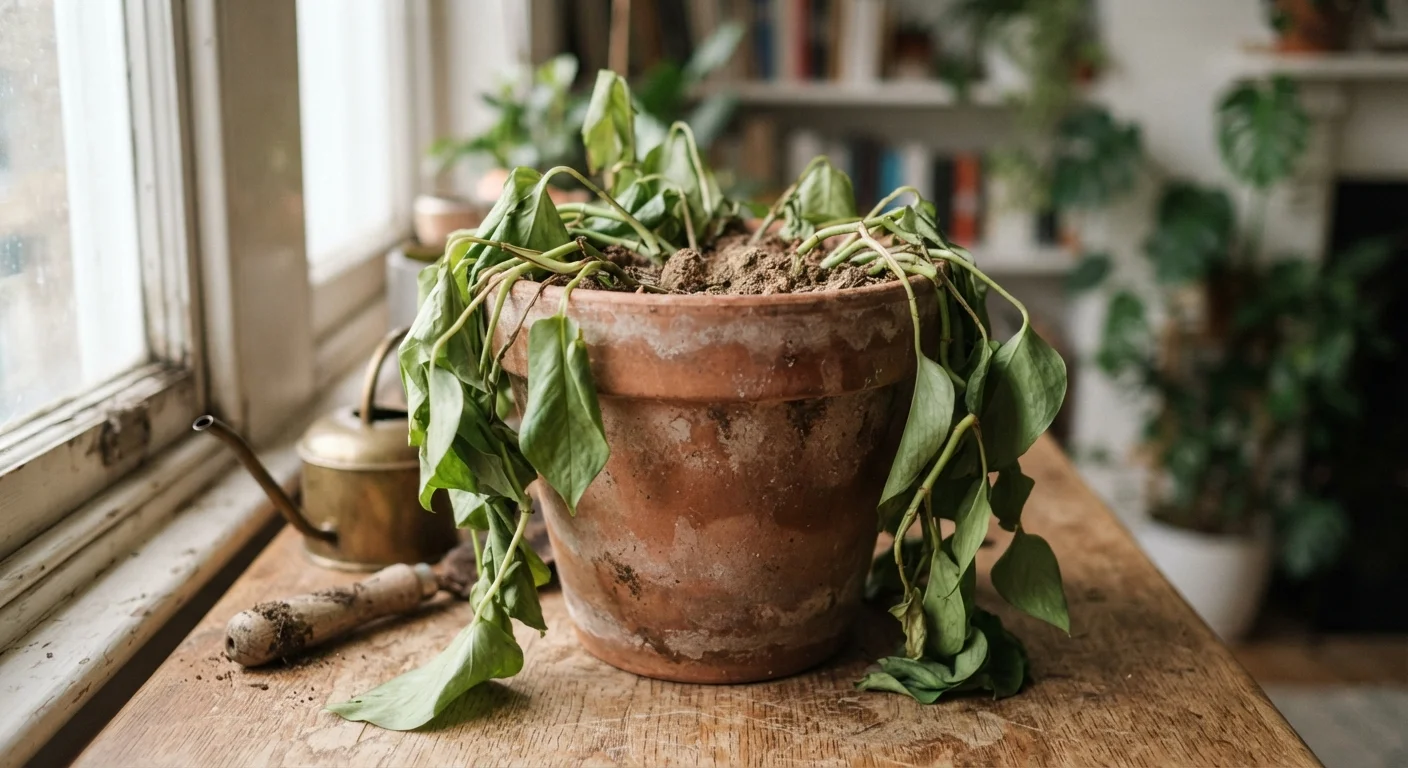
Wilting after watering is often a sign of the wrong problem. Learn the common culprits and how to read what your plants are telling you.
Key takeaways
- Wilting is a symptom, not a diagnosis — overwatering causes it just as often as underwatering.
- Compacted or waterlogged soil prevents oxygen from reaching roots, starving plants even in wet conditions.
- Root rot, poor drainage, and heat stress are three distinct problems that all look identical above ground.
- Checking soil moisture two inches below the surface is more reliable than judging by surface appearance.
- Matching a plant's water needs to its pot size, soil type, and season prevents most wilting problems.
Why Wilting Isn't the Simple Problem It Looks Like
When a plant wilts, the instinctive response is to grab the watering can. Sometimes that's exactly right. But just as often, adding more water makes the underlying problem worse — because wilting is your plant's all-purpose distress signal, not a specific message about thirst.
Leaves droop when cells lose their internal pressure, a process called turgor loss. That can happen when roots can't deliver water upward — but roots fail for many reasons beyond drought. Oxygen deprivation, rot, compaction, and temperature stress all disrupt water uptake, and they all produce the same droopy leaves. Learning to distinguish between them is the single most useful diagnostic skill an everyday gardener can develop.
The good news: most of these problems follow predictable patterns and respond to straightforward corrections. Our guide to common garden myths unpacks several of the false assumptions that lead gardeners into these traps in the first place.
Common Mistakes That Cause Post-Watering Wilt
The mistakes below account for the vast majority of cases where plants wilt despite receiving regular water. Work through them systematically rather than guessing — your plant's roots will reward the detective work.
Watering on a fixed schedule regardless of actual soil moisture.
Why it happens: Calendars feel reliable, and many beginner guides suggest watering 'every two to three days' as a starting point. But evaporation rates, pot size, plant type, and season all shift water demand constantly.
Overwatering to the point where roots suffocate and rot.
Why it happens: More water seems like more care. Many gardeners don't realize that plant roots need oxygen as well as moisture, and saturated soil drives out the air pockets roots depend on.
Using a pot or planting bed with inadequate drainage.
Why it happens: Decorative pots without drainage holes are sold everywhere, and some gardeners assume a thick gravel layer at the bottom will compensate. It doesn't — research consistently shows gravel at the base of a pot actually raises the water table inside the container.
Attributing heat stress wilt to underwatering and adding excess water.
Why it happens: On hot afternoons, plants that are otherwise healthy and properly watered will wilt temporarily as a defense against sun and heat. The soil may already be adequately moist.
Ignoring root-bound conditions in container plants.
Why it happens: Roots that have completely filled a pot circle back on themselves and lose efficiency at absorbing water and nutrients. Because the plant looks established, gardeners often don't think to repot.
How to Read What Your Soil Is Actually Telling You
The most reliable diagnostic tool you own is your finger. Push it two inches into the soil — not just along the surface, but straight down toward the root zone. If it comes out coated with cool, dark, clinging soil, the plant doesn't need water regardless of how wilted it looks. If it comes out nearly clean and the soil feels warm or powdery, moisture is genuinely low.
For containers, lift the pot immediately after watering and again two days later. You'll quickly develop a feel for what a well-drained, appropriately moist pot weighs versus a waterlogged or bone-dry one. This weight-check method is especially valuable in container gardening situations where drainage behavior varies dramatically by pot material and mix.
~90%
Of houseplant deaths attributed to watering errors
Horticultural educators commonly estimate that the overwhelming majority of indoor plant failures stem from overwatering or underwatering rather than pests or disease.
2 inches
Soil depth to check before watering
University extension programs across the US recommend probing at least two inches below the surface to accurately assess moisture available to the root zone.
Soil that pulls away from the container wall, or that repels water and lets it run straight through, needs structural intervention — not just more frequent watering. Mixing in perlite or aged compost helps restore proper texture and water retention balance.
For a deeper look at timing, frequency, and technique, see our guide to watering practices that help plants thrive.
All published content on this website is for informational and educational purposes only and should not be taken as professional advice. We recommend that readers seek expert opinion before making any decisions. The website is not responsible for any actions taken based on the information provided on this website. We are not liable for any inaccuracies, modifications, or omissions in information. Moreover, external links or third-party content are provided for convenience; we are not liable for their correctness. Users are advised to verify every piece of information before they use it for any purpose.