
Watering Practices That Actually Help Plants Thrive

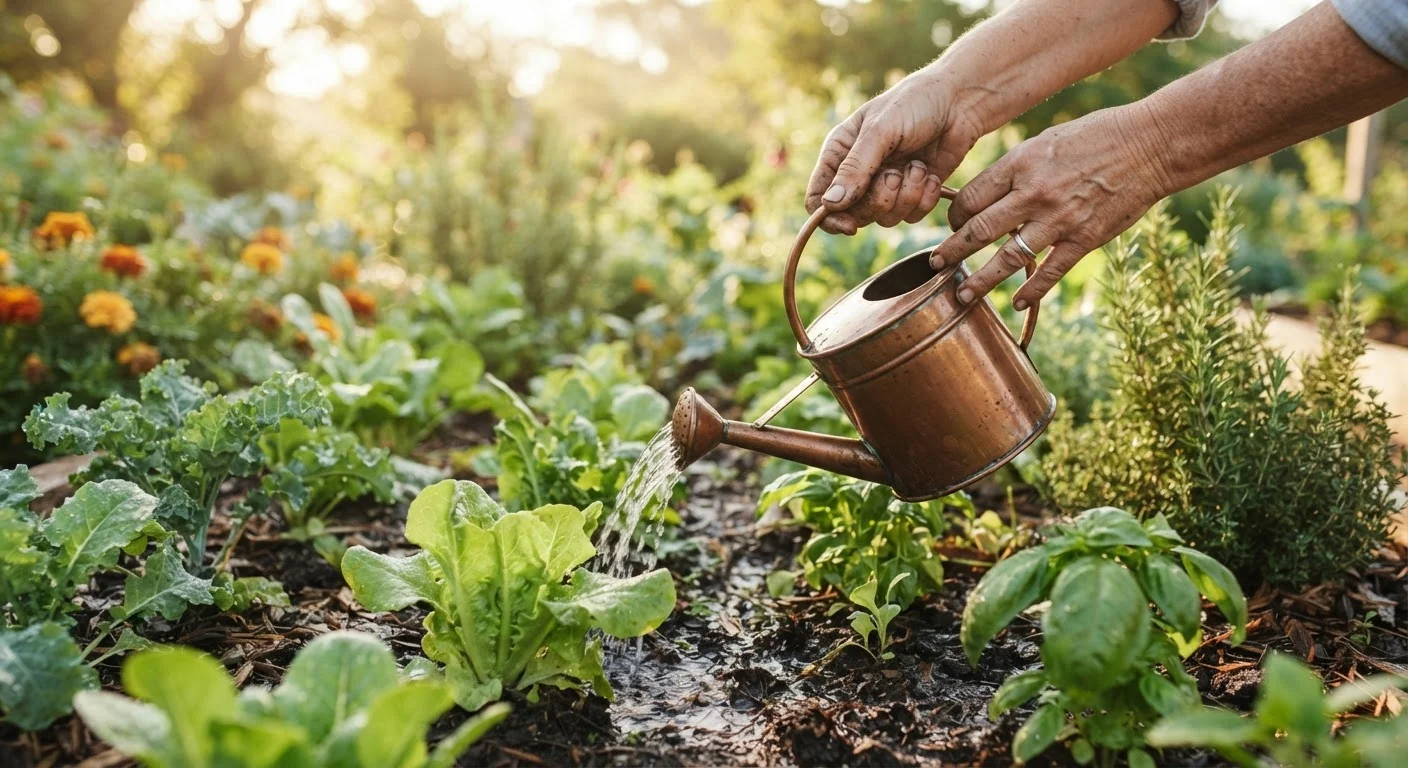
Timing, depth, frequency, and technique — the principles behind effective watering that keep roots healthy and soil balanced.
Key takeaways
- Watering deeply and less frequently encourages roots to grow deeper into the soil.
- Morning is the best time to water — foliage dries faster, reducing disease risk.
- Soil type and container vs. in-ground planting significantly affect how often plants need water.
- Mulching the soil surface can slow moisture loss and reduce how often you need to water.
- Wilting doesn't always mean underwatering — overwatered roots can cause the same symptoms.
Why Watering Technique Matters More Than You Think
Most gardeners know plants need water, but fewer realize that how you water matters as much as how much. Watering habits shape root architecture, disease pressure, and soil health over time. A plant watered shallowly and frequently will develop a shallow root system — one that's vulnerable to heat, drought, and competition. A plant watered deeply and less often will send roots further down into the soil, where moisture is more stable.
Understanding a few core principles transforms watering from a daily chore into a purposeful practice. Whether you're tending a raised bed, a container on a balcony, or an in-ground vegetable patch, the fundamentals apply — even though the specifics vary. See our guide to raised beds vs. in-ground planting for a closer look at how setup affects drainage and moisture retention.
Core Watering Practices That Support Healthy Plants
The following practices reflect established horticultural guidance and are applicable to most home garden situations. Adjust them based on your plant types, climate, and soil conditions.
Water deeply and infrequently rather than little and often
Frequent shallow watering keeps moisture near the surface, which is where it evaporates fastest and where it encourages roots to stay. Deep watering pushes moisture further into the soil, prompting roots to follow — building a more resilient plant. Most established garden plants benefit from infrequent deep watering rather than daily light sprinkles.
Water in the morning, before temperatures peak
Morning watering gives foliage time to dry before evening, reducing the moist conditions that encourage fungal diseases like powdery mildew. It also means water reaches roots before midday heat increases evaporation from the soil surface. Evening watering is a common habit that can quietly contribute to leaf disease over time.
Direct water at the root zone, not the leaves
Overhead watering is convenient, but wet foliage is more susceptible to fungal diseases and can even cause minor leaf scorch in intense sunlight. Directing water to the soil around the base of a plant ensures it reaches the roots where it's actually used, and minimizes conditions that pathogens exploit.
Apply mulch to slow moisture loss between watering sessions
A two- to three-inch layer of organic mulch — such as wood chips, straw, or shredded leaves — over bare soil dramatically slows evaporation. This means you can water less frequently without plants suffering between sessions. Mulch also moderates soil temperature and gradually improves soil structure as it breaks down.
Adjust your schedule based on weather, not just the calendar
A fixed watering schedule ignores the reality that rainfall, temperature, humidity, and wind all affect how quickly soil dries out. Watering on a set schedule during a rainy week wastes water and risks oversaturation. Skipping water during a heat wave because 'it's not watering day' can stress plants unnecessarily.
Reading Your Soil and Your Plants
No watering schedule works if it's disconnected from what's actually happening in your garden. The most reliable signal isn't a calendar — it's the soil itself. Push a finger about two inches into the ground near the root zone. If it feels dry at that depth, most plants are ready for water. If it still feels moist, wait.
Wilting is often misread as a thirst signal. In reality, overwatered roots can suffocate and rot, causing the same drooping appearance as drought stress. If you're puzzled by a plant that wilts despite regular watering, our article on why plants wilt even when watered can help you diagnose the real cause.
Soil composition also governs how fast water moves through the ground. Sandy soils drain quickly and may need more frequent watering; dense clay soils hold moisture longer but can become waterlogged. Improving soil structure with organic matter helps buffer both extremes. For a deeper explanation of what your soil is actually made of, visit our Soil 101 guide.
The Finger Test: Your Most Reliable Watering Guide
Before reaching for the watering can, press your index finger two inches into the soil near the plant's root zone. If the soil feels dry at that depth, it's time to water. If it still feels cool and moist, wait another day and check again. This low-tech check takes five seconds and works across almost every plant type and growing situation — no gadgets required.
Special Considerations: Containers, Seedlings, and Seasonal Shifts
Container plants deserve special attention because they have no connection to the surrounding soil — all their water comes from what you provide. Containers dry out faster than garden beds, especially in warm weather or when placed in windy spots. Check containers daily in summer and water thoroughly until it drains from the bottom, ensuring the entire root zone is reached. For a full guide to container care, see our article on container gardening in small spaces.
Newly started seeds and seedlings need consistent, gentle moisture. Too much force from a hose can dislodge seeds or damage tender stems. Use a watering can with a fine rose (the sprinkler head attachment) or a misting setting on a hose nozzle for young plants. As they establish, you can gradually shift toward deeper, less frequent watering. If you're still deciding how to start your garden, the seeds vs. seedlings guide covers how your starting method affects early care needs.
Seasonally, plants need more water during active growth and flowering, and considerably less as they go dormant in cooler months. Adjust your schedule every few weeks rather than setting one routine for the entire year.
All published content on this website is for informational and educational purposes only and should not be taken as professional advice. We recommend that readers seek expert opinion before making any decisions. The website is not responsible for any actions taken based on the information provided on this website. We are not liable for any inaccuracies, modifications, or omissions in information. Moreover, external links or third-party content are provided for convenience; we are not liable for their correctness. Users are advised to verify every piece of information before they use it for any purpose.