
Interior Design Styles Decoded: A Plain-English Reference Guide

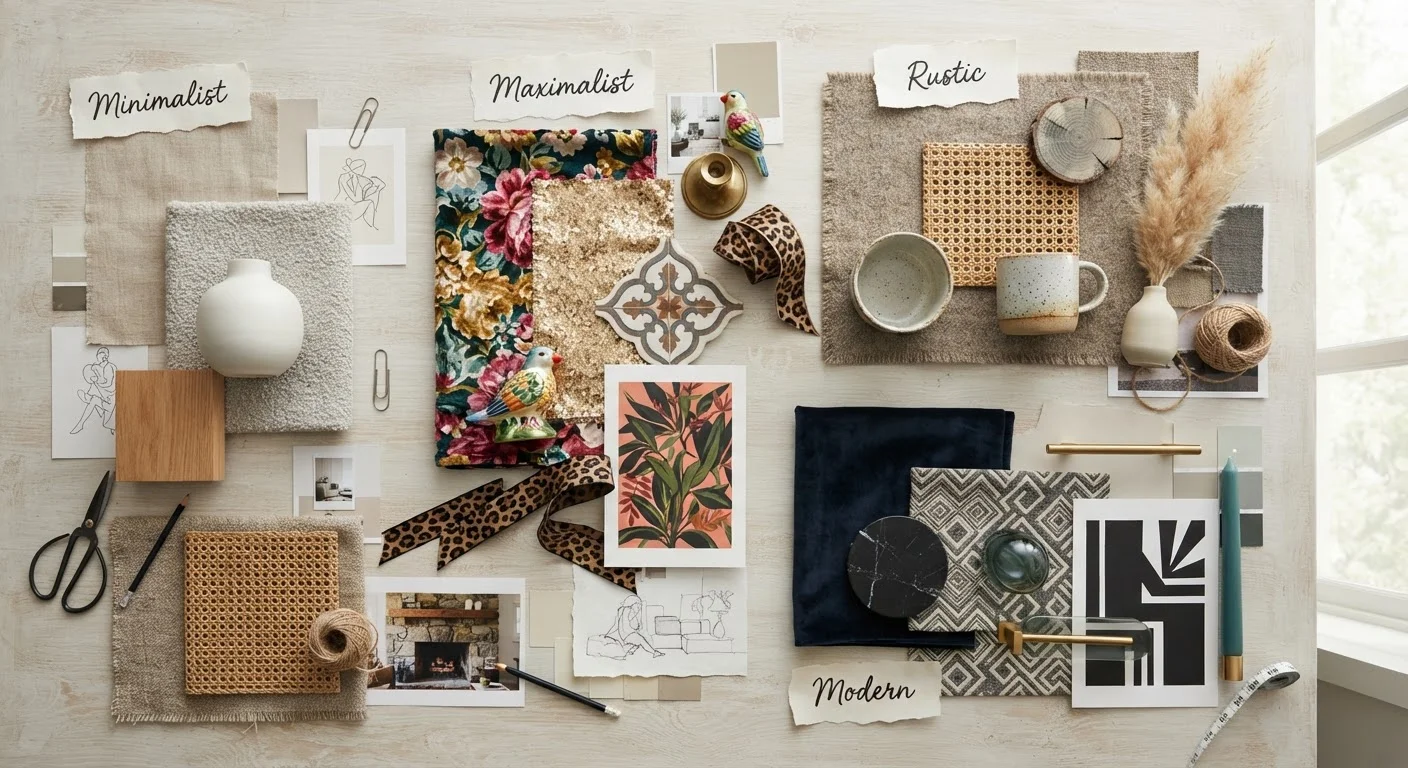
Scandinavian, maximalist, wabi-sabi, cottagecore — a clear, jargon-free glossary of the decorating styles you keep seeing.
Why Design Style Labels Matter (and When to Ignore Them)
Walk through any home décor site or scroll any design feed and you'll run into terms like wabi-sabi, biophilic, or transitional used with quiet confidence, as if everyone already knows what they mean. Most people don't — and that's fine. Style labels aren't rules you're required to follow; they're shorthand for clusters of ideas about color, texture, material, and mood. Understanding them helps you communicate what you want, shop more purposefully, and figure out why a room feels the way it does.
You don't need to plant your flag in one style and live there forever. Most livable, interesting homes borrow from two or three traditions. Think of this guide as a vocabulary reference — something to consult when a term stops you, not a checklist to complete. If you're new to decorating altogether, our beginner's decorating guide is a solid place to start building confidence before diving into style specifics.
Negative space
The empty or unoccupied area in a room or composition. In design, intentional negative space gives the eye a place to rest and prevents a room from feeling overwhelmed with objects.
Wabi-sabi
A Japanese aesthetic philosophy centered on finding beauty in imperfection, impermanence, and incompleteness. In interior terms, it favors aged, handmade, or naturally flawed materials over polished perfection.
Biophilic design
An approach to interior and architectural design that integrates natural elements — light, plants, organic forms, natural materials — to strengthen the connection between occupants and the natural world.
Ma
A Japanese concept meaning negative space or pause. In interior design, ma refers to the deliberate emptiness between objects, which is treated as meaningful rather than as space to fill.
Transitional style
A design approach that blends traditional and contemporary elements. It doesn't commit fully to either direction, making it versatile and broadly appealing in US residential settings.
Organic form
Shapes inspired by nature — curves, irregular silhouettes, flowing lines — as opposed to rigid geometric forms. Common in mid-century modern, biophilic, and wabi-sabi-influenced interiors.
The Core Styles, Defined Plainly
Below are the interior design styles most commonly referenced in US home décor coverage, each explained in plain terms.
Scandinavian (Scandi)
Rooted in Nordic design traditions, this style prioritizes function, craftsmanship, and restraint. Expect neutral palettes — whites, grays, warm taupes — natural wood tones, simple furniture silhouettes, and very little visual clutter. The underlying principle is that beauty comes from well-made objects that earn their place.
Minimalist
Related to Scandi but more rigorous. Minimalism asks what can be removed rather than what can be added. Furniture is low-profile, surfaces stay clear, and color palettes collapse to near-monochrome. It's not cold if done well — the warmth comes from material quality and deliberate negative space.
Maximalist
The intentional opposite: maximalism layers pattern on pattern, fills walls, mixes eras and cultures, and treats abundance as the point. The key word is intentional — a maximalist room is curated, not merely crowded. Repetition of a unifying color or motif keeps it from reading as chaos.
Mid-Century Modern
Refers to American and European design roughly from the 1940s through the 1960s. Signature features include tapered legs on furniture, organic curved forms, flat planes, and a mix of natural and synthetic materials. It photographs well and has maintained steady popularity because its proportions work in most room sizes.
Industrial
Draws on the aesthetic of converted warehouses and factories: exposed brick, raw concrete, visible ductwork, dark metal fixtures, and reclaimed wood. Palettes skew dark — charcoal, rust, aged brown. It suits open-plan spaces well and tends to feel masculine without deliberate softening via textiles.
Bohemian (Boho)
Relaxed, globally influenced, and texture-heavy. Boho interiors layer rugs, mix printed textiles from different traditions, collect ceramics and plants, and resist symmetry. It's one of the more forgiving styles for renters — most elements are freestanding or removable, which matters if you're decorating without risking your deposit.
Cottagecore
An aesthetic built around romanticized rural domesticity: floral prints, linen and cotton in soft colors, antique or vintage furniture, dried botanicals, and handmade or artisanal objects. It feels deliberately unhurried and intentionally imperfect.
Japandi
A hybrid of Japanese and Scandinavian sensibilities — arguably the most influential emerging style of the past several years. It combines Scandi functionality with the Japanese concept of ma (negative space) and wabi-sabi (the beauty of imperfection). Expect muted earthy tones, low furniture, natural materials, and a profound lack of decoration for its own sake.
Wabi-Sabi
Borrowed from Japanese aesthetics, wabi-sabi is less a decorating style than a philosophy that shapes one: find beauty in the aged, the imperfect, and the transient. Cracked ceramics, weathered wood, and linen that wrinkles are all welcome. It's the antidote to catalog-perfect interiors.
Transitional
The style most US homes actually occupy, whether planned or not. Transitional blends traditional and contemporary elements — a clean-lined sofa with a carved wood coffee table, or streamlined cabinetry with ornate hardware. It's deliberately uncommitted, which makes it commercially safe and personally flexible.
Biophilic
Less a visual style than a design principle: bring the natural world indoors. Plants are the obvious expression, but biophilic design also means natural light, organic shapes, stone and wood surfaces, water features, and views to the outside. Research in environmental psychology consistently links nature contact indoors to reduced stress, though individual results vary.
Hollywood Regency
Glamorous, theatrical, and unapologetically bold. Think lacquered surfaces, jewel-toned velvet, mirrored furniture, brass or gold hardware, and strong graphic patterns. It borrows from 1930s and 1940s California luxury and requires a confident hand — undercommitting produces clutter rather than drama.
| Origin of Scandinavian design | Nordic countries (Denmark, Sweden, Norway, Finland) — formalized as a movement in the 1950s |
| Mid-century modern era | Roughly 1945–1969 |
| Most blended style in US homes | Transitional (combines traditional and contemporary) |
| Japandi blend | Japanese minimalism + Scandinavian functionality |
| Boho primary influence | Global folk traditions, textiles, and travel-collected objects |
| Hollywood Regency heyday | 1930s–1940s California luxury interiors |
Putting It Together: Mixing Styles Without Losing Coherence
Knowing the labels is only half the work. The more useful skill is identifying which elements of a style appeal to you — and understanding that those elements can travel across categories. You might love the neutral palette of Scandi design but find its austerity cold; borrowing cottagecore's linen textures and wabi-sabi's aged ceramics bridges that gap without abandoning your core preference.
Color is often the most powerful unifier when mixing styles. A consistent palette can hold together furniture from different eras and materials with very different weights. If you want to go deeper on how color choices shape a room's feel, our guide to color and mood walks through the psychology and practical decisions involved. And for a full room-by-room decorating framework — from planning through finishing touches — this comprehensive decorating guide is worth bookmarking.
The goal isn't stylistic purity. It's a home that feels like yours.
All published content on this website is for informational and educational purposes only and should not be taken as professional advice. We recommend that readers seek expert opinion before making any decisions. The website is not responsible for any actions taken based on the information provided on this website. We are not liable for any inaccuracies, modifications, or omissions in information. Moreover, external links or third-party content are provided for convenience; we are not liable for their correctness. Users are advised to verify every piece of information before they use it for any purpose.