
Seeds vs. Seedlings: Which Starting Method Suits Your Garden?

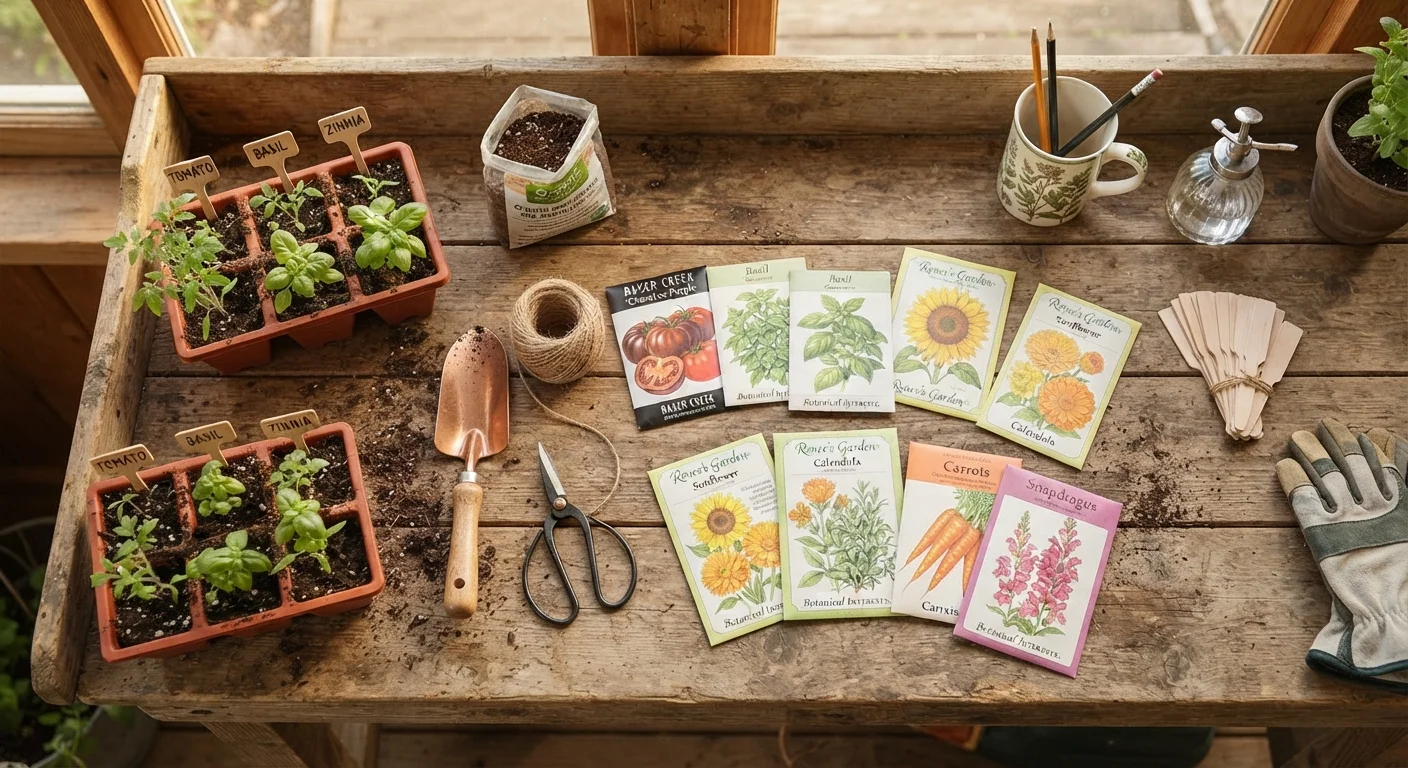
Growing from seed or buying seedlings each has real trade-offs. Here's how to decide which approach fits your timeline and goals.
Option A
Growing from Seed
The patient grower's path to full control and variety.
Best for: Gardeners with extra lead time, a limited budget, or an interest in hard-to-find plant varieties.
Option B
Buying Seedlings
The faster, more forgiving route to a productive garden.
Best for: Beginners, busy households, or anyone who missed the indoor seed-starting window.
Key takeaways
- Seeds cost significantly less per plant than nursery seedlings, making them ideal for large plantings.
- Seedlings give you a head start of several weeks, which matters in regions with short growing seasons.
- Starting from seed requires attention to light, heat, moisture, and timing — seedlings simplify that process.
- Some crops, like root vegetables and direct-sown greens, actually prefer being seeded straight into the ground.
- Mixing both methods within one garden is a practical strategy that most experienced growers use.
Why the Starting Method Matters More Than You Might Think
Every plant in your garden begins as a seed — the question is simply when that germination happens and who is responsible for it. When you start from seed, you manage those first fragile weeks yourself. When you buy seedlings (also called transplants), a nursery or greenhouse has handled that work for you, and you're taking over at the juvenile plant stage.
That handoff point has real consequences for timing, cost, effort, and plant selection. Understanding those trade-offs helps you make smarter choices for each bed, each crop, and each season. If you're building your first garden from scratch, our practical first-timer's walkthrough covers the broader setup before you decide on a starting method.
The Case for Starting from Seed
Cost savings at scale. A single seed packet typically contains 20 to 200 seeds and costs a few dollars. Compare that to purchasing individual seedlings, and the math quickly favors direct seeding when you're planting large quantities of the same crop.
Variety access. Nurseries stock proven sellers. Seed catalogs carry thousands of varieties — including heirlooms, disease-resistant strains, and regionally adapted cultivars you simply won't find as transplants. If you've ever wanted to grow a specific tomato variety or an unusual squash, seeds are often the only route. Our guide to reading a plant label can help you decode the information on seed packets before you buy.
Crops that prefer direct sowing. Some plants genuinely do better when their roots are never disturbed. Root vegetables — carrots, parsnips, beets, radishes — should almost always be sown directly into garden soil. Fast-maturing greens like lettuce, arugula, and spinach are also commonly direct-seeded in successive small batches to keep harvests coming.
The trade-offs. Seeds demand attention to germination conditions: consistent soil temperature (often 65–75°F for warm-season crops), adequate humidity, and sufficient light once seedlings emerge. Indoor seed starting also requires planning — most warm-season vegetables need 6 to 10 weeks of indoor growth before the last frost date. Miss that window, and starting from seed indoors may no longer be practical for that season.
| Criterion | Growing from Seed | Buying Seedlings |
|---|---|---|
| Cost per plant | Very low (cents per plant) | Higher (dollars per plant) |
| Variety selection | Extensive — hundreds of varieties | Limited to nursery stock |
| Time to harvest | Longer — adds weeks to the timeline | Shorter — starts at juvenile stage |
| Skill and equipment needed | More — lighting, heat, timing | Less — focus on outdoor care |
| Best for root crops | Yes — direct sow preferred | Not suitable for root vegetables |
| Short growing seasons | Challenging without indoor setup | Well suited |
| Risk of early crop loss | Higher during germination phase | Lower — past most vulnerable stage |
The Case for Buying Seedlings
Time and simplicity. Buying transplants lets you skip germination, thinning, and the delicate early growth phase entirely. You're planting a juvenile plant that has already developed its first true leaves and an established root system — a stage that, for many gardeners, represents the hardest part of growing from scratch.
Reliability under a short growing season. In northern states and high-elevation regions, the frost-free window can be as short as 90 to 120 days. Warm-season crops like tomatoes, peppers, and eggplant require a much longer growing period than that window allows for outdoor germination. Buying established transplants solves this problem without requiring indoor seed-starting infrastructure.
Lower barrier to entry. For newer gardeners, seedlings let you focus on the skills that matter most outdoors — soil preparation, spacing, watering, fertilizing, and pest observation — without simultaneously managing the indoor environment that seeds require. This matters for building confidence and early success. Container gardeners especially benefit from seedlings, since containers offer limited space and a single failed germination attempt can cost an entire season's harvest from that pot.
The trade-offs. Per-plant cost is notably higher than starting from seed. Variety selection is limited to whatever your local nursery carries. And seedlings purchased from a nursery may carry pests or disease if not inspected carefully before purchase — always check the undersides of leaves and the soil surface before bringing plants home.
How to Decide — and When to Use Both
Most experienced gardeners use both methods simultaneously, assigning each crop to the starting method that suits it best. A practical framework:
- Direct sow outdoors: Root vegetables, fast-maturing greens, beans, peas, sunflowers, and squash (in warm climates with adequate season length).
- Start indoors from seed: Tomatoes, peppers, eggplant, broccoli, and other crops that need a long head start but that you want to grow in specific or unusual varieties.
- Buy as seedlings: Any crop where you missed the seed-starting window, where you only need a few plants, or where the standard nursery varieties suit your needs.
Your local frost dates are the most important variable in this decision. The USDA Plant Hardiness Zone Map provides a starting point, but local cooperative extension offices publish frost date calendars specific to your county — a more reliable resource for timing. Our article on annuals vs. perennials also shapes this decision, since perennial plants started from seed often don't flower until their second year, making seedling purchase a smarter first-year investment for that category.
If you find your first season yielding mixed results, that's normal. Many common gardening assumptions turn out to be less reliable than widely believed. Adjust your method year by year based on what actually grows well in your specific conditions.
All published content on this website is for informational and educational purposes only and should not be taken as professional advice. We recommend that readers seek expert opinion before making any decisions. The website is not responsible for any actions taken based on the information provided on this website. We are not liable for any inaccuracies, modifications, or omissions in information. Moreover, external links or third-party content are provided for convenience; we are not liable for their correctness. Users are advised to verify every piece of information before they use it for any purpose.