
Statement Furniture vs. Statement Accessories: Choosing Where to Put Your Energy

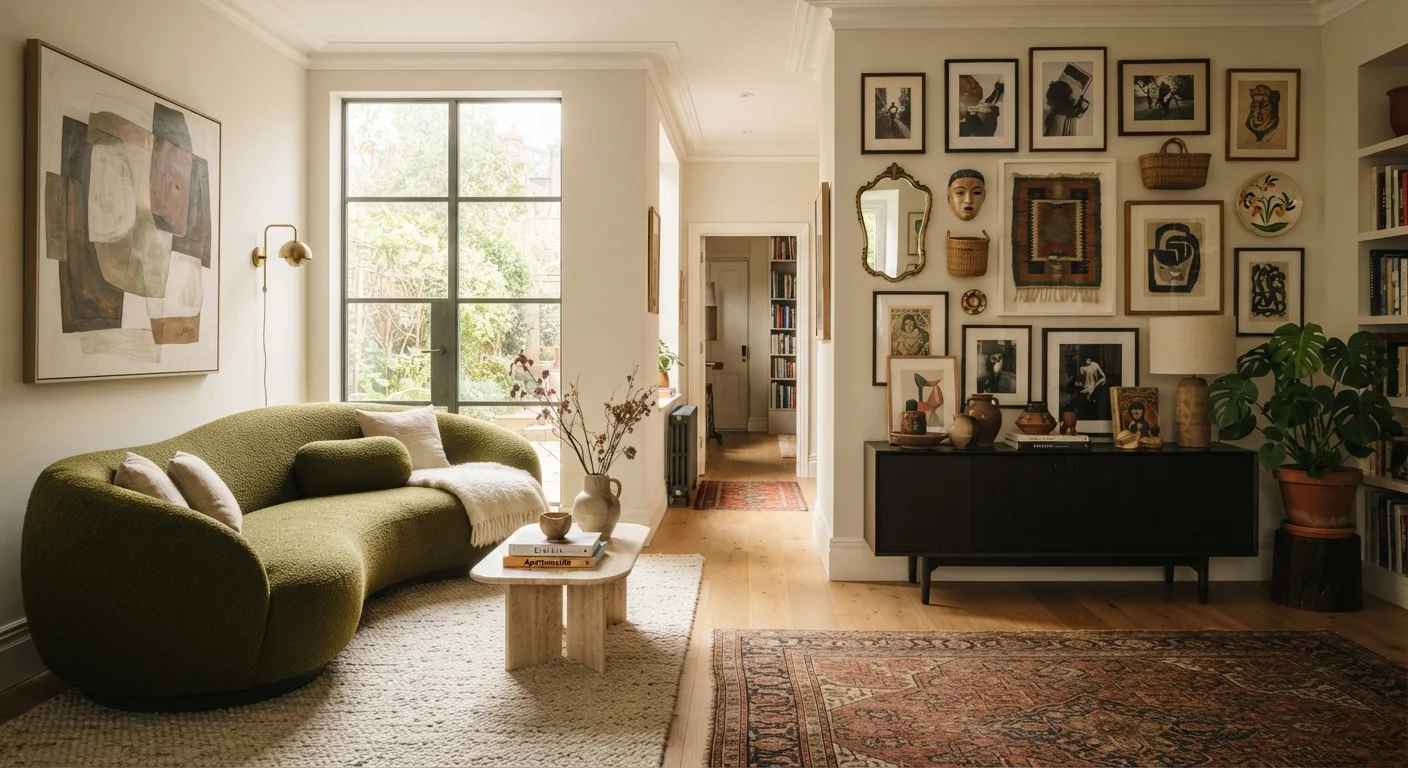
Is it smarter to invest in a standout sofa or a collection of bold accents? The answer depends on the room and how you live in it.
Our Verdict
Neither approach is universally superior — the right choice depends on how you use the room, your budget, and how frequently you want the freedom to refresh. Statement furniture pays dividends in rooms where you entertain or spend significant time, while statement accessories shine in spaces that benefit from seasonal updates or personal collections. For most homeowners, a hybrid strategy — investing in quality, restrained furniture and expressing personality through curated accessories — offers the best of both worlds.
| Best for | Recommended |
|---|---|
| Those who want a room to feel cohesive with minimal ongoing effort | Statement Furniture |
| Those who enjoy redecorating seasonally or on a tighter budget | Statement Accessories |
| Those furnishing a long-term home with a clear aesthetic vision | Statement Furniture |
| Renters or those in transitional living situations | Statement Accessories |
Key takeaways
- Statement furniture anchors a room's identity but requires a longer-term commitment to a style.
- Statement accessories offer flexibility and are easier to swap out as your taste evolves.
- Room size, function, and how often you redecorate should guide which approach you prioritize.
- The strongest rooms often combine one dominant statement with supporting accents — not two competing focal points.
- Neutral, well-made furniture tends to outlast trendy pieces and pairs well with bolder accessories over time.
What Makes Something a 'Statement' in the First Place
A statement piece is any element that draws the eye first and sets the tone for everything around it. It doesn't have to be loud — a sculptural chair in a muted linen can make just as strong a statement as a jewel-toned velvet sectional. What matters is that it has visual authority: it occupies enough space, color weight, or formal presence to shape how the whole room reads.
The debate between furniture and accessories as statement-makers is really a question of scale and permanence. Furniture operates at the architectural level — it defines traffic flow, anchors seating arrangements, and commits you to a silhouette. Accessories work at the layer above that: art, textiles, ceramics, mirrors, and lighting that punch up or soften the structure underneath.
Understanding which layer you're working on helps you allocate your energy — and your budget — more deliberately. For a broader look at how each design decision interacts with the others, the room refresh checklist is a useful starting point.
The Case for Statement Furniture
When a piece of furniture becomes the room's focal point, it does structural work that accessories simply cannot. A curved sofa, an oversized dining table, or an architecturally interesting bed frame sets proportions, establishes the style direction, and tells every other decision where to go. This is particularly effective in open-plan spaces, where you need one strong visual anchor to prevent the room from feeling scattered.
Statement furniture also tends to age gracefully when it's chosen well. A classic silhouette in a quality material holds its presence across multiple rounds of accessory swaps — you can update throw pillows, rugs, and artwork without losing the room's identity. This matters most in high-use rooms like living rooms and primary bedrooms, where a sense of permanence is part of what makes a space feel settled.
The trade-off is commitment. Bold furniture is harder to move, harder to sell, and harder to style around if your taste shifts. It's also where decorating mistakes are most costly — both financially and visually. Before investing, consider whether the piece will still fit if you move to a different-sized home. In smaller rooms especially, oversized statement furniture can overwhelm rather than impress. See decorating principles for small rooms for scale guidance that applies here.
| Statement Furniture | Statement Accessories | |
|---|---|---|
| Visual impact | Immediate, room-defining | Layered, builds over time |
| Flexibility | Low — hard to move or replace | High — easy to swap or rotate |
| Typical cost commitment | Higher upfront investment | Scalable; can build incrementally |
| Best room types | Living rooms, dining rooms, bedrooms | Entryways, offices, guest rooms |
| Risk if taste changes | High — major piece to rehome | Low — individual pieces easily removed |
| Suits renters? | Less practical — size and lease constraints | Highly practical — fully portable |
The Case for Statement Accessories
Accessories are where personality lives. A gallery wall of collected prints, a cluster of sculptural vessels, an unexpected vintage rug — these elements communicate taste in ways that are immediate, personal, and relatively low-risk. Because they're modular, you can build a statement incrementally, adding pieces over time rather than committing to one large purchase.
For renters and anyone in a transitional stage of life, accessories are a practical necessity. They travel with you, require no installation that could violate a lease, and scale up or down without structural consequence. Even for long-term homeowners, accessories offer a seasonal rhythm that furniture cannot — swapping in warmer textiles in winter or rotating art can make a room feel genuinely renewed without any major expenditure.
The risk is visual noise. Without discipline, a collection of bold accessories can compete with each other and produce a cluttered, restless feeling rather than a deliberate one. The discipline required is editorial: choosing a throughline — whether that's color, material, or era — that links the pieces into a coherent statement rather than a pile of interesting things. Mixing antiques and contemporary pieces explores exactly this kind of curation.
How Room Function Should Guide Your Decision
The room's purpose is often the clearest signal for which approach makes more sense. Consider these patterns:
- Living rooms and dining rooms — High-visibility, high-use spaces where furniture scale dominates. A statement sofa or dining table earns its investment here because it's seen and used daily.
- Home offices and guest rooms — Lower-commitment spaces where accessories can do the heavy lifting. A gallery wall, a bold lamp, or a distinctive rug gives character without locking in a silhouette you'll tire of.
- Entryways and hallways — Narrow spaces where furniture options are limited. Accessories — mirrors, art, a statement light fixture — are almost always the more practical choice.
- Bedrooms — The bed itself is unavoidably the focal point. Investing in a distinctive headboard or bed frame is often worthwhile, while softer accessories like bedding and art handle the personality layer.
Lighting deserves its own mention here. A sculptural pendant or an unexpected floor lamp can function as both furniture and accessory — anchoring a space while remaining relatively easy to change. It's one of the most flexible statement tools available. The role of lighting layers in decorating is worth understanding before you finalize any room's approach.
Making Both Work Together
The most visually resolved rooms rarely rely on a single strategy. They use one dominant statement — usually a piece of furniture in a key room — supported by accessories that amplify rather than compete with it. Think of it as a hierarchy: one voice leads, the others harmonize.
A practical rule of thumb: if your furniture is restrained in color and form, accessories have room to be expressive. If your furniture is already making a bold claim, accessories should provide texture and warmth rather than additional visual complexity. Two competing focal points in the same room create tension that most people read — correctly — as unresolved.
Apply the One-Statement Rule Per Zone
In any defined area of a room — a seating cluster, a dining nook, a reading corner — aim for a single dominant statement, whether that's a furniture piece or an accessory grouping. Once you've identified it, let everything else play a supporting role. This discipline prevents visual competition and makes even modest rooms feel intentional and well-considered.
Storage decisions also affect how much room accessories have to breathe. If shelves are cluttered with functional items, there's less visual space for intentional display. The comparison of open shelving and closed cabinetry addresses this trade-off directly and is worth consulting before committing to a display strategy.
All published content on this website is for informational and educational purposes only and should not be taken as professional advice. We recommend that readers seek expert opinion before making any decisions. The website is not responsible for any actions taken based on the information provided on this website. We are not liable for any inaccuracies, modifications, or omissions in information. Moreover, external links or third-party content are provided for convenience; we are not liable for their correctness. Users are advised to verify every piece of information before they use it for any purpose.