
Room Refresh Checklist: Giving Any Space a Considered Once-Over

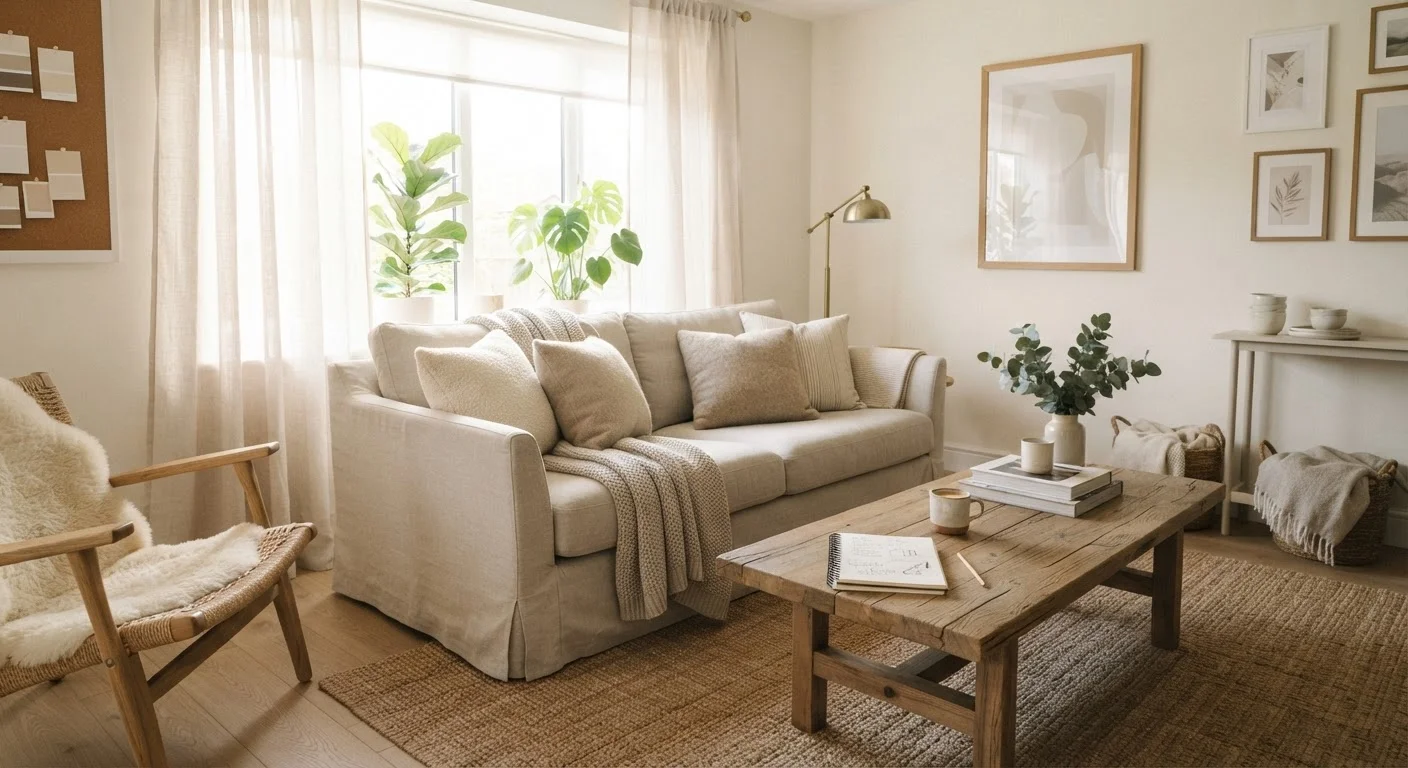
A practical room-by-room checklist for spotting what's working, what's clashing, and what small changes will make the biggest difference.
Summary
22 items · 30–90 minutes per room
Key takeaways
- A room refresh doesn't require buying anything new — observation comes first.
- Most rooms have one or two fixable issues that account for the majority of visual friction.
- Light, scale, and editing are the three levers that shift a room's feel most dramatically.
- Working through a checklist prevents the overlooked details that undermine an otherwise good space.
- Small, intentional changes consistently outperform large, impulsive purchases.
Why a Structured Walk-Through Beats a Gut-Reaction Overhaul
Most rooms don't need a complete redo — they need a careful audit. The impulse to buy something new is almost always the wrong first move. Before you rearrange a single cushion or add anything to a cart, walk through the room with fresh eyes and a clear framework. That's what this checklist is designed to help you do.
Think of this as a diagnostic tool rather than a to-do list. Some items will reveal that a room is already working better than you thought; others will expose the one or two friction points — a badly scaled lamp, a color that fights everything around it, a corner that collects visual noise — that are quietly dragging the whole space down. If you're newer to decorating and want grounding principles before you begin, start with our beginner's guide first.
Work through the checklist room by room. A living room might take 45 minutes; a hallway, 15. The point is to be deliberate — not fast.
Measuring tape
Verify furniture dimensions and spacing, rug coverage, and artwork placement heights.
Notepad or notes app
Record observations as you move through the room so nothing is forgotten before you act.
Color card or paint chip samples
Test existing palette relationships and scout potential accent or repaint options.
Camera or smartphone
Photograph the room from the doorway and key angles — photos reveal proportion and clutter issues that the eye normalizes.
How to Use This Checklist
Print or save the checklist and bring it into the room you're assessing. Stand in the doorway first — that's the view most visitors get, and it's often the most revealing angle. Then move through each category in order. Resist the urge to start fixing things before you've finished observing; solutions become much clearer once you've identified all the issues together.
Items marked must address fundamental problems that consistently undermine a room's feel. Should items are strongly worth acting on once the basics are solid. Nice-to-have items are the polish layer — they matter, but only after the structure beneath them is sound.
If clutter seems to reassemble itself no matter what you do, read our piece on why rooms look cluttered even after tidying — scale and visual noise are often the real culprits, not the quantity of objects.
Light Assessment
Layout and Flow
Scale and Proportion
Color and Visual Cohesion
Editing and Clutter
After the Audit: Deciding What to Actually Change
Once you've walked through the full checklist, you'll likely have a short list of genuine issues and a longer list of things that are actually fine. That distinction is valuable. It keeps you from spending money solving problems that don't exist.
Prioritize structural fixes first: lighting, layout, and proportion. These are the changes that alter how a room feels — and they're often free or low-cost (repositioning a lamp, moving a chair, removing one piece of furniture entirely). Color and surface-level styling come after, not before.
For rooms where scale is the persistent challenge, our guide to decorating small rooms with considered choices covers the layout and light decisions that genuinely work. And if you're weighing whether to invest in a statement furniture piece versus a set of bold accessories, this breakdown of where to put your decorating energy can help you decide. For a comprehensive room-by-room approach, our room-by-room decorating framework walks through planning, proportion, color, and finishing touches in depth.
Don't Fix Everything at Once
It's tempting to act on every item you've flagged in a single afternoon. Resist that impulse. Making multiple changes simultaneously makes it difficult to understand which adjustment actually solved the problem — and it significantly increases the risk of spending money on things you'll want to undo. Work through your priority list one change at a time, giving each at least a day or two before moving on.
All published content on this website is for informational and educational purposes only and should not be taken as professional advice. We recommend that readers seek expert opinion before making any decisions. The website is not responsible for any actions taken based on the information provided on this website. We are not liable for any inaccuracies, modifications, or omissions in information. Moreover, external links or third-party content are provided for convenience; we are not liable for their correctness. Users are advised to verify every piece of information before they use it for any purpose.