
Interior Decorating From Start to Finish: A Room-by-Room Framework

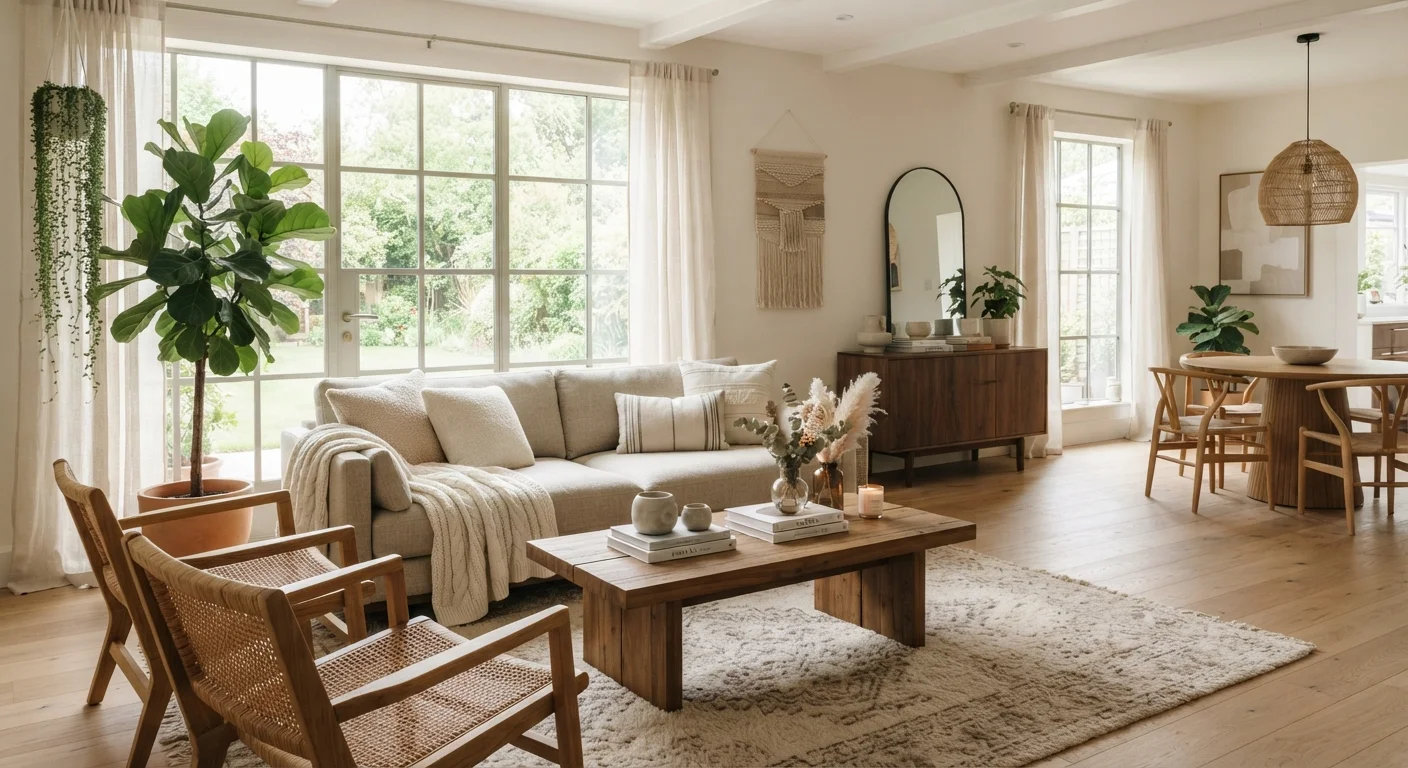
A comprehensive guide to decorating every room with intention — covering planning, proportion, colour, material, and finishing touches.
Key takeaways
- Begin every decorating project with an honest assessment of the room's fixed elements and natural light.
- A cohesive style direction prevents impulse purchases and keeps the design on track.
- Proportion and furniture layout matter more than any single decorative item.
- A three-colour palette with one dominant, one secondary, and one accent shade keeps rooms balanced.
- Layering different textures adds visual depth even when a palette is minimal.
- Small finishing touches — lighting, art placement, and plants — unify a space without heavy investment.
Start With a Room Assessment
Before purchasing a single item or painting a single wall, spend time observing the room as it currently exists. Walk through at different times of day and note how natural light shifts — a north-facing room stays cooler and dimmer, which affects both colour perception and mood. Measure the space carefully: ceiling height, wall lengths, window placement, and any architectural features like alcoves or exposed beams.
List what is fixed and cannot reasonably change — flooring, structural walls, window sizes, radiators — and what is flexible. Fixed elements become the design constraints you work with, not around. If you have warm-toned hardwood floors, for example, that anchors your material palette from the start.
Use our room refresh checklist to systematically identify what's working in the space and where the pain points are. This diagnostic step saves time and prevents costly rework later.
Define Your Style Direction
A clear style direction acts as a filter for every subsequent decision. Without it, rooms tend to fill with unrelated pieces that feel random even when individually attractive. You don't need to commit to a single rigid aesthetic, but you should be able to describe your intended feeling in a few words — calm and minimal, layered and warm, structured but inviting.
Collect reference images from magazines, design publications, or saved photos you've accumulated over time. Look for recurring patterns: do your saved images lean toward natural materials and muted tones, or do they feature saturated colour and bold pattern? Those patterns reveal your actual preferences, not aspirational ones.
If you want a broader vocabulary for decorating styles, our plain-English guide to interior design styles defines the terms clearly and helps you find words for what you're drawn to.
Build your style direction around three adjectives that describe how you want the room to feel, not just look — then use those adjectives as a quick filter whenever you're considering a new purchase.
Emotional intent is a more reliable guide than visual trends, which change quickly. Rooms designed around a feeling tend to stay cohesive as individual pieces are swapped over time.
When you're unsure whether a room feels finished, photograph it and look at the image on your phone screen. The camera flattens the space and makes compositional gaps, clutter, and proportion issues easier to spot than the naked eye does in person.
Switching from three-dimensional perception to a flat image shifts how the brain processes the scene, revealing visual imbalances that become invisible when you're physically present in a familiar space.
Work With Proportion and Layout
Proportion is the single most overlooked factor in amateur decorating. A sofa that is too small for a room makes the space feel unfinished; a dining table that is too large crowds movement and creates daily frustration. The general guideline for living areas is to leave at least 36 inches (about 90 cm) of clearance for main traffic paths and 18 inches between a sofa and a coffee table.
Start your layout with the largest piece — typically a sofa, bed, or dining table — and position it before anything else. In most rooms, the dominant piece should face or acknowledge the room's focal point, whether that's a fireplace, a window with a view, or a feature wall. Floating furniture slightly away from walls often makes a room feel more considered and spacious than pushing everything to the perimeter.
For bedrooms, the bed's headboard wall should be the first decision. Allocate equal clearance on both sides when possible — even 24 inches is sufficient — so the room doesn't feel lopsided. Sketch layouts on grid paper or use a free floor-plan tool to test arrangements before moving heavy furniture.
Choosing a Colour Palette
A practical colour framework for any room is the 60-30-10 rule: 60% dominant colour (usually walls and large upholstery), 30% secondary colour (curtains, rugs, secondary seating), and 10% accent colour (cushions, accessories, art). This ratio keeps rooms visually balanced without feeling flat.
Always test paint colours on the actual wall — at least a 12-inch square — and observe them at multiple times of day and under artificial lighting. Paint chips at a hardware store are misleading because the surrounding white card shifts how the colour reads. Many decorators recommend leaving test patches for 48 hours before committing.
Consider how colours move through adjacent rooms, especially in open-plan spaces. Colours don't need to match between rooms, but they should share at least one tonal relationship — similar undertones or a shared accent colour — so the home feels connected rather than fragmented.
Materials, Texture, and Layering
Once your palette is set, texture carries the visual interest. A monochromatic room in off-white reads beautifully when it mixes linen, wool, raw wood, ceramic, and matte plaster — the tonal sameness becomes a strength when surfaces contrast. Conversely, a room with rich colour can feel flat if every surface has the same finish.
A useful mental checklist when layering a room is to ensure you have at least one each of: hard (wood, stone, metal), soft (textile, upholstery, rug), and reflective (mirror, glass, polished metal). This triad creates visual movement and stops the eye from becoming bored.
Natural materials — jute, linen, rattan, terracotta, untreated timber — tend to age well and add warmth across most style directions. Synthetic materials can work effectively when used thoughtfully, but watch for rooms that feel cold or impersonal, which often trace back to an excess of flat, uniform surfaces.
For structural upgrades and improvements that can support your decorating plans, the home improvement hub covers practical fixes that create a better canvas for any design scheme.
Finishing Touches That Make a Room Feel Complete
Finishing touches are where most decorating budgets are spent first and most expertise is needed last — the opposite of a sensible order. Treat them as the final 10% of the project, deployed after layout, colour, and material decisions are settled.
Lighting is the most transformative finishing layer. Rooms with a single overhead fixture feel flat and institutional. Layer three light sources instead: ambient (general room illumination), task (reading lamps, under-cabinet strips), and accent (picture lights, table lamps, candles). Warm bulb temperatures — around 2700K — suit living spaces; cooler temperatures work better in kitchens and home offices.
Art placement follows a simple rule: hang pieces so their visual centre sits at eye level, roughly 57–60 inches from the floor to the artwork's midpoint. When grouping multiple pieces, treat the arrangement as a single unit and find its collective centre.
Plants add organic softness that no manufactured item replicates. A single large-leaf plant in a corner can resolve a room that feels unfinished despite everything else being in place. Match the plant to the light conditions of the room rather than choosing by aesthetics alone — a thriving plant always looks better than a struggling one.
Finally, edit ruthlessly. A finished room typically needs fewer objects than you think. Each item should earn its place by contributing to the palette, the material story, or the function of the space. When in doubt, remove rather than add.
All published content on this website is for informational and educational purposes only and should not be taken as professional advice. We recommend that readers seek expert opinion before making any decisions. The website is not responsible for any actions taken based on the information provided on this website. We are not liable for any inaccuracies, modifications, or omissions in information. Moreover, external links or third-party content are provided for convenience; we are not liable for their correctness. Users are advised to verify every piece of information before they use it for any purpose.