
Soil 101: What Garden Soil Is Actually Made Of

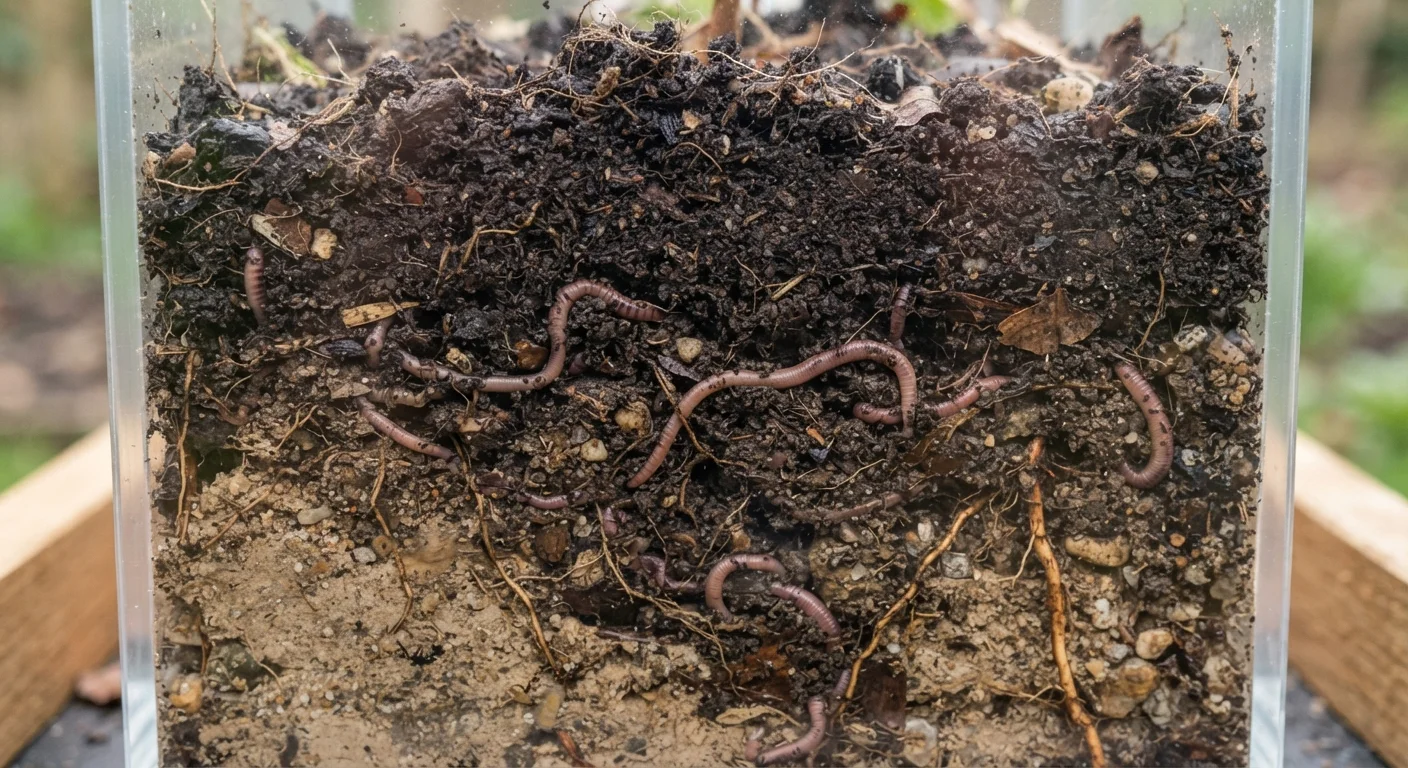
Understand the layers, components, and living organisms that make healthy garden soil — and why they matter for your plants.
Key takeaways
- Healthy soil is roughly half solid material and half pore space filled with air and water.
- The mineral fraction — sand, silt, and clay — determines soil texture and drainage behavior.
- Organic matter is the most manageable component and the one gardeners can most easily improve.
- Billions of microorganisms in one handful of soil drive nutrient cycling that feeds your plants.
- Soil pH affects how available nutrients are to plant roots, regardless of how much fertilizer you add.
- Understanding your existing soil is the foundation of every successful garden decision.
The Five Building Blocks of Soil
Soil is not just dirt — it is a structured system with five distinct components, each playing a specific role in plant health. Understanding what those components are helps you diagnose problems and make smarter decisions in the garden.
- Mineral particles: The skeleton of soil, made up of sand, silt, and clay in varying proportions. These particles come from the slow weathering of rocks over thousands of years.
- Organic matter: Decomposed plant and animal material — the fraction that makes soil dark, crumbly, and fertile.
- Water: Held in the pore spaces between particles, soil water dissolves and transports nutrients directly to root cells.
- Air: Oxygen in soil pores is essential for root respiration and the survival of beneficial microbes. Compacted soil squeezes out this air.
- Living organisms: Bacteria, fungi, earthworms, insects, and more — a thriving food web that drives nutrient cycling and soil structure.
In a well-structured soil, roughly 45% is mineral matter, 5% is organic matter, 25% is water, and 25% is air. That balance is the target every gardener is working toward, even if they don't know it yet.
Mineral Particles: Sand, Silt, and Clay
The mineral fraction of soil is categorized by particle size into three groups, and their ratio — called soil texture — is one of the most important characteristics your soil has.
Sand
Sand particles are the largest. They create large pore spaces that drain quickly and allow plenty of air movement, but they hold very little water or nutrients. Sandy soil warms up fast in spring but dries out quickly during dry spells.
Silt
Silt particles are medium-sized and feel smooth or silky when moist. Silty soils hold water longer than sandy soils and are moderately fertile, but they can compact easily under foot traffic or heavy rain.
Clay
Clay particles are the smallest and carry a negative electrical charge that attracts and holds positively charged nutrient ions — meaning clay soils are often naturally rich in nutrients. The downside is that clay drains slowly, compacts readily, and can become hard and cracked when dry.
The ideal garden texture is loam — a balanced mix of all three. If your soil is heavily weighted toward one type, you can work toward balance by adding organic matter consistently over time. For gardeners weighing whether to work with native soil or start fresh, see our comparison of raised beds vs. in-ground planting.
How to Identify Your Soil Texture at Home
The ribbon test is a simple field method: moisten a small handful of soil and squeeze it between your thumb and forefinger. Clay-heavy soil forms a long, smooth ribbon; sandy soil barely holds together; silty soil forms a shorter, rougher ribbon. For a more precise result, a mason jar shake test — mixing soil with water and letting it settle in layers — gives a visual estimate of sand, silt, and clay proportions.
Organic Matter: The Component You Can Actually Control
Of all the soil components, organic matter is the one most responsive to gardener effort — and it influences nearly every other aspect of soil health. It improves drainage in clay soils, water retention in sandy soils, nutrient availability everywhere, and microbial activity throughout.
Organic matter exists in several stages: fresh plant debris, actively decomposing material, and fully stabilized humus — the dark, stable end product that persists in soil and is responsible for that characteristic rich, earthy smell.
The most effective way to build organic matter is to add compost. Our guide to composting at home walks through the process of turning kitchen scraps and yard waste into a reliable soil amendment. Even a thin annual layer of finished compost — roughly one inch — can meaningfully improve soil structure over a few seasons.
~5%
Organic matter in ideal garden soil
University extension programs generally cite 5% organic matter as a practical target for productive vegetable and ornamental garden soils.
1 billion+
Bacteria per teaspoon of healthy soil
USDA Natural Resources Conservation Service estimates that a single teaspoon of productive soil contains between 100 million and 1 billion bacteria.
12 inches
Minimum workable topsoil depth for vegetables
Most university extension services recommend at least 12 inches of loose, fertile topsoil for productive vegetable root development.
The Living Soil: Microorganisms and Earthworms
A single teaspoon of healthy garden soil contains millions of bacteria and thousands of feet of fungal threads. These organisms are not incidental — they are the engine that makes soil nutrients available to plants.
Bacteria break down organic matter into simpler compounds and are responsible for key processes like nitrogen fixation and nitrification. Fungi, particularly mycorrhizal fungi, form symbiotic relationships with plant roots, extending the root's effective reach and improving uptake of phosphorus and water. Earthworms physically mix soil layers, improve drainage, and produce castings that are exceptionally rich in plant-available nutrients.
Practices that harm soil biology include excessive tilling, overuse of synthetic pesticides, leaving soil bare and exposed to erosion, and allowing soil to dry out completely between waterings. Keeping soil covered — with mulch, cover crops, or growing plants — protects the organisms living in it. Our article on watering practices that help plants thrive covers how watering decisions affect soil life as well as roots.
“The nation that destroys its soil destroys itself. Soil is not merely the medium in which plants grow — it is a living resource that must be actively maintained across generations.”
— Franklin D. Roosevelt, 32nd President of the United States, in a 1937 letter to state governors on soil conservation
Soil pH and Nutrient Availability
pH measures the acidity or alkalinity of soil on a scale from 0 to 14, with 7 being neutral. Most common garden vegetables and ornamentals perform best in a slightly acidic to neutral range of 6.0–7.0. Outside that window, certain nutrients become chemically unavailable to plants — a condition sometimes called nutrient lockout.
For example, iron and manganese become less available in alkaline soils above pH 7.5, causing yellowing leaves even when those minerals are present. Conversely, aluminum and manganese can reach toxic concentrations in very acidic soils below pH 5.5.
You can lower soil pH (make it more acidic) by incorporating elemental sulfur; you can raise it (make it more alkaline) with ground limestone. Both take time — months, not days — and the right amount depends on your current pH and soil texture. A soil test is the only reliable way to know what adjustments your specific soil needs before planting. Check our preparation checklist at Before You Plant for guidance on testing before breaking ground.
Soil Layers: A Quick Look Below the Surface
Soil is not uniform from the surface down. It is organized into horizontal layers called horizons, each with distinct characteristics.
- O Horizon (Organic Layer)
- The topmost layer, consisting of decomposing leaves, mulch, and surface debris. This is where decomposition actively begins.
- A Horizon (Topsoil)
- The dark, fertile layer where most plant roots live and where biological activity is highest. This is the soil you are actively managing when you garden.
- B Horizon (Subsoil)
- A lighter-colored layer below topsoil. It holds less organic matter and is denser, but plant roots of trees and deep-rooted vegetables do reach here.
- C Horizon (Parent Material)
- Partially weathered rock that is slowly becoming soil over geological time. Not relevant to most gardeners in the short term.
In practical terms, most garden management happens in the top 12 inches — the O and A horizons. Protecting and building those layers is far more effective than trying to overhaul deeper soil. Curious about common misconceptions around soil and drainage? Our piece on garden myths that keep new growers stuck addresses several that trip up beginners.
Frequently Asked Questions
All published content on this website is for informational and educational purposes only and should not be taken as professional advice. We recommend that readers seek expert opinion before making any decisions. The website is not responsible for any actions taken based on the information provided on this website. We are not liable for any inaccuracies, modifications, or omissions in information. Moreover, external links or third-party content are provided for convenience; we are not liable for their correctness. Users are advised to verify every piece of information before they use it for any purpose.