
Reality TV vs. Scripted Drama: Which Format Actually Shapes Culture More?

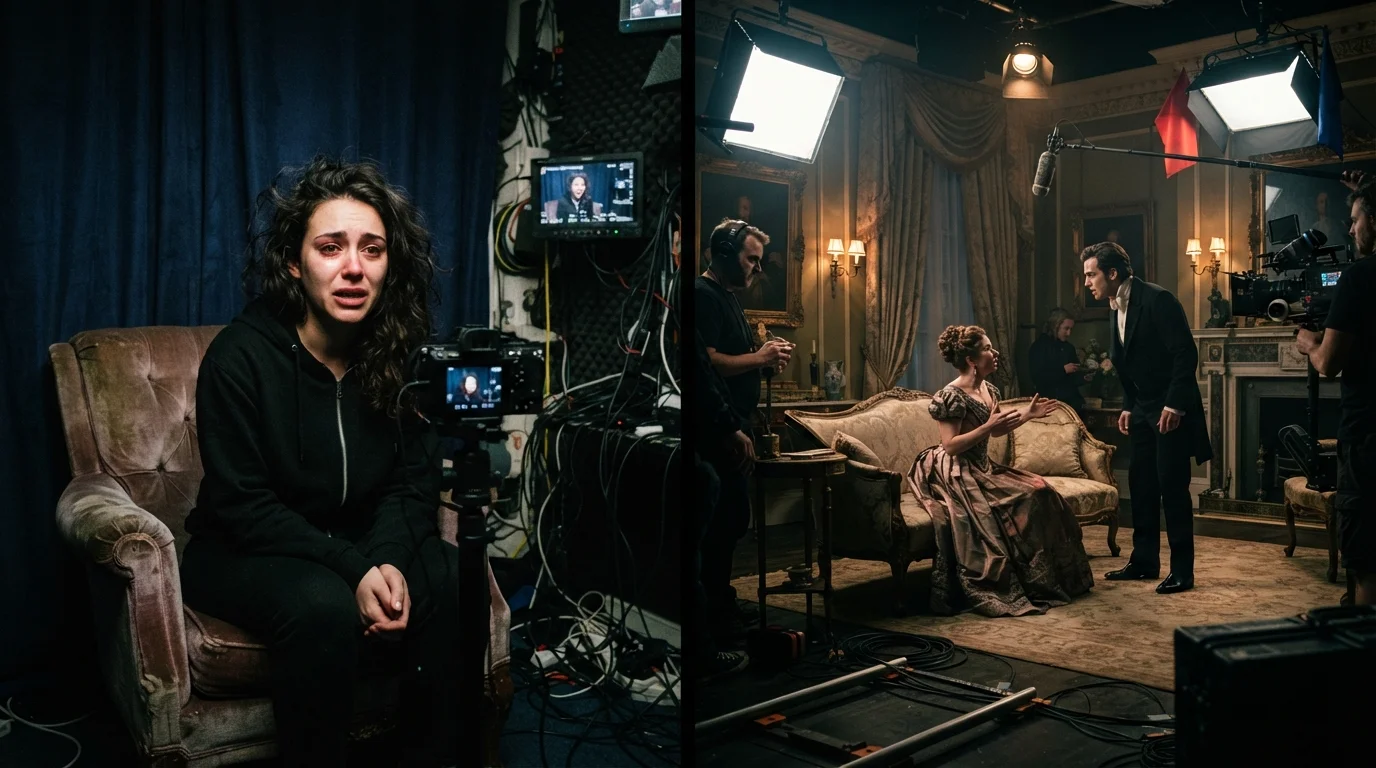
Both genres dominate the national conversation, but in very different ways. A look at how each one leaves its mark.
Option A
Reality TV
The unscripted powerhouse that turns everyday people into overnight icons.
Best for: Audiences who crave immediate cultural conversation, viral moments, and parasocial connection with relatable personalities.
Option B
Scripted Drama
The crafted storytelling format that redefines what television can say.
Best for: Viewers who want narratively layered, thematically ambitious stories that linger in the cultural consciousness for years.
Key takeaways
- Reality TV generates faster, wider viral moments but often fades from cultural memory more quickly.
- Scripted dramas tend to drive deeper conversations around social issues, identity, and systemic change.
- Both formats increasingly borrow from each other, blurring genre boundaries in the streaming era.
- The rise of social media has amplified both formats' ability to dominate national conversation simultaneously.
- Neither format definitively "wins" — each shapes culture in distinct, complementary ways.
Defining the Two Giants
Reality TV and scripted drama are the two most dominant formats on American television — and they couldn't be more different in how they're built. Reality TV presents itself as a window onto unscripted human behavior: competitions, relationships, social experiments, and personality-driven spectacles. Scripted drama, by contrast, is the product of writers' rooms, detailed production planning, and deliberate narrative craft.
But those clean definitions get messier in practice. Many reality shows are extensively produced, with storylines shaped in the editing room. Meanwhile, some scripted dramas — particularly prestige limited series — draw so heavily from real events that they blur the line between documentary and fiction. Understanding how each format shapes culture requires looking beyond surface definitions to what each actually does to its audience and the broader conversation. You can explore how the streaming landscape has reshuffled both genres in our look at how Americans watch and talk about television today.
Reality TV's Cultural Superpower: Speed and Virality
Reality TV's greatest cultural asset is velocity. When a contestant says something explosive on a Monday night broadcast, the clip is dissected on social media by Tuesday morning and a meme by Tuesday afternoon. This rapid cycle of event-reaction-commentary is almost impossible for scripted drama to replicate, because scripted dramas usually demand sustained attention rather than offering easily extractable moments.
This speed directly feeds celebrity culture. Reality TV has become one of the most reliable celebrity-manufacturing machines in modern media, producing personalities who transcend their original shows and build multi-platform brands within a single season. The relationship between reality stars and their audiences often takes on an intense parasocial quality — viewers feel they know these people in ways that fictional characters rarely inspire. For a deeper look at that dynamic, our piece on celebrity culture in the social media age unpacks exactly how those bonds form and what they cost both sides.
| Criterion | Reality TV | Scripted Drama |
|---|---|---|
| Speed of cultural impact | Near-immediate; hours to days | Slower build; weeks to months |
| Longevity in cultural memory | Short-to-medium; cycles quickly | Long-lasting; often referenced for years |
| Celebrity generation | Rapid; ordinary people to icons fast | Gradual; tied to character recognition |
| Social issue engagement | Incidental; driven by participant behavior | Deliberate; embedded in narrative design |
| Virality on social media | Very high; clip-friendly moments | Moderate; peaks around premiere and finale |
| Critical and awards recognition | Limited; separate reality TV categories | High; dominates prestige awards circuits |
| Audience investment style | Parasocial; feels personal and immediate | Narrative; character arcs over time |
The trade-off, of course, is longevity. Reality TV cycles through cultural moments at a pace that rarely allows any single one to calcify into lasting significance. What dominates the conversation in March may be completely forgotten by June.
Scripted Drama's Cultural Superpower: Depth and Durability
Where reality TV moves fast, scripted drama moves deep. The most culturally resonant scripted series tend to act almost like social documents — capturing a specific anxiety, injustice, or cultural moment and forcing audiences to sit with it across multiple episodes or seasons. This isn't accidental: writers' rooms actively develop themes and subtext that reward close attention and generate the kind of layered conversation that academic critics, journalists, and activists engage with seriously.
Scripted dramas also tend to perform better in the long game of awards and critical recognition, which matters because awards amplify cultural conversation in their own right. The trajectory from acclaimed series to cultural flashpoint to classroom syllabus is well-worn territory for prestige drama in a way reality TV rarely achieves. That said, award show dynamics have shifted considerably — see our analysis of how award shows became cultural flashpoints for more on that evolving relationship.
Scripted drama's other underrated power is its ability to introduce vocabulary. Phrases, concepts, and even specific dialogues from landmark series enter the broader cultural lexicon and stay there. That's a kind of cultural embedding that a viral reality TV clip rarely sustains.
Where the Lines Blur — and What That Means
Perhaps the most interesting development in contemporary television is the degree to which these two formats are converging. Docuseries occupy a fascinating middle ground, delivering the intimacy and perceived authenticity of reality TV with the structural discipline of scripted storytelling. True crime programming — itself a genre worth examining, as we do in our feature on the cultural footprint of true crime — borrows from both traditions simultaneously.
Scripted dramas increasingly incorporate reality TV aesthetics: handheld cameras, confessional-style interviews, deliberately rough editing. And major reality franchises have grown sophisticated enough to sustain multi-season narrative arcs that rival scripted soap operas in complexity. The release strategy also affects how both formats land culturally — whether episodes drop weekly or all at once shapes everything from fan community dynamics to critical reception, a tension explored in detail in our comparison of binge-watching vs. weekly releases.
The Genre Boundary Is Getting Thinner
Media scholars have noted that the distinction between "reality" and "scripted" content has become increasingly constructed rather than inherent. Editing choices, producer prompts, and post-production shaping all mean reality TV carries significant scripted elements. Conversely, scripted dramas that foreground authentic performance and location shooting borrow reality TV's visual grammar. Audiences, many researchers suggest, are aware of this blurriness — and engage with both formats partly because of it, not in spite of it.
The convergence of both formats suggests that the real question isn't which genre shapes culture more — it's how the interplay between them creates a richer, more complex media ecosystem than either could produce alone.
All published content on this website is for informational and educational purposes only and should not be taken as professional advice. We recommend that readers seek expert opinion before making any decisions. The website is not responsible for any actions taken based on the information provided on this website. We are not liable for any inaccuracies, modifications, or omissions in information. Moreover, external links or third-party content are provided for convenience; we are not liable for their correctness. Users are advised to verify every piece of information before they use it for any purpose.