
Why Birdwatching Turns Casual Observers Into Lifelong Enthusiasts

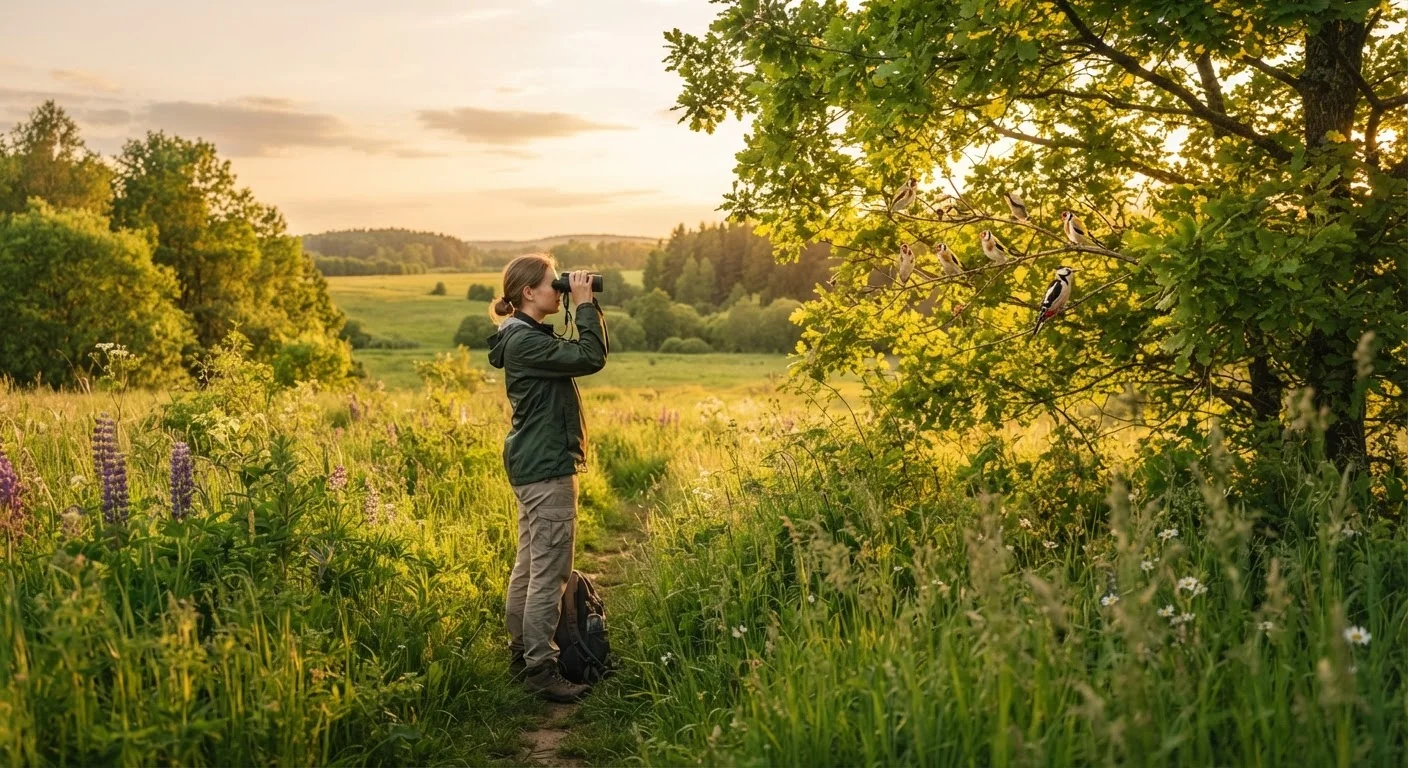
Birdwatching requires no special fitness, costs very little to start, and rewards patience in ways few hobbies can. Here's what makes it so compelling.
Key takeaways
- Birdwatching is one of the most accessible outdoor hobbies — starting costs can be near zero.
- The hobby naturally draws people outdoors, supporting mental wellbeing and gentle physical activity.
- Birding scales with your interest: a backyard feeder counts just as much as a dedicated expedition.
- Citizen science platforms let casual birders contribute real data to conservation research.
- A community of fellow birders — local and online — makes the learning curve far more enjoyable.
The Hook Nobody Sees Coming
It usually starts with something small: a flash of red at the window feeder, an unfamiliar song from the tree outside your office, a massive bird riding thermals overhead during a lunch walk. Most people who become devoted birders didn't sign up for a hobby — they simply paid attention once, and something clicked.
That accidental beginning is part of birdwatching's quiet genius. Unlike hobbies that demand investment before you experience any reward, birding can deliver genuine wonder on day one. You don't need to buy gear, join a club, or pass a test. The birds are already there. You just have to look.
For adults balancing full schedules and competing leisure options, that low-friction entry point matters enormously. Contrast it with amateur astronomy, another absorbing outdoor pursuit that typically requires more planning, equipment, and patience before the payoffs arrive. Birding operates on a far more forgiving timeline — and the 'equipment' is often already in your pocket.
Why Birding Keeps Its Hold on People
The hobby's staying power comes from a combination of factors that are surprisingly hard to find together in a single leisure pursuit.
It's an endless puzzle
There are roughly 10,000 bird species in the world, with about 900 regularly spotted in North America alone. Even a lifetime of dedicated birding won't exhaust the possibilities. Each new habitat, season, or region reshapes what you might encounter — which means the learning never really stops. That open-ended quality keeps curiosity alive in a way that hobbies with a defined 'completion' rarely can.
It rewards presence in a distracted era
Birdwatching demands a specific kind of attention: quiet, patient, and genuinely in-the-moment. That's almost the opposite of what most adults experience during passive screen time. If you're curious about what more intentional leisure looks like in practice, our piece on making screen time feel more intentional explores a related idea from the other direction.
It scales with your life
Birding adapts to whatever you have available — twenty minutes from your kitchen window, a weekend hike, or a dedicated trip to a national wildlife refuge. This scalability means it tends to stick around across life changes in a way that more physically demanding or expensive hobbies don't. It's one of the reasons birdwatching appears consistently on lists of leisure pursuits that hold up across decades.
The Science Angle: You're Doing Real Research
One of the more unexpected dimensions of birding is that casual participants can contribute to legitimate conservation science. Platforms like eBird — managed by the Cornell Lab of Ornithology — aggregate millions of bird sighting reports from everyday observers worldwide. That crowdsourced data informs migration research, habitat assessments, and population monitoring in ways that professional scientists couldn't achieve alone.
Contributing takes less than five minutes: log what you saw, where, and when. Over time, your records become part of a global dataset that actually matters. For people who want their leisure time to carry some meaning beyond personal enjoyment, that connection to something larger is a powerful motivator.
96M+
Americans who watch wildlife, including birds
According to the U.S. Fish & Wildlife Service's National Survey of Fishing, Hunting, and Wildlife-Associated Recreation, tens of millions of Americans participate in wildlife watching annually, making it one of the most widely practiced outdoor activities in the country.
1.6B+
Bird observations in eBird database
The Cornell Lab of Ornithology's eBird platform has accumulated over a billion bird sighting records submitted by citizen scientists worldwide, demonstrating the scale of amateur participation in real scientific data collection.
$107B
Economic impact of wildlife watching in the U.S.
The U.S. Fish & Wildlife Service has estimated that wildlife watching, which includes birdwatching, generates substantial economic activity through travel, equipment, and related spending — underscoring how widespread the pastime has become.
Getting Started Without Overthinking It
The most common mistake beginners make is waiting until they feel 'ready.' They research binoculars for weeks, debate field guides, and plan the perfect introductory outing — then never go. The simpler approach: start exactly where you are.
Install a free identification app (Merlin Bird ID from the Cornell Lab of Ornithology is widely recommended among the birding community). Spend ten minutes outside — backyard, park, or sidewalk — and try to name what you see. That's it. You've started.
From there, the hobby builds naturally. You'll notice patterns, then start seeking out new habitats. You might join a local Audubon chapter or connect with birders online. The social layer turns out to be one of the hobby's underrated pleasures — a community of people genuinely excited to share knowledge with newcomers.
If sustaining the momentum once initial excitement fades is a concern, keeping a hobby from fading into a forgotten phase offers useful perspective on how to build habits that outlast the honeymoon period.
Start With Sound, Not Just Sight
Many experienced birders identify the majority of species by ear before they ever see the bird. Training your ear alongside your eyes dramatically expands what you can detect, especially in dense woodland. Free apps like Merlin Bird ID include sound identification features that can analyze a recording from your phone and suggest matching species in seconds — a genuinely useful tool for beginners building their ear.
Frequently Asked Questions
All published content on this website is for informational and educational purposes only and should not be taken as professional advice. We recommend that readers seek expert opinion before making any decisions. The website is not responsible for any actions taken based on the information provided on this website. We are not liable for any inaccuracies, modifications, or omissions in information. Moreover, external links or third-party content are provided for convenience; we are not liable for their correctness. Users are advised to verify every piece of information before they use it for any purpose.