
Celebrity Culture in the Social Media Age: Fame, Parasocial Bonds, and the Blurred Line Between Star and Fan

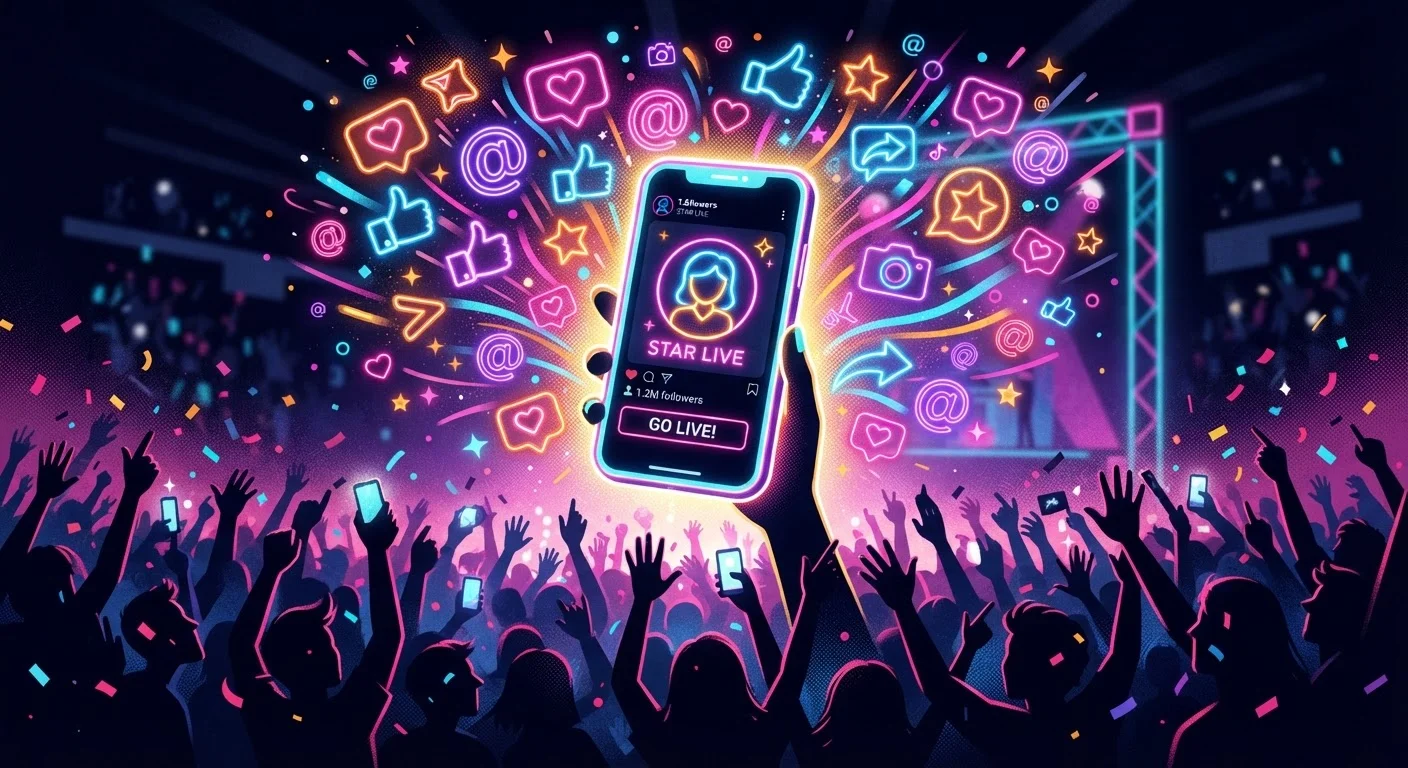
How platforms have reshaped the relationship between celebrities and audiences, and what that means for both sides.
Key takeaways
- Social media collapsed the traditional distance between celebrities and their audiences.
- Parasocial bonds — one-sided feelings of closeness — are a normal psychological response to media consumption.
- Fans increasingly treat celebrities as public property, blurring personal and professional boundaries.
- Constant digital visibility creates real mental health pressures for public figures.
- Performed authenticity has become its own genre of celebrity content.
- Understanding these dynamics helps audiences engage with celebrity culture more critically.
How Social Media Rewired Celebrity
For most of the twentieth century, celebrity operated at a deliberate remove. Studios managed images, publicists filtered access, and fans encountered stars through scripted interviews and carefully lit magazine covers. The gap between performer and audience was architectural — built into the system on purpose.
Then came social platforms, and the architecture collapsed. Twitter (now X), Instagram, TikTok, and YouTube handed celebrities a direct channel to millions of followers, bypassing every traditional gatekeeper. A musician could share a raw studio session at midnight. An actor could respond to a critic in real time. A reality star could document breakfast. The result wasn't just more access — it was a fundamentally different kind of relationship.
This shift also democratized who could become famous. Viral moments no longer required a record label or a network deal. Content creators, athletes, chefs, and everyday people with compelling perspectives joined a celebrity ecosystem that had once been strictly gated. For more on what separates a fleeting viral flash from durable cultural impact, see our breakdown of viral moments.
72%
Americans who follow celebrities on social media
According to Pew Research Center data on social media use and celebrity engagement among U.S. adults.
3.5B+
Social media users worldwide
Global estimates from Statista tracking platform user counts across major social networks.
57%
Fans who feel personally connected to a creator
A Horowitz Research study found a majority of streaming audiences report feeling a real personal bond with online creators.
The Parasocial Bond Explained
Psychologists coined the term parasocial relationship in the 1950s to describe the one-sided emotional connections audiences form with media figures. You feel like you know a late-night host; you root for a podcaster like they're your friend. These bonds are real in the sense that they produce genuine emotion — but they're asymmetrical, because the celebrity doesn't know you exist.
Social media didn't invent parasocial bonds, but it turbocharged them. When a celebrity posts an unfiltered story about their anxiety, responds to fan comments, or goes live from their living room, the brain processes those interactions through the same social circuitry it uses for real relationships. The familiarity feels earned, even when it was carefully curated.
This isn't a flaw in human psychology — it's a feature. Parasocial relationships can offer genuine comfort, community, and even inspiration. The psychology behind why these bonds feel so vivid is explored in depth in our companion piece: Parasocial Relationships: What They Are and Why They Feel So Real.
When Fans Feel Like Stakeholders
Here's where the dynamic gets genuinely complicated. When a celebrity has invited millions of people into their life — shared their relationship milestones, their political views, their grief — fans can begin to feel a sense of ownership. And ownership has expectations attached to it.
This shows up in striking ways. Fan communities debate whether a celebrity's partner is "good enough." Audiences organize campaigns to reinstate cancelled shows or demand artists address social issues publicly. Some fans send aggressive messages when a celebrity doesn't reciprocate perceived closeness — a phenomenon researchers sometimes call parasocial breakup, the distress that follows when a figure goes quiet, changes persona, or falls from grace.
The pressure on entertainers to weigh in on political and social issues has intensified alongside this dynamic. Pop Music, Politics, and Public Expectation examines the real tension that creates for artists navigating audience demands alongside their own values.
Audit your own parasocial investments periodically — ask yourself whether following a particular celebrity is adding genuine value to your life or just feeding compulsive checking behavior.
Media psychologists suggest that conscious reflection on parasocial bonds helps people maintain perspective and emotional equilibrium, especially during celebrity controversies.
When a celebrity says something that surprises or disappoints you, give the same interpretive grace you'd offer a real-world acquaintance before reacting publicly.
Context collapse — posts reaching audiences beyond their intended scope — is a documented social media phenomenon that frequently distorts how celebrity statements are perceived.
The Cost of Constant Visibility
The same openness that builds devoted audiences can exact a steep personal toll. Public figures who've spoken candidly about social media's psychological weight — including several prominent musicians, athletes, and actors — describe an environment where criticism is immediate, relentless, and often deeply personal.
Research from the APA and other institutions has documented links between heavy social media use and heightened anxiety and depression, particularly for people whose professional identity is inseparable from their online presence. For celebrities, every post is simultaneously a creative act, a PR decision, and a public referendum.
There's also the question of boundaries that never quite hold. A celebrity who shares personal struggles to connect authentically may find those disclosures weaponized in future criticism. The openness that builds parasocial warmth can later feel like vulnerability that was exploited — by audiences, tabloids, or algorithms that reward controversy over nuance.
Authenticity: Real, Performed, or Both?
"Authentic" content is now one of the most strategically crafted categories in the celebrity playbook. The no-makeup selfie, the tearful confession, the behind-the-scenes chaos — all of these can be genuinely spontaneous, deliberately staged, or something in between. The trick is that audiences often can't tell the difference, and may not want to.
What viewers respond to is the feeling of authenticity — the sense that a star is letting them past the velvet rope. That feeling is powerful regardless of how engineered it actually is. This has created a new genre of celebrity labor: the ongoing performance of being real. Managing that performance across multiple platforms, 24 hours a day, is genuinely exhausting work, even when it looks effortless.
Reality television was an early laboratory for this dynamic, blending scripted structure with the appearance of unfiltered life. The ongoing cultural conversation about reality TV versus scripted drama — and which format shapes culture more durably — is worth exploring: Reality TV vs. Scripted Drama.
What This Means for Fan Culture Going Forward
Understanding the mechanics of modern celebrity doesn't diminish the genuine joy of fandom — it makes that joy more sustainable. When you recognize that parasocial closeness is a psychological response to media design rather than evidence of a real personal relationship, you can appreciate a celebrity's work without placing unrealistic expectations on them, or yourself.
Healthier fan engagement looks like appreciating art and persona without demanding access, supporting creators while respecting their humanity, and staying curious about the business structures shaping what gets presented as authentic. It also means being thoughtful about how platforms profit from parasocial intensity — engagement-optimized feeds are built to keep you emotionally invested.
The relationship between stars and audiences will keep evolving as platforms change. New formats — short-form video, live audio, AI-generated personas — are already introducing new variations on the same fundamental dynamic: people forming emotional connections with figures they'll never actually know. Being a savvy participant in that culture, rather than just a passive consumer, is its own kind of cultural literacy.
All published content on this website is for informational and educational purposes only and should not be taken as professional advice. We recommend that readers seek expert opinion before making any decisions. The website is not responsible for any actions taken based on the information provided on this website. We are not liable for any inaccuracies, modifications, or omissions in information. Moreover, external links or third-party content are provided for convenience; we are not liable for their correctness. Users are advised to verify every piece of information before they use it for any purpose.