
The Quiet Comeback of Analog Hobbies in a Screen-Saturated World

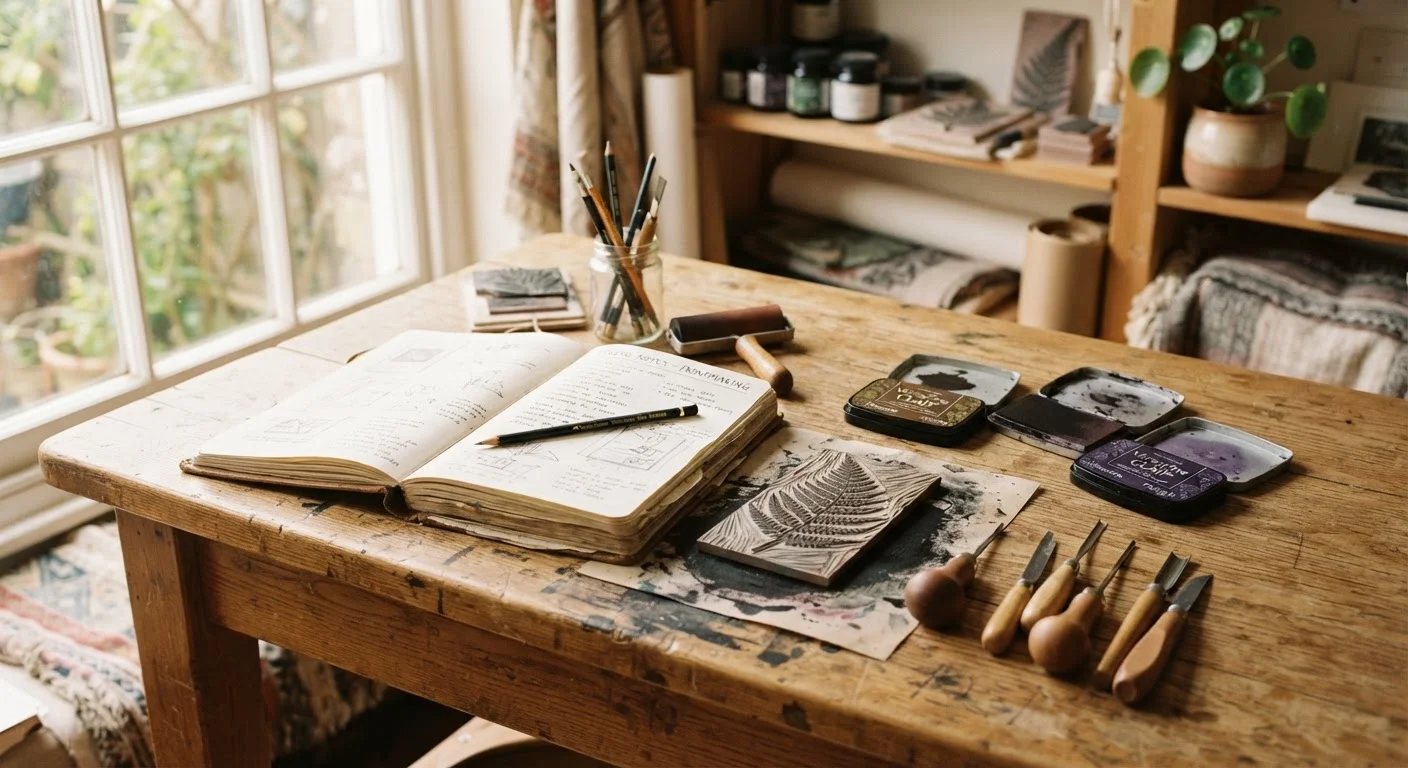
From letterpress to lino-cutting, analog pastimes are drawing adults back to tactile creativity. Here's what's fueling the shift away from screens.
Key takeaways
- Analog hobbies rely on physical materials and hands-on skill rather than any digital screen.
- Interest in tactile crafts has surged meaningfully since the early 2020s, driven partly by screen fatigue.
- The psychological benefits include reduced cognitive load, improved focus, and a stronger sense of accomplishment.
- Entry barriers are lower than many people assume — most analog hobbies can be started with modest, affordable supplies.
- Analog and digital lives aren't mutually exclusive; many people use one as a healthy counterweight to the other.
Why Adults Are Putting Down Their Phones and Picking Up a Chisel
Something quiet has been building in craft studios, spare bedrooms, and community workshops across the country. Adults who spend eight or more hours a day staring at screens are increasingly carving lino blocks, pressing letterforms into paper, and stitching fabric by hand — not out of nostalgia alone, but out of genuine need. The appetite for analog hobbies isn't a fleeting aesthetic trend; it reflects a deeper recalibration of how people want to spend their limited leisure time.
Screen saturation is a reasonable starting point for understanding the shift. According to data published by Nielsen, American adults average over ten hours of screen exposure daily across devices. When leisure time is also screen-mediated — scrolling social feeds, streaming another series — the brain rarely gets a true cognitive break. Analog hobbies offer something screens structurally cannot: a closed feedback loop between hand, material, and visible result, with no notification interrupting it.
This connects meaningfully to the broader conversation around digital wellness and screen boundaries. Where that conversation often focuses on restriction, analog hobbies offer something more generative — a pull toward something absorbing, rather than simply a push away from something draining.
10+ hrs
Average daily screen exposure for US adults
Nielsen's audience measurement research has consistently tracked adult screen time across TV, smartphones, computers, and tablets at above ten hours per day.
~30%
Adults who took up a new hobby post-2020
Multiple consumer surveys conducted between 2020 and 2022 found roughly a third of US adults reported adopting a new creative or hands-on hobby during pandemic-related periods of increased time at home.
$44B+
US arts and crafts market valuation
Industry analysts have placed the US arts, crafts, and hobby retail sector above $44 billion in annual revenue, with craft categories like printmaking and fiber arts showing consistent category growth.
The Psychology Behind the Tactile Turn
Psychologists have long studied what makes certain activities restorative rather than merely distracting. Hands-on craft falls into a category researchers call "effortful leisure" — activities that require genuine skill application and produce a concrete, visible outcome. Unlike passive consumption, effortful leisure activates what Mihaly Csikszentmihalyi described as a flow state: a condition of absorbed, self-reinforcing focus where time seems to compress and self-criticism quiets.
There's also a sensory dimension that screens simply can't replicate. The resistance of a lino block under a cutting tool, the smell of fresh ink, the weight of a hand-bound book — these physical sensations anchor attention in the present moment in ways that have genuine psychological value. Occupational therapists have incorporated craft activities into treatment programs for anxiety and low mood for decades, though it's worth noting that this general research context doesn't constitute medical advice for any individual.
Interestingly, the same nostalgic impulse that drives entertainment's ongoing nostalgia economy also feeds the analog hobby revival. Many adults encountered printmaking, weaving, or woodworking in school and are circling back to crafts that felt meaningful before professional life crowded them out.
A Closer Look at the Crafts Leading the Revival
Not all analog hobbies are experiencing equal momentum, but a handful have captured particular cultural attention.
- Lino-cutting and printmaking: Accessible, compact, and deeply satisfying. A beginner can produce a meaningful print within a single afternoon session, which makes the reward-to-effort ratio feel immediate.
- Letterpress and hand lettering: The combination of typographic craft and physical pressure has attracted practitioners from graphic design backgrounds seeking a slower, more deliberate counterpart to digital work.
- Bookbinding and paper crafts: Creating a functional, beautiful object from flat sheets of paper and thread carries a particular satisfaction — the finished book can be used, gifted, or filled with writing.
- Weaving and fiber arts: Rigid heddle looms and small tapestry frames have brought weaving into small apartments. The rhythmic, repetitive motion of weaving is widely reported as meditative.
- Natural dyeing and surface design: Working with plant-based dyes and fabric connects the hobby to ecological consciousness, adding a values dimension that appeals to many practitioners.
What unites these crafts is that they reward sustained attention and incremental skill-building — qualities that pair naturally with the kind of leisure pursuits that hold up across decades of life.
Making It Stick: From Curiosity to Committed Practice
The initial excitement of a new analog hobby is easy to sustain for a few weeks. The challenge, as many enthusiasts know from experience, is keeping the practice alive once novelty fades. The shift from dabbler to committed practitioner usually depends less on talent than on structure.
Setting aside dedicated time — even a single consistent hour per week — matters more than long occasional sessions. Physical space also plays a role: having supplies accessible and visible, rather than packed away, lowers the activation energy needed to begin. A lino block left on the corner of a desk is far more likely to get picked up than one stored in a closet.
The question of where to practice — solo at home or within a community setting — deserves genuine thought. Both environments produce distinct creative experiences, with trade-offs worth understanding before committing to one approach. Our deeper look at home studio versus community class dynamics explores this tension in detail.
For those worried about sustaining momentum beyond the honeymoon phase, the strategies explored in keeping a hobby from fading into a forgotten phase offer practical, experience-grounded guidance that applies across nearly any analog pursuit.
The quiet comeback of analog hobbies ultimately reflects something straightforward: people want to make things, and they want to feel the making. In a world where so much experience is mediated, filtered, and optimized, the unmediated satisfaction of a hand-cut print or a hand-bound book carries a weight that's genuinely hard to replicate.
Frequently Asked Questions
All published content on this website is for informational and educational purposes only and should not be taken as professional advice. We recommend that readers seek expert opinion before making any decisions. The website is not responsible for any actions taken based on the information provided on this website. We are not liable for any inaccuracies, modifications, or omissions in information. Moreover, external links or third-party content are provided for convenience; we are not liable for their correctness. Users are advised to verify every piece of information before they use it for any purpose.