
How Award Shows Went from Must-See Events to Cultural Flashpoints

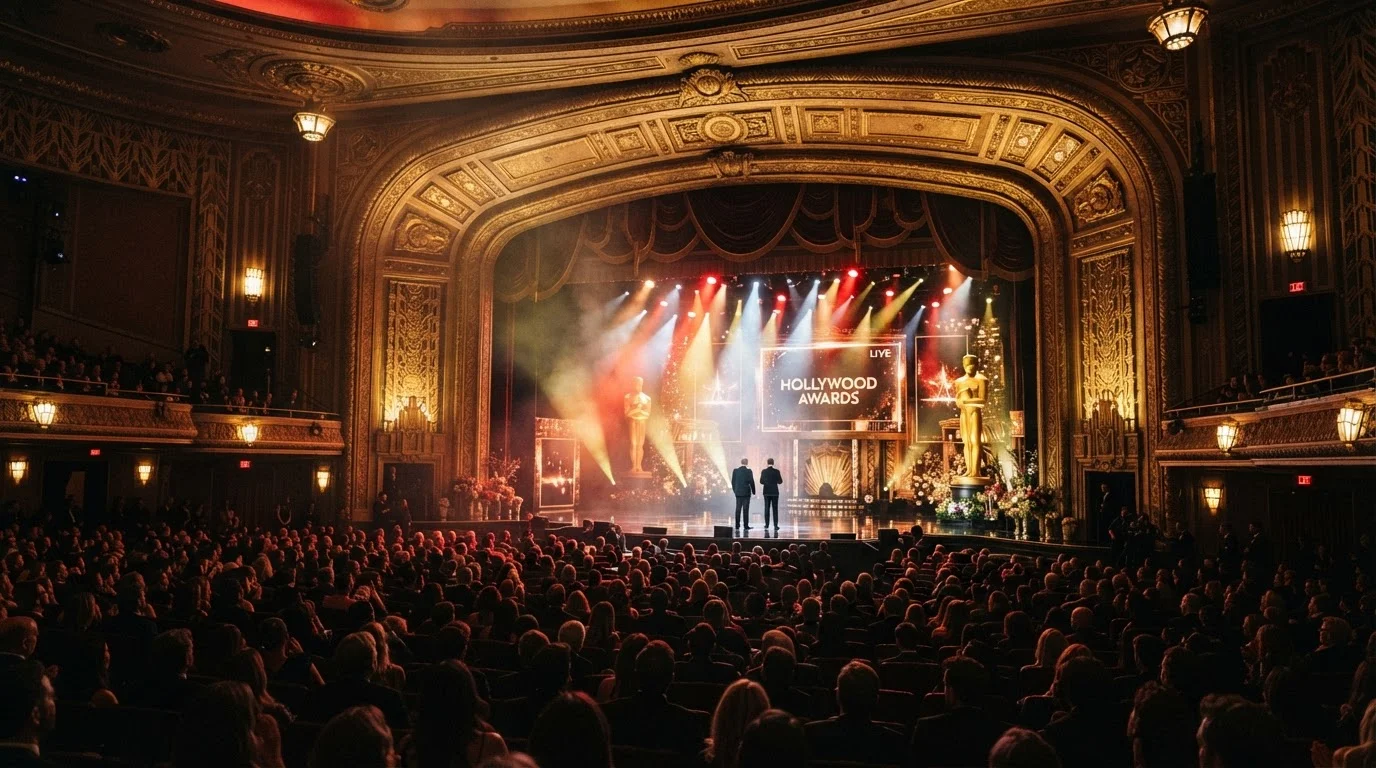
Viewership for major award ceremonies has shifted dramatically. What does that tell us about changing tastes and media habits?
Key takeaways
- Award show ratings have declined sharply over the past two decades, even as individual moments generate record online engagement.
- The shift from broadcast to streaming has fragmented the shared viewing experience that once made these events unmissable.
- Viral incidents — not the awards themselves — now drive most post-show conversation on social media.
- Audiences increasingly expect celebrities to take political and social stances, adding tension and unpredictability to live broadcasts.
- Award shows remain influential as cultural barometers, even when fewer people watch them in real time.
The Golden Age of Must-See Ceremony TV
There was a time when award show nights felt genuinely communal. Families gathered around television sets, office pools debated winners, and the next morning's water-cooler conversation was practically scripted in advance. The Oscars, Grammys, Emmys, and Golden Globes were more than industry handshakes — they were reliable tent-pole moments in the American cultural calendar, the kind of live television that demanded your full attention.
At their peak, ceremonies like the Academy Awards routinely drew audiences of 40 to 50 million viewers in the United States. The combination of live stakes, glamour, and unpredictability made them appointment viewing in a media landscape where appointment viewing was still the default. The concept of a shared national audience — everyone watching the same thing at the same moment — was still very much intact. As our decade-by-decade reference to defining cultural moments illustrates, these ceremonies produced some of the most talked-about events in American entertainment history.
The Viewership Slide: Numbers and Context
By the early 2020s, the picture looked dramatically different. Oscar audiences had fallen well below 20 million — a decline of more than half from their late-1990s highs. Grammy and Emmy viewership followed similar trajectories. Industry analysts pointed to a web of causes rather than a single smoking gun.
~29M
Peak U.S. Oscar viewership in 1998
Nielsen historical data has tracked Academy Awards audiences since the broadcast era; late-1990s numbers regularly exceeded 40–50 million viewers during blockbuster-driven years.
~18.5M
2023 Academy Awards U.S. viewership
Per Nielsen ratings reported by major entertainment trades, the 2023 Oscars drew approximately 18.5 million viewers — a partial recovery from 2021's record-low figures, but still far below peak-era numbers.
60%+
Decline in Emmy viewership since 2000
Industry tracking shows Emmy audiences have fallen by more than half since the early 2000s, reflecting broader shifts in how viewers consume live television events.
The fracturing of the cable-to-streaming transition is central to understanding the ratings drop. When viewers had three or four major networks and limited cable options, a high-profile live event automatically commanded a massive share of the available audience. As the number of viewing choices multiplied — first with hundreds of cable channels, then with dozens of streaming platforms — that automatic gravitational pull weakened. The streaming wars fundamentally reshaped how Americans relate to shared TV experiences, making the idea of "everyone watching the same thing" feel increasingly nostalgic.
Skepticism about the awards themselves also contributed. Recurring critiques about industry insularity, lack of diversity in nominations, and a perceived disconnect between winners and audience favorites all eroded the sense that these ceremonies meant something beyond Hollywood self-congratulation.
When Moments Replace the Show Itself
Here's the paradox: even as live audiences shrank, individual award show moments grew in cultural magnitude. A startling speech, an unexpected confrontation, or a jaw-dropping performance can now generate more online conversation in 24 hours than the full telecast reached in real time. The ceremony itself has, in many ways, become a delivery mechanism for shareable clips rather than a cohesive entertainment experience.
This dynamic reshaped what viewers — and broadcasters — actually care about. Producers began engineering for virality as much as for prestige. Musical performances grew more elaborate. Hosts became more provocative. The unscripted possibility of something happening became the main selling point. In that sense, award shows didn't simply become less important — they became important in a completely different way.
The evolution of celebrity culture in the social media age accelerated this shift. Audiences no longer needed to watch live to feel connected to stars; they followed them in near real-time on platforms that delivered the highlights faster, with commentary and reaction baked in. Watching the full show became optional. Watching the moment became mandatory.
The Politics Problem — and Opportunity
Award shows have always carried political undertones, but the temperature has risen considerably. Acceptance speeches have become expected platforms for social commentary, and audiences increasingly arrive with strong opinions about whether celebrities should use that platform. This creates a genuine tension that producers and networks can't easily resolve.
On one hand, politically charged moments generate massive engagement. On the other, they can alienate segments of the viewing public who came for entertainment rather than advocacy. As we've explored in our coverage of the pressure on entertainers to take public stands, the expectation that celebrities weigh in on social issues creates real friction for artists and audiences alike.
The result is that award shows now operate as genuine flashpoints — lightning rods for debates about culture, representation, and whose stories get told and celebrated. Whether that's a feature or a bug depends heavily on where you're standing.
How to Engage With Award Season Thoughtfully
If you want to form your own opinions about award nominees, try sampling the contenders before the ceremony rather than after — your reaction will be less shaped by whether they won or lost. Treating awards as a discovery mechanism (a starting list to explore) rather than a verdict tends to make the whole season more enjoyable and less frustrating.
What Award Shows Actually Tell Us About Culture
Despite declining ratings, award ceremonies remain unusually useful cultural barometers. The films, albums, and performances that receive nominations reflect — however imperfectly — what the entertainment industry considers meaningful at a given moment. Shifts in who gets nominated and who wins track, sometimes with a lag, broader changes in public sensibility around identity, storytelling, and social value.
The tension between institutional prestige and popular relevance has always existed in award culture. What's changed is that social media makes that tension visible and immediate. When a critically acclaimed film wins big but most viewers haven't seen it, Twitter will tell you so — loudly. When a beloved mainstream hit gets overlooked, fandoms mobilize with remarkable speed and force. This is fan devotion in its modern form — organized, vocal, and deeply invested in outcomes.
Award shows, then, haven't lost their power so much as redistributed it. The live ceremony is one node in a much larger cultural conversation that begins weeks before the nominations drop and continues long after the statues are handed out. Understanding them requires looking beyond the ratings to what they reveal about who we are and what we value — even when we can't agree on either.
Frequently Asked Questions
All published content on this website is for informational and educational purposes only and should not be taken as professional advice. We recommend that readers seek expert opinion before making any decisions. The website is not responsible for any actions taken based on the information provided on this website. We are not liable for any inaccuracies, modifications, or omissions in information. Moreover, external links or third-party content are provided for convenience; we are not liable for their correctness. Users are advised to verify every piece of information before they use it for any purpose.