
The Streaming Wars Have Reshaped How Americans Watch — and Talk About — Television

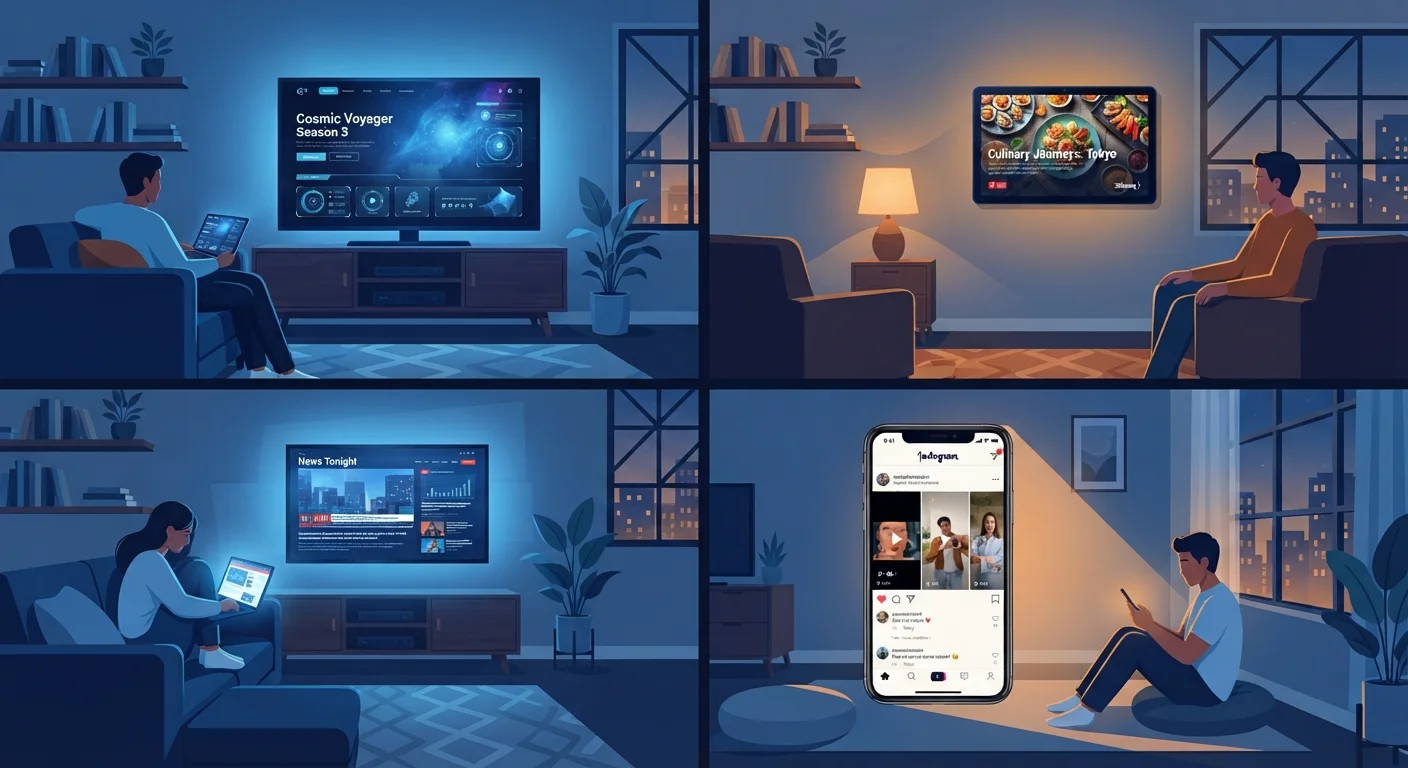
With dozens of platforms competing for attention, the shared TV experience has fractured. Here's what that shift really means.
Key takeaways
- Americans now subscribe to an average of four or more streaming services simultaneously, up from just one or two a decade ago.
- The shift from broadcast to streaming has fractured the shared cultural experience of watching the same show at the same time.
- Exclusive content strategies mean viewers must subscribe to multiple platforms just to follow mainstream pop culture.
- Viral TV moments still happen, but they spread differently — through social media clips rather than live appointment viewing.
- Streaming metrics are inconsistently reported across platforms, making it genuinely hard to know what people are actually watching.
- The "discovery problem" — finding shows you'd love — has grown worse as each platform optimizes for retention over exploration.
From Three Networks to Three Hundred Platforms
For most of the 20th century, Americans largely watched the same things. A hit show on a broadcast network could command tens of millions of simultaneous viewers on a Tuesday night. Water-cooler conversations the next morning were essentially guaranteed. That era didn't end quietly — it unraveled gradually, then all at once.
The arrival of Netflix originals around 2013 proved that audiences would actively seek out prestige television outside the traditional broadcast model. What followed was a cascade: nearly every major media conglomerate concluded it needed its own direct-to-consumer platform to survive. By the early 2020s, Americans could choose from well over a dozen subscription video services, not counting free ad-supported options.
For a deeper look at how this landscape continues to evolve, the Streaming & TV hub tracks platform trends, viewing habits, and the shows shaping the conversation right now.
4+
Average streaming services per U.S. household
Multiple media analytics surveys conducted in the early 2020s consistently found U.S. households maintaining four or more active subscriptions simultaneously.
~$20B
Annual content spend by leading platforms
Major streaming services have publicly reported annual content budgets in the range of $15–20 billion, reflecting the scale of competition for original programming.
50%+
U.S. adults who have cancelled and resubscribed to a service
Industry research has found that subscription rotation — canceling and re-subscribing based on specific content — has become a common viewer behavior.
1 in 3
Viewers who discover shows via social media clips
Surveys of streaming audiences suggest a significant share of new show discoveries now originate from short-form social video rather than platform recommendations.
The Fractured Conversation: What We Lost When TV Splintered
The most underappreciated casualty of the streaming explosion isn't the traditional TV industry — it's the shared cultural moment. When a show drops all at once on a platform available only to subscribers, the audience that actually watches it is self-selected and often geographically and demographically concentrated. The broad, accidental national audience that once stumbled into a hit show through channel-surfing largely doesn't exist anymore.
This shift has real consequences for how we talk about television. Spoiler culture has become genuinely contentious because no two viewers are on the same episode at the same time. Recommendation loops have tightened: we tend to discuss shows with people who already share our subscriptions. And the release model matters enormously — weekly episodic drops generate sustained conversation, while full-season dumps often spike and vanish within days. The binge-watching vs. weekly release debate gets at exactly this tension.
Award shows, once the great equalizer — everyone watching the same ceremony at the same time — have also felt this fragmentation. Award show viewership has shifted dramatically, reflecting just how differently audiences now engage with even the biggest cultural events.
Viral Moments Still Happen — They Just Travel Differently
Declare the shared TV moment dead, and Twitter — or X, or TikTok — will immediately prove you wrong. Streaming hasn't eliminated cultural flashpoints; it's changed how they propagate. A jaw-dropping finale, an unexpected casting revelation, a scene that captures something true about contemporary life — these still ignite national conversations. But the ignition happens across social platforms rather than in real-time living rooms.
TikTok has become particularly powerful as a content amplifier. A 30-second clip from a streaming show can reach tens of millions of people who have never opened the app where the show lives. That dynamic changes the economics of virality: a platform benefits from a moment going viral even if the viewer never subscribes. How virality actually works across different platforms is a more complex story than most people realize, and streaming content sits at the center of it.
Track the Conversation, Not Just the Platform
If you want to stay current with what's driving TV culture, follow discussion on social platforms alongside the streaming services themselves. Many of the most significant cultural moments originate in clips and commentary that circulate independently of any subscription. You don't always need to watch everything — you need to know where the conversation is happening.
Numbers, Metrics, and the Transparency Problem
One of the stranger side effects of the streaming wars is that we know both more and less about what people actually watch than we ever did with broadcast. Nielsen ratings were imperfect, but they were standardized and publicly available. Streaming services report viewership on their own terms — different definitions of a "view," different counting windows, selectively released data.
When a platform announces a show was watched by 100 million households, what does that mean? Was it a full episode? Two minutes? Across how many days? Understanding what streaming metrics actually measure is essential context for anyone trying to assess which shows are genuinely shaping culture versus which ones are being promoted as hits.
The opacity cuts both ways. Beloved shows get canceled without public explanation because internal viewership data stays internal. And shows that do get prominent promotion may dominate discourse not because they're widely seen, but because the platform's algorithm surfaces them aggressively. The discovery problem in modern streaming is, in part, a consequence of this dynamic.
What Comes Next: Consolidation, Fatigue, and a New Kind of Shared Viewing
The economics of the streaming wars were always unsustainable at peak competition. Heavy content spending, subscriber growth slowdowns, and rising subscription prices have already pushed the industry toward consolidation — mergers, licensing deals, and the quiet death of some platforms. Ad-supported tiers have returned as a mainstream option, in an ironic echo of broadcast television's original model.
What emerges from this consolidation likely won't resemble either the old broadcast era or peak streaming fragmentation. A smaller number of larger platforms will probably dominate, but the culture of on-demand, personalized viewing is almost certainly permanent. The challenge — for platforms, creators, and audiences alike — will be finding new ways to create the sense of shared discovery and collective experience that streaming's architecture naturally erodes.
Reality TV and scripted drama are both adapting to this new environment in distinct ways, each finding different routes to cultural relevance in a world where nothing is truly appointment viewing anymore — except, perhaps, the moments that are simply too big to miss.
Frequently Asked Questions
All published content on this website is for informational and educational purposes only and should not be taken as professional advice. We recommend that readers seek expert opinion before making any decisions. The website is not responsible for any actions taken based on the information provided on this website. We are not liable for any inaccuracies, modifications, or omissions in information. Moreover, external links or third-party content are provided for convenience; we are not liable for their correctness. Users are advised to verify every piece of information before they use it for any purpose.