
Binge-Watching vs. Weekly Releases: The Case for and Against Each Model

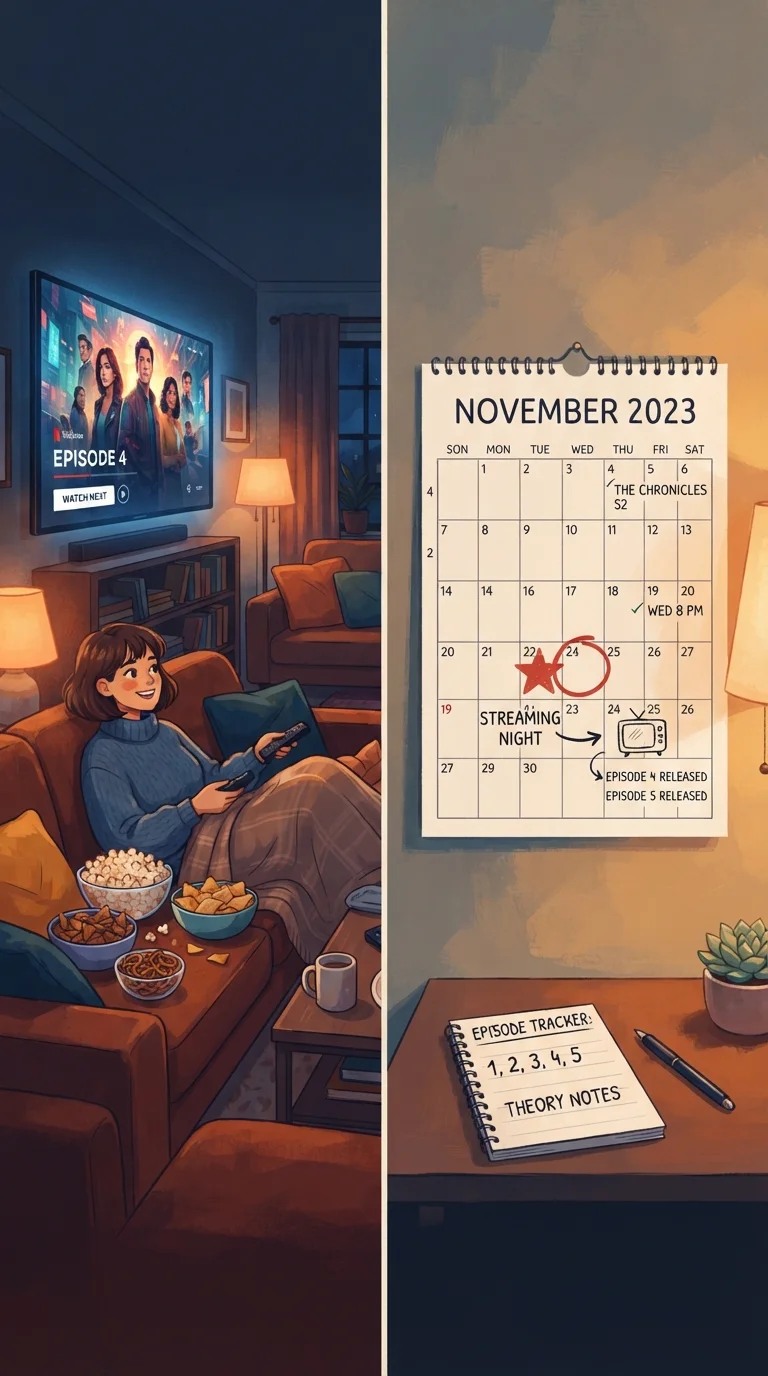
Should shows drop all at once or one episode per week? Explore how each release strategy shapes the viewing experience, fan culture, and storytelling itself.
Our Verdict
Both release models serve real audience needs, but in genuinely different ways. Binge drops excel at delivering immersive, self-contained narratives that reward marathon viewing, while weekly releases build sustained cultural energy and give stories room to breathe. The right model ultimately depends on what a show is trying to do and who it's trying to reach.
| Best for | Recommended |
|---|---|
| Viewers who want complete control over pacing and hate cliffhanger waits | Binge Release |
| Fans who live for online theorizing, recaps, and shared weekly reactions | Weekly Release |
| Shows with serialized, complex mythology that benefits from audience discussion | Weekly Release |
| Limited series or anthology formats designed as single-sitting experiences | Binge Release |
Key takeaways
- Binge releases prioritize viewer autonomy and immediate gratification but can hurt long-term cultural conversation.
- Weekly drops rebuild anticipation and extend a show's cultural footprint over weeks or months.
- Storytelling itself can be shaped by which release model a platform commits to.
- Neither model is universally superior — audience habits and genre both influence which works better.
- Hybrid release strategies are emerging as platforms attempt to balance both approaches.
How We Got Here: Two Competing Release Philosophies
When Netflix dropped the first two seasons of House of Cards in full back in 2013, it wasn't just a scheduling decision — it was a cultural statement. The all-at-once drop signaled that streaming would play by entirely different rules than broadcast TV. Viewers could watch on their own terms, at their own pace, without a network telling them when to tune in.
But not every platform followed suit. HBO built its identity on weekly appointments. Disney+ experimented with both. And as the streaming landscape grew more crowded, the release model question became genuinely strategic — not just a logistical footnote. Today, it's one of the defining creative and business tensions in television.
Understanding both approaches means thinking about more than convenience. It means asking: what do we actually want from the experience of watching television together?
The Case for Binge-Watching: Freedom, Flow, and the Full Story
There's a reason the word "binge" stuck. Watching multiple episodes — or an entire season — in one stretch taps into something deeply satisfying about narrative immersion. When a show drops all at once, viewers control the rhythm entirely. No waiting a week to find out what happened after a cliffhanger. No spoilers from friends who somehow watched ahead. Just story, on your schedule.
For certain genres, this model fits like a glove. True crime documentaries, limited series, and tightly plotted thrillers often benefit from sustained viewing momentum. The tension that makes a mystery work can dissipate over seven days of real life. Dropping everything simultaneously preserves that narrative momentum.
The all-at-once model also gives a show a powerful opening weekend. Social media spikes hard the first few days, driving urgency among casual viewers. From a platform's perspective, a big binge event can justify a subscription in a single weekend — which matters enormously in an era where subscribers regularly rotate platforms.
Writing for the Release Format Matters
Showrunners writing for binge consumption have noted that episode-ending hooks matter less when viewers can immediately proceed to the next episode. Instead, the pressure shifts to sustaining momentum across the full season arc rather than episode-by-episode escalation. This means the release model isn't just a distribution choice — it shapes the actual craft of television writing.
Showrunners writing for binge consumption have noted that episode-ending hooks matter less when viewers can immediately proceed to the next episode. Instead, the pressure shifts to sustaining momentum across the full season arc rather than episode-by-episode escalation.
The Case for Weekly Releases: Anticipation, Community, and Cultural Staying Power
Here's what binge culture quietly killed: the Monday morning recap. The "did you see last night's episode?" conversation at work. The fan theories that had a full week to marinate before being confirmed or demolished. Weekly releases don't just deliver a show — they create a shared experience that unfolds in real time alongside the audience.
Shows like Succession, The Last of Us, and Andor dominated cultural conversation precisely because each episode had space to breathe. Critics could publish thoughtful analyses. Podcasts could dissect every scene. Viewers had time to form genuine emotional attachments before the next chapter arrived. That week between episodes is dead air to some viewers — but it's oxygen for fan culture.
Weekly drops also change a show's algorithmic lifespan. Instead of one big spike and a rapid fade, the show stays relevant — on social platforms, in search trends, in recommendation queues — for the entire run. This extended visibility is increasingly valuable in a landscape where decision paralysis plagues subscribers and discoverability is genuinely hard to achieve.
| Binge Release | Weekly Release | |
|---|---|---|
| Viewer control | Full autonomy over pacing | Structured, appointment-style viewing |
| Cultural conversation | Short, intense spike at launch | Sustained discussion over full run |
| Fan community engagement | Limited theorizing window | Week-long speculation and analysis |
| Storytelling structure | Novel-like chapter arcs | Episode-level self-contained beats |
| Platform subscription value | Strong incentive for short-term sign-ups | Encourages longer subscriber retention |
| Spoiler risk | High after first few days | Moderate, week-to-week exposure |
| Best genre fit | Thrillers, limited series, documentaries | Dramas, sci-fi, serialized mysteries |
What the Release Model Means for the Show Itself
This debate isn't just about viewer preference — it reaches into the writing room. When creators know a season will drop all at once, they may structure episodes more like chapters in a novel, with slower burns and payoffs designed for immediate follow-through. When writing for weekly release, each episode needs to justify its own existence while also advancing a larger arc — a harder balance to strike, but one that often produces tighter, more purposeful television.
It's also worth noting that the release model can influence whether a show survives. Binge-released shows that don't generate a big opening splash risk being quietly cancelled before any audience groundswell builds. Weekly shows, by contrast, have time to build word-of-mouth. The mechanics of cancellation on streaming platforms are complex, but release cadence plays a real role in how platforms measure a show's performance and longevity.
Some platforms have experimented with hybrid approaches — dropping a premiere or first few episodes to hook viewers, then shifting to weekly releases. It's an attempt to capture the best of both worlds, though critics argue it can feel like an unsatisfying compromise rather than a genuine strategy.
Ultimately, neither model has a monopoly on quality television. The best approach depends on the story being told, the audience it's for, and what kind of cultural moment a show is trying to create. As streaming continues to evolve — explored further in our look at how pilot season itself has been transformed — the release model question will only grow more consequential for creators, platforms, and viewers alike.
All published content on this website is for informational and educational purposes only and should not be taken as professional advice. We recommend that readers seek expert opinion before making any decisions. The website is not responsible for any actions taken based on the information provided on this website. We are not liable for any inaccuracies, modifications, or omissions in information. Moreover, external links or third-party content are provided for convenience; we are not liable for their correctness. Users are advised to verify every piece of information before they use it for any purpose.