
The Cultural Footprint of True Crime: Why the Genre Won't Go Away

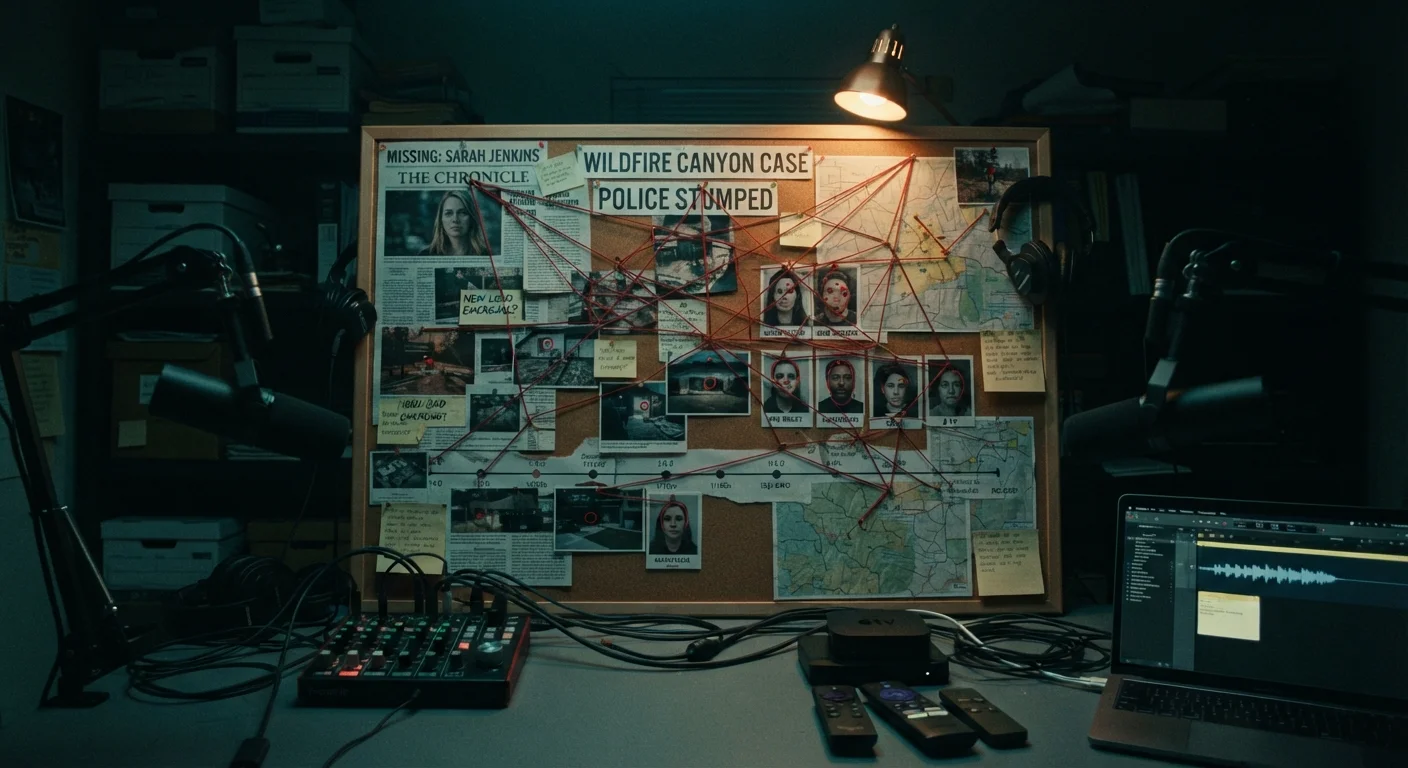
True crime has moved from niche interest to mainstream obsession. Researchers and critics weigh in on why — and at what cost.
Key takeaways
- True crime has ancient roots but became a mass-market phenomenon through podcasting and streaming.
- The genre's popularity is driven by psychology, not morbidity — curiosity, pattern recognition, and empathy all play roles.
- Critics raise valid concerns about victim exploitation and the glamorization of perpetrators.
- Dedicated true crime communities have occasionally contributed to real investigative breakthroughs.
- The genre reflects broader cultural conversations about justice, race, gender, and institutional trust.
- Its dominance in the streaming landscape shows no statistical signs of fading.
A Genre as Old as Tabloid Ink
Long before podcasts or streaming queues, people gathered around printed pamphlets recounting the lurid details of public executions. True crime's appetite for real-world transgression is not a product of the algorithm — it's one of the oldest commercial storytelling impulses in Western culture. Victorian-era crime journalism, mid-century paperback murder chronicles, and the literary nonfiction of writers like Truman Capote all laid groundwork for what audiences consume today in on-demand audio and video.
What changed isn't human curiosity; it's distribution. When the podcast Serial debuted in 2014 and became the fastest podcast in history to reach five million downloads at the time, it proved that the format could carry long-form investigative narrative to a mass audience with almost no production barrier. The streaming boom that followed opened a second front: documentary series that could unfold a single case across multiple episodes, building tension the way prestige drama does. True crime didn't become popular — it became accessible.
Understanding why it dominates the national conversation today requires looking at that infrastructural shift alongside something more fundamental: the psychological hooks the genre has always exploited. Much like viral cultural moments, true crime taps into emotional triggers — suspense, moral outrage, the desire for resolution — that reliably generate engagement.
What the Psychology Actually Says
Critics who dismiss true crime fandom as simple morbid curiosity are working from an incomplete model. Researchers studying media consumption and criminal psychology have identified a cluster of cognitive and emotional drivers that make the genre genuinely compelling rather than merely sensational.
Pattern recognition is one. True crime narratives are structured as puzzles — even when the outcome is known — and human brains are wired to find satisfaction in following a sequence toward resolution. The genre also activates empathy: listeners and viewers report feeling profound identification with victims, which can translate into a heightened sense of social awareness about danger, justice, and institutional failure.
Top 3
True crime's consistent podcast chart ranking in the U.S.
Industry trackers including Edison Research have consistently placed true crime among the top three most-consumed podcast genres among American adults.
~74%
Share of true crime podcast audience identifying as female
Survey data published by podcast analytics firm Podtrac and others has repeatedly found that women make up a substantial majority of true crime podcast listeners in the U.S.
175M+
Estimated global downloads of 'Serial' across its run
NPR and Serial Productions have cited download figures in this range, reflecting the podcast's role in mainstreaming long-form true crime audio storytelling.
There's also a documented gender dimension that researchers have taken seriously. Studies including survey work published in academic journals focused on media psychology consistently find that women are disproportionately drawn to true crime content. One frequently cited explanation — grounded in evolutionary psychology — is that content centered on predatory behavior may function as a form of threat calibration: understanding how crimes happen as a way of processing risk. This doesn't mean women consume true crime out of fear, but it does suggest the genre serves purposes beyond entertainment.
The Ethics That Come With the Territory
The genre's explosive growth has outpaced the ethical conversations that should surround it. Criticism tends to cluster around two concerns: the treatment of victims and the treatment of perpetrators.
Victim advocacy groups have long argued that true crime storytelling — particularly in its more commercialized forms — reduces real people to plot devices. Families of victims often report not being consulted before their loved ones' cases become podcast material. In some instances, renewed media attention has reopened wounds that were only beginning to heal. The question of who profits from retelling real trauma, and who bears the cost, is not rhetorical.
On the perpetrator side, critics have noted that documentary and narrative treatment can veer into glamorization. When a convicted killer receives Netflix-level production values and tens of millions of viewers, the line between accountability journalism and celebrity-making grows blurry. This concern echoes debates about how accountability and public attention interact — media coverage shapes moral judgment in ways that aren't always predictable or fair.
Quality in the genre is identifiable, even if the market doesn't always reward it. The strongest true crime work treats victims as full human beings, is transparent about evidentiary limits, and engages directly with the ethical stakes of the storytelling itself.
When Audiences Become Investigators
One of the stranger and more consequential developments in true crime culture is the emergence of amateur investigative communities — Reddit threads, Facebook groups, and Discord servers where audience members pool information, analyze evidence, and occasionally surface leads that professional investigators have missed.
The outcomes have been genuinely mixed. In some cases, these communities have contributed to real momentum on cold cases. In others, they've wrongly identified innocent people as suspects, causing real reputational damage that no retraction fully repairs. The internet's capacity to amplify both useful information and damaging misinformation is on particularly stark display in true crime communities.
This participatory dimension is part of what keeps the genre culturally sticky in ways that, say, scripted procedurals simply cannot replicate. Where scripted drama offers catharsis, true crime offers something closer to civic engagement — a feeling that the audience is part of a living inquiry. It's a seductive proposition, and one that carries real responsibility.
How to Engage With True Crime Thoughtfully
Before diving into a new documentary or podcast series, it's worth pausing to ask who produced it, whether affected families were involved or consulted, and how the content treats victims. Look for content that is transparent about what's proven versus speculated. Setting limits on consumption — particularly late-night bingeing — can also help manage any anxiety the genre may amplify.
Why the Genre Reflects — and Refracts — Cultural Anxieties
True crime cases rarely exist in a vacuum. They arrive loaded with context about race, class, gender, and the reliability of institutions — and audiences know it. High-profile cases involving wrongful convictions have fueled public skepticism about prosecutorial practices. Cases where victims of color received less investigative attention than white victims have sharpened criticism of how law enforcement prioritizes resources. The genre, whether it intends to or not, frequently becomes a vehicle for processing systemic grievances.
It's worth noting that this dynamic can cut multiple directions. True crime content has both challenged and reinforced existing biases depending on its framing. Researchers studying the genre caution against treating any single documentary or podcast as a reliable lens on criminal justice — a reminder that mistaking narrative for social reality is an easy error to make when storytelling is this emotionally effective.
What seems clear is that true crime functions as a kind of cultural barometer. When audiences flock to a particular case or series, they're not just seeking entertainment — they're working through something. The genre won't go away because what it's processing — fear, injustice, the search for meaning in senseless events — never goes away either.
Frequently Asked Questions
All published content on this website is for informational and educational purposes only and should not be taken as professional advice. We recommend that readers seek expert opinion before making any decisions. The website is not responsible for any actions taken based on the information provided on this website. We are not liable for any inaccuracies, modifications, or omissions in information. Moreover, external links or third-party content are provided for convenience; we are not liable for their correctness. Users are advised to verify every piece of information before they use it for any purpose.