
Robot Vacuums: What Changes Once You Actually Own One

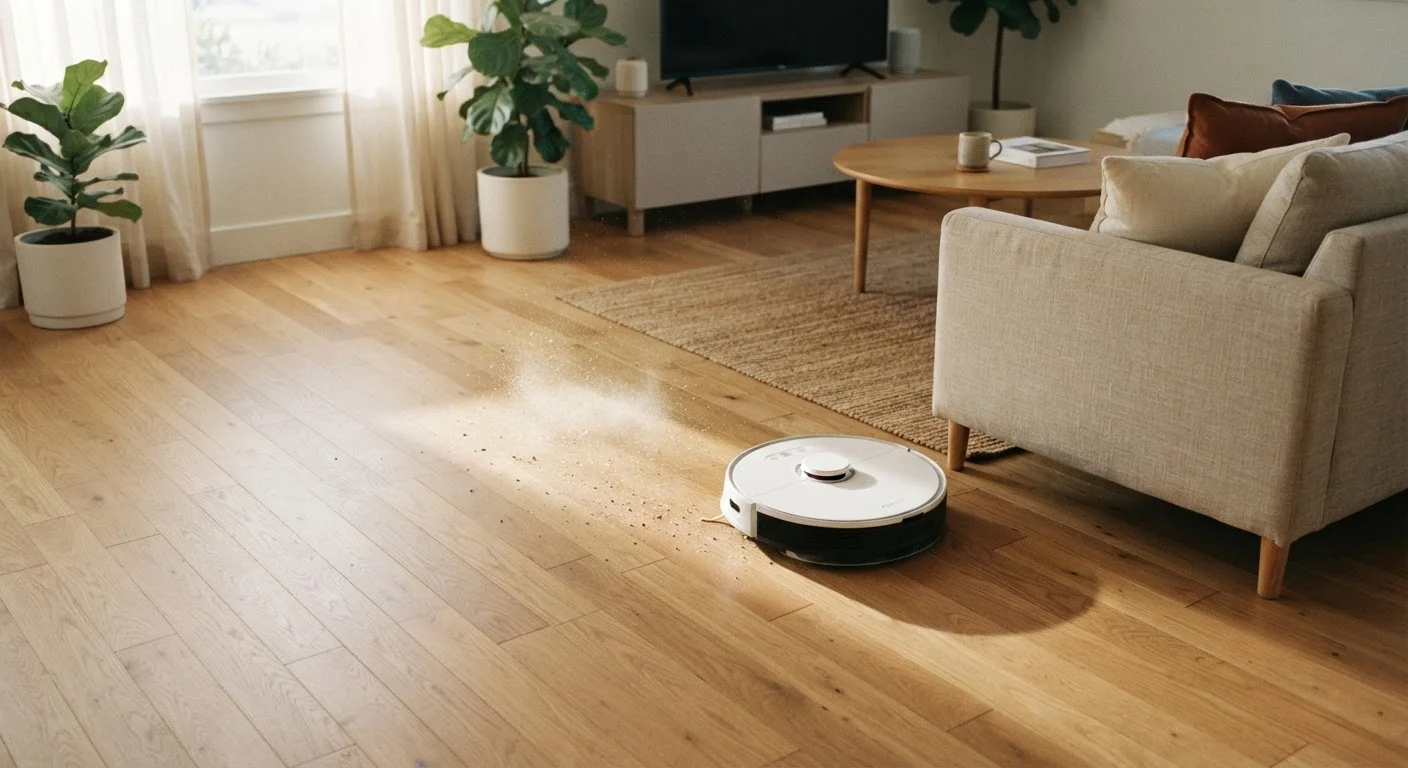
Robot vacuums look impressive in demos, but daily life with one is different. Here's an honest look at the trade-offs before you commit.
Our Verdict
Robot vacuums deliver genuine, meaningful convenience for the right household — but they work best as a supplement to occasional deep cleaning, not a total replacement for it. The learning curve is mild, but the maintenance commitment is real and ongoing. Buyers who go in with accurate expectations tend to be satisfied; those expecting a fully hands-off experience often aren't.
Best suited to pet owners, busy households with mostly open floor plans, and anyone who wants to reduce the frequency of manual vacuuming rather than eliminate it entirely.
Key takeaways
- Robot vacuums reduce daily floor-cleaning effort but still require regular human maintenance.
- Cluttered or multi-level homes create genuine navigation challenges for most models.
- The convenience benefit is most consistent for pet owners and people with busy schedules.
- Setup and scheduling are simpler than many buyers expect, even for non-technical users.
- Long-term running costs — filters, brushes, and bags — add up and deserve attention before purchase.
The Honest First Week
The first few days with a robot vacuum are a mix of genuine delight and small surprises. The device maps your home, bumps into a few chair legs, and — if you have pets — almost certainly picks up more hair than you expected was on the floor. That part feels like a win.
What catches most new owners off guard is the prep work. Robot vacuums navigate by sensing obstacles, but they can't lift a phone charger cable out of their path or step over a low-profile throw rug that bunches at the edge. Before each run, many users find themselves doing a quick "robot sweep" — picking up socks, tucking away cables, and repositioning furniture fringe. It becomes routine quickly, but it's worth knowing it exists before you assume the device is entirely autonomous.
If you're thinking through the broader setup process, getting your first smart home device running is a useful frame for understanding what early ownership actually involves.
Where Robot Vacuums Genuinely Shine
The strongest case for a robot vacuum is maintenance cleaning — keeping floors from building up dust and pet hair between deeper manual sessions. Set it on a daily or every-other-day schedule, and the baseline cleanliness of your home improves noticeably without any active effort on your part.
Keeps floors cleaner with minimal daily effort
Scheduled runs handle routine dust, debris, and pet hair accumulation automatically, so floors stay at a higher baseline cleanliness between manual deep-cleaning sessions.
Runs while you're away or asleep
Scheduling a cycle during work hours or overnight means cleaning happens without consuming any of your active time, which is the core convenience most owners cite.
Especially effective for pet hair households
Frequent automated runs prevent pet hair from building up on hard floors and low-pile rugs, reducing allergen accumulation and the visible layer of shedding that builds between manual cleans.
App controls add useful day-to-day flexibility
Starting, pausing, or setting no-go zones remotely — such as keeping the device away from a pet's water bowl — gives owners meaningful control without requiring them to be home.
Handles mixed floor surfaces without manual switching
Most current models transition smoothly between hardwood, tile, and low-pile carpet, making them practical in homes that have more than one flooring type.
Scheduling is a standout feature that owners consistently mention. The ability to run a cleaning cycle while you're at work, or overnight, means you return to a tidier space without dedicating weekend time to it. For households with dogs or cats that shed heavily, this alone can feel transformative.
Most current models also handle the transition between hardwood, tile, and low-pile carpet without intervention, which makes them genuinely useful in mixed-flooring homes rather than just single-surface spaces.
The Real Limitations You'll Live With
Robot vacuums don't replace a deep clean. They can't get into corners as thoroughly as an upright vacuum with a crevice tool, they struggle with high-pile rugs, and they can't carry themselves between floors — meaning a multi-story home effectively needs either multiple units or manual transfers.
Doesn't replace deep or corner cleaning
Robot vacuums miss edges, corners, and areas under furniture that sit below their sensor range, meaning a thorough manual vacuum session remains necessary on a periodic basis.
Requires regular maintenance to keep performing well
Dustbins need emptying every few runs, brush rolls collect tangled hair, and filters wear out — the device demands consistent upkeep even though it cleans autonomously.
Floor prep before each run is often necessary
Loose cables, low-profile rugs, and small items left on the floor can jam or confuse the device, requiring a quick tidy-up before starting a cycle.
Can't navigate between floors on its own
Multi-story homes require either multiple units or manual transport of the device between levels, which significantly reduces the hands-off convenience for those households.
Ongoing consumable costs are easy to overlook
Replacement filters, brush rolls, and — where applicable — self-emptying bags add recurring costs that can meaningfully affect the total cost of ownership over one to two years.
Noise level is comparable to a standard vacuum
Most models produce sustained operational noise that makes running them at night or during calls impractical, limiting scheduling flexibility for people working from home.
Maintenance is the part that surprises owners most. The dustbin fills quickly in active households and needs emptying every one to three runs. Brush rolls tangle with hair and require periodic cleaning. Filters wear out and need replacing on a schedule. Models with self-emptying docks reduce some of this burden, but those models carry a meaningfully higher upfront and ongoing cost.
The practical pre-purchase checklist approach is especially relevant here — calculating filter and brush replacement costs over a year often changes how people evaluate the overall value of a given model.
Noise, Scheduling, and Fitting Into Daily Life
Robot vacuums are not silent. Most operate at a noise level comparable to a traditional vacuum, though the sound profile differs — it's sustained and lower-pitched rather than the burst you'd get from a manual pass. Scheduling runs during daytime hours when the home is empty solves this for most people, but it's a relevant factor for remote workers, light sleepers, or households with young children napping.
App Dependency: What to Know Upfront
Most robot vacuums today are designed around companion smartphone apps for scheduling, mapping, and zone control. This adds genuine convenience, but it also means your experience can be affected by app quality, software updates, and Wi-Fi reliability. Before committing to a model, it's worth checking whether core functions like start and stop are still accessible via physical buttons on the device itself — they usually are, but scheduling and floor mapping typically require the app to work as intended.
App connectivity is a genuine usability improvement over older models. Being able to start, pause, or redirect a cleaning run from your phone — or to set no-go zones around a pet's water bowl — adds practical flexibility. However, app dependency can become a friction point if the companion software receives poor updates or if your home Wi-Fi is unreliable. The core cleaning function typically still works via on-device buttons, but scheduling and mapping usually require the app.
For a wider look at how this trade-off between automation and control plays out across devices, the trade-offs behind a fully automated world is worth reading alongside this one.
Is the Adjustment Worth It?
For most households that commit to a realistic workflow — light floor-prep before runs, regular bin emptying, and monthly brush maintenance — robot vacuums deliver on their core promise. Floors stay cleaner with less conscious effort, and the time savings accumulate meaningfully over weeks and months.
~70%
Owners who use scheduling features regularly
Consumer research from market analysts has consistently found that scheduled automation — not on-demand cleaning — is the feature robot vacuum owners rely on most in daily use.
2–3x
Cleaning frequency increase after ownership
Surveys of robot vacuum owners suggest floors are cleaned two to three times more frequently than before ownership, largely because automation removes the effort barrier.
The adjustment period is real but short. Most owners report settling into a comfortable routine within two to three weeks. The people who abandon the device are more often those who expected zero involvement, not those who understood it as a high-frequency maintenance tool that still needs a human in the loop.
If you're building out a broader set of smart home tools, the complete guide to living with everyday smart gadgets covers how devices like this fit into a practical, sustainable home setup over time.
All published content on this website is for informational and educational purposes only and should not be taken as professional advice. We recommend that readers seek expert opinion before making any decisions. The website is not responsible for any actions taken based on the information provided on this website. We are not liable for any inaccuracies, modifications, or omissions in information. Moreover, external links or third-party content are provided for convenience; we are not liable for their correctness. Users are advised to verify every piece of information before they use it for any purpose.