
The Trade-Offs Behind a Fully Automated World

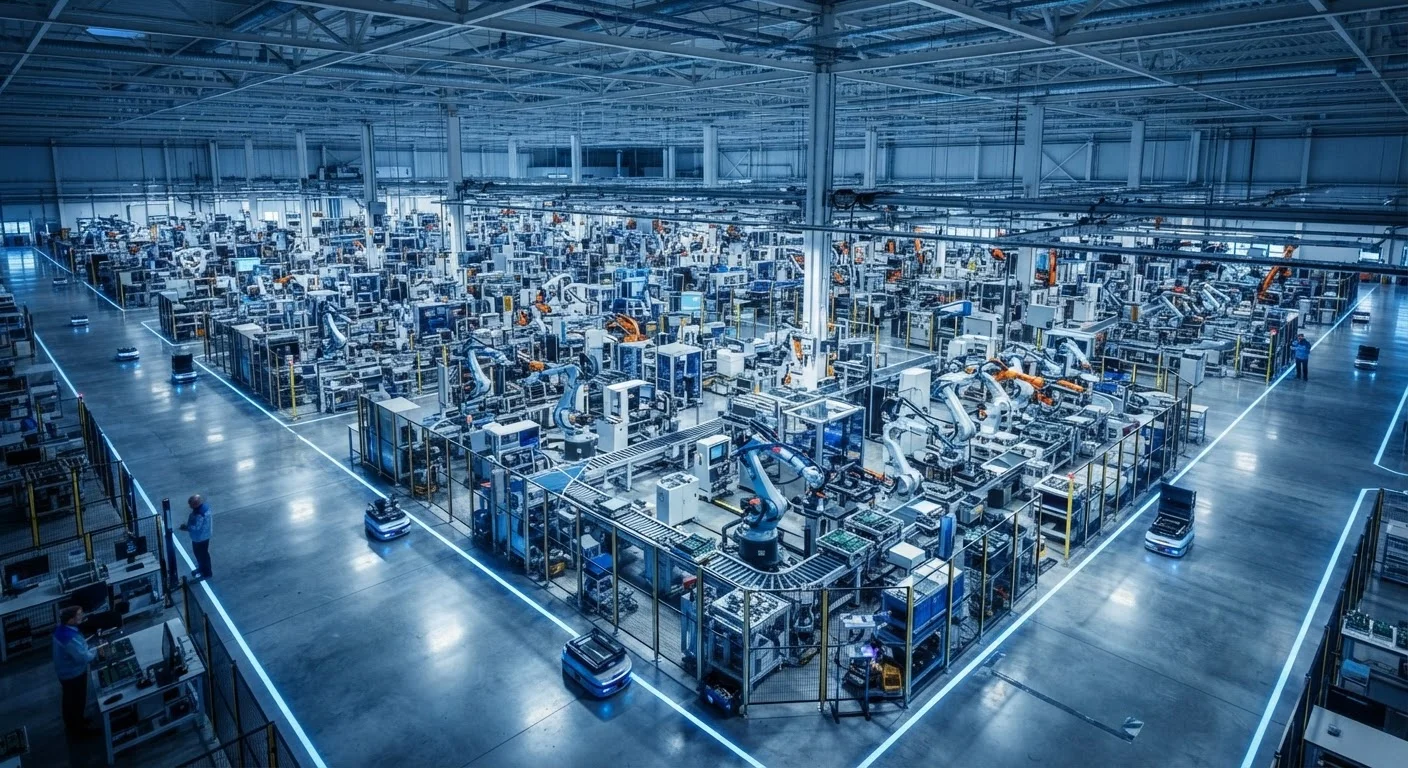
Automation promises efficiency and convenience, but it also raises real questions about work, decision-making, and accountability. A balanced look at both sides.
Our Verdict
A fully automated world offers genuine gains in productivity, safety, and convenience — but those gains come with structural costs that fall unevenly on workers, communities, and accountability frameworks. Automation works best as a tool that augments human judgment rather than one that replaces it entirely. The more consequential the decision, the more human oversight matters.
Readers trying to think critically about automation's role in their work, finances, and daily life — rather than accepting the hype or the fear at face value.
Key takeaways
- Automation dramatically improves efficiency and consistency in repetitive, high-volume tasks.
- Displaced workers face genuine retraining challenges that market forces alone may not resolve.
- Fully automated systems can fail catastrophically when they encounter edge cases they weren't designed for.
- Accountability becomes murky when a machine, not a person, makes a consequential decision.
- The benefits of automation are unevenly distributed across income levels and industries.
What 'Full Automation' Actually Means
When people talk about a fully automated world, they usually mean systems that can perform tasks — physical or cognitive — without ongoing human input. That covers a wide range: warehouse robots sorting packages, algorithms approving loan applications, self-driving vehicles navigating city streets, and AI tools generating legal documents or medical summaries.
The word full is doing a lot of work here. In practice, automation exists on a spectrum. A thermostat that adjusts the temperature is automated. So is a trading algorithm executing thousands of stock orders per second. What's changed in recent years is that automation has moved from purely physical, rule-based tasks into domains that once required human judgment — pattern recognition, language, diagnosis, creative output.
Understanding that spectrum matters, because the trade-offs shift depending on where on it you're looking. Automating a packaging line is a different proposition than automating a parole decision. This article focuses on the broader picture: what society gains and gives up as automation expands across more of daily life. For a closer look at how automation applies to personal finance, see how financial automation tools work.
The Case For: What Automation Does Well
The productivity argument for automation is well-documented. Machines don't tire, don't get distracted, and can operate continuously at a consistent quality level. In manufacturing, healthcare logistics, and data processing, that consistency translates directly into fewer errors and higher throughput.
Dramatically improves speed and output consistency
Automated systems can perform repetitive tasks far faster than humans and maintain quality across millions of iterations without fatigue. This drives measurable gains in manufacturing output, logistics throughput, and data processing.
Reduces human exposure to dangerous environments
Automating hazardous tasks — in mining, chemical plants, and infrastructure inspection — lowers injury rates and protects workers from environments where human error under stress can be lethal.
Frees cognitive capacity for higher-value work
When routine decisions are handled automatically, workers and individuals can redirect attention to tasks requiring creativity, empathy, and judgment — areas where human performance is still superior.
Lowers error rates in structured, rule-based tasks
In domains like medical billing, inventory management, and financial reconciliation, automated systems produce fewer clerical errors than human workers performing the same repetitive checks.
Can make services more accessible and affordable
Automation reduces the marginal cost of delivering services, which can translate into lower prices for consumers and broader access to things like financial tools, translation, and educational resources.
Safety is another compelling argument. Automating hazardous tasks — mining, chemical handling, deep-sea inspection — removes human workers from environments where injury risk is high. The same logic applies to road transport: driver error accounts for the vast majority of traffic accidents, which is why automated driving assistance features have meaningfully reduced certain collision types in vehicles where they're available.
There's also a cognitive load argument. When routine decisions are handled automatically, people can redirect attention toward higher-order thinking. Even something as mundane as a robot vacuum illustrates this: the time and mental energy freed up by delegating a repetitive task has real value, even if it seems trivial.
The Case Against: Where Automation Creates Problems
The costs of automation are real, and they tend to land hardest on people who were already economically vulnerable. Labor displacement is the most visible concern: when a process is automated, the workers who performed it don't automatically retrain for higher-skilled roles. Research consistently shows that retraining programs produce mixed results, and the timeline from displacement to re-employment can span years.
Displaces workers faster than retraining can absorb
Labor displacement from automation often outpaces the availability of retraining pathways. Workers in mid-wage, routine roles face the longest adjustment periods and the least institutional support.
Fails unpredictably in novel or edge-case situations
Automated systems are optimized for known conditions. When they encounter inputs outside their training or design parameters, failures can be abrupt and difficult to contain without human intervention.
Blurs accountability when errors cause harm
Determining legal and moral responsibility when an automated system causes injury or injustice — in lending, healthcare, or criminal justice — remains legally and ethically unresolved in most jurisdictions.
Concentrates economic gains among capital owners
Productivity gains from automation tend to flow to shareholders and technology developers rather than to the workforce. This can widen income inequality even as overall economic output grows.
Creates systemic risks through over-reliance
Societies that become deeply dependent on automated systems — for supply chains, utilities, or financial infrastructure — become more vulnerable to large-scale disruptions from software failures, cyberattacks, or cascading errors.
Encodes existing biases into scalable decisions
Automated decision-making systems trained on historical data can perpetuate and amplify existing patterns of discrimination in hiring, lending, and law enforcement at a scale no human process could match.
Beyond employment, there's a reliability problem that often gets underplayed. Automated systems are optimized for the conditions they were trained or designed for. When they encounter situations outside those parameters — a rare weather event, an unusual transaction pattern, an edge case in a medical image — they can fail in ways that are hard to predict and fast to cascade. A human operator with contextual judgment might catch the anomaly; an automated system may not.
Accountability is perhaps the trickiest issue. When an automated system makes a consequential error — a wrongful denial of benefits, a misdiagnosis flagged by an AI tool, a self-driving vehicle collision — determining who is responsible is genuinely difficult. The developer? The deploying organization? The regulator who approved it? This ambiguity isn't just philosophical; it affects how victims seek recourse and how incentives for safety are structured. For a related look at how AI systems can present false confidence, see when AI confidence and accuracy diverge.
The Equity Problem Automation Creates
One of the less-discussed trade-offs is distributional: the benefits and costs of automation are not shared equally. Productivity gains tend to accrue to capital owners and shareholders. The workers displaced by automation — often in routine, mid-wage roles — rarely share in those gains directly.
~60%
Jobs with partially automatable tasks
McKinsey Global Institute research has estimated that roughly 60% of occupations have at least 30% of their constituent tasks that are technically automatable with current technology.
85M
Jobs potentially displaced by 2025
The World Economic Forum's Future of Jobs Report projected that 85 million jobs could be displaced by automation by 2025, while also forecasting 97 million new roles emerging.
94%
Of serious traffic crashes involving human error
The U.S. National Highway Traffic Safety Administration has attributed approximately 94% of serious crashes to human choice or error — a primary argument for automated driving assistance.
At the same time, automation can reduce prices for goods and services, which does benefit consumers broadly. Grocery logistics automation, for instance, can lower food costs. But lower prices don't compensate for lost wages or eroded community tax bases when a factory closes.
The geographic dimension compounds this. Automation tends to concentrate economic activity in high-tech urban centers while accelerating decline in communities built around industries that are being automated. This isn't an argument against automation — it's an argument for thinking carefully about who bears adjustment costs and whether policy keeps pace with technological change.
Policy Hasn't Kept Pace With Technology
Regulatory frameworks governing automated decision-making — in employment, lending, healthcare, and criminal justice — lag significantly behind the pace of deployment. In the U.S., there is currently no comprehensive federal law governing algorithmic accountability. This gap means that the harms automation can cause often have no clear legal remedy. Advocacy organizations and some state legislatures have pushed for algorithmic impact assessments, but adoption remains uneven.
Living With Automation: Where Human Judgment Still Belongs
The question isn't whether automation should exist — it already does, and its benefits in many domains are clear. The more useful question is: where should human oversight remain non-negotiable?
A reasonable framework: the higher the stakes of a decision and the less predictable the environment, the more human judgment should remain in the loop. Automating appointment reminders is low-stakes. Automating sentencing recommendations in criminal courts is high-stakes and contested. Most real-world applications fall somewhere between those poles, which is why understanding who controls automated systems — and how — matters for everyday citizens, not just policymakers.
Practically, this means being a thoughtful consumer of automated tools rather than a passive one. Automated financial systems, for example, can reduce decision fatigue and catch errors — but they work best when you understand what they're doing and why. The same applies at work: automation that handles routine tasks can free up time for the relational and strategic work that machines genuinely can't replicate. See our look at how shifting work structures affect daily life for a parallel set of trade-offs in how we work.
All published content on this website is for informational and educational purposes only and should not be taken as professional advice. We recommend that readers seek expert opinion before making any decisions. The website is not responsible for any actions taken based on the information provided on this website. We are not liable for any inaccuracies, modifications, or omissions in information. Moreover, external links or third-party content are provided for convenience; we are not liable for their correctness. Users are advised to verify every piece of information before they use it for any purpose.