
The Honest Case for Renting Art Instead of Buying It

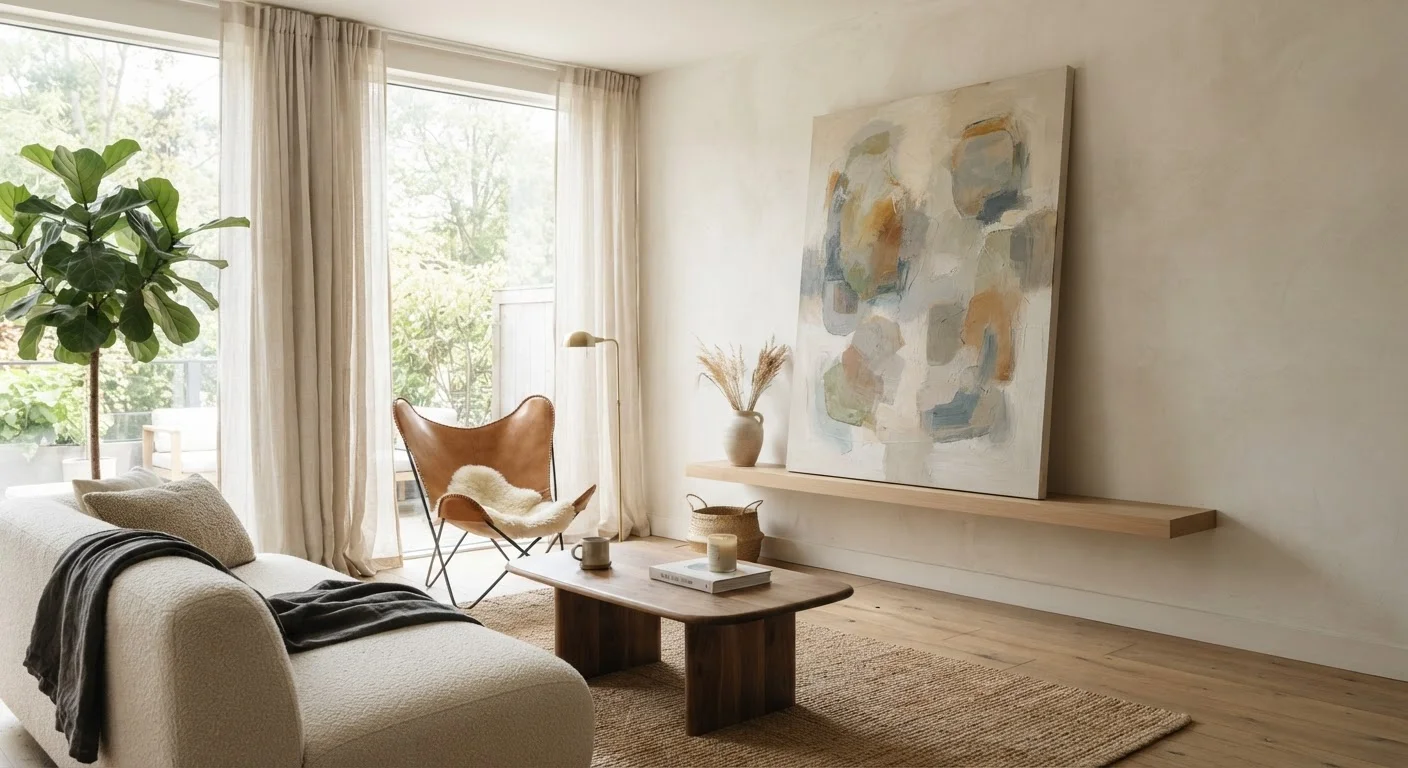
Art rental programs let you live with original work without a long-term commitment. A balanced look at what the arrangement does and doesn't offer.
Our Verdict
Art rental is a genuinely practical option for people who value living with original work but aren't ready — or don't want — to commit to ownership. It lowers the financial and logistical barriers to decorating with real art, though it comes with ongoing costs and no lasting asset value. The arrangement rewards the experience of art over its accumulation.
Renters, frequent movers, design-curious beginners, and anyone who wants to rotate artwork seasonally without the cost and risk of buying outright.
Key takeaways
- Art rental programs allow you to display original works in your home for a monthly or annual fee.
- Renting suits people who want flexibility, variety, or access to work beyond their purchase budget.
- Most programs require careful handling and may limit where or how you display pieces.
- Renting builds no equity — fees paid do not translate to ownership unless a purchase option exists.
- Art rentals work especially well in apartments, rental homes, or transitional living situations.
What Art Rental Programs Actually Offer
Art rental programs — offered by museum associations, artist cooperatives, and private galleries — let individuals borrow original paintings, photographs, sculptures, and mixed-media works for a recurring fee, typically monthly or annual. The model has existed in various forms since the mid-twentieth century, with museum art rental galleries in cities like San Francisco, Toronto, and Boston running programs for decades.
Most programs work on a straightforward basis: you browse available inventory, select a piece, pay a rental fee (commonly a percentage of the work's retail value per year), and arrange pickup or delivery. At the end of your rental term, you can return the piece, exchange it for something new, or — in many cases — apply a portion of your rental fees toward purchase. Fees, return policies, and purchase options vary significantly between programs, so reading the terms carefully before committing is essential.
If you're working with a rented apartment or a space you don't plan to stay in long, pairing art rental with the strategies covered in decorating a rental without losing your deposit can help you display pieces confidently without damaging walls or risking your security deposit.
The Real Advantages of Renting Art
The strongest argument for renting is access. Original art — even from emerging or mid-career artists — can carry price tags that put outright ownership out of reach for many households. Renting lets you live with those works on a fraction of the cost, often for a few dollars a day.
Access to original art at a fraction of purchase cost
Rental fees typically run at a small percentage of a work's retail value annually, making original paintings and sculptures accessible to households with modest decorating budgets.
Freedom to rotate works as your taste evolves
Most programs allow exchanges at the end of a term, so you can refresh your walls seasonally or whenever a room's color palette or furniture changes.
Low-risk introduction to living with original art
Spending months with a piece in your actual home teaches you what styles, scales, and moods genuinely work for you — something no gallery visit or online browse can replicate.
Practical solution for renters and frequent movers
People who relocate often or live in temporary spaces can enjoy curated walls without the logistical and financial risk of transporting or reselling owned artwork.
Some programs offer rent-to-own credit
A number of museum and gallery rental programs apply a portion of rental fees toward the eventual purchase price, giving you a path to ownership if a piece earns a permanent place in your home.
There's also a decorating logic to it. Tastes change, rooms get repainted, furniture gets replaced. A piece that feels perfect in one season or life chapter may feel wrong in the next. Renting allows that kind of evolution without the guilt or financial loss that comes with reselling art you no longer love. If you're experimenting with building a more composed wall arrangement, the rotating nature of rentals pairs naturally with the planning principles in gallery walls that actually hang together.
For people new to living with art, rental is also a low-stakes education. Spending several months with a piece teaches you far more about what you actually respond to than browsing images on a screen ever could.
The Honest Disadvantages to Weigh
The most significant drawback is straightforward: you are paying for an experience, not building an asset. Unlike purchasing art — where the work retains at least some resale value, however unpredictable — rental fees disappear entirely unless the program offers a rent-to-own credit. Over several years, cumulative rental costs can approach or exceed a work's purchase price without ever resulting in ownership.
Fees build no equity or lasting asset value
Unless a rent-to-own credit applies, money paid in rental fees is spent entirely on temporary access — over time, cumulative costs can rival a purchase price without any ownership to show for it.
Handling requirements can be restrictive
Borrowed works typically cannot be hung in direct sunlight or high-humidity environments, which may limit where you display them and require adjusting your room layout accordingly.
Damage liability can be significant
Accidental scratches, water damage, or breakage can result in fees well beyond the cost of the rental itself; verifying whether your existing insurance covers borrowed art is essential before signing.
Inventory depends entirely on program offerings
You are limited to whatever a particular program has available — niche styles, specific artists, or unusual formats may simply not be in circulation when you want them.
No emotional satisfaction of ownership or provenance
For people drawn to collecting as a long-term practice, renting lacks the sense of stewardship, personal history, and relationship with an artist that comes with actually owning a work.
Handling responsibility is another real consideration. Rental programs require you to treat borrowed work with care — no direct sunlight, no high-humidity rooms, careful handling during moves. Accidental damage can result in fees that dwarf the rental cost, so understanding your liability and whether your renter's or homeowner's insurance covers borrowed artwork matters before you sign anything.
It's also worth acknowledging what renting doesn't give you emotionally. If you're drawn to the satisfactions of collecting — the sense of ownership, provenance, and personal curation over time — rental will feel hollow by comparison. The two models serve genuinely different relationships with objects.
How to Decide If It's Right for Your Home
Start by being honest about your situation. If you're in a transitional phase — new city, rented apartment, uncertain about your longer-term style direction — art rental is likely a smart fit. It lets you live with real work without locking in decisions you're not ready to make.
Check Insurance Before You Borrow
Standard renter's and homeowner's insurance policies vary widely in whether they cover borrowed or rented property. Before accepting a piece into your home, contact your insurance provider to confirm your coverage, and ask the rental program what liability you assume for accidental damage. Some programs offer optional damage coverage for an additional fee — worth considering for higher-value works.
If you're in a stable home with walls you've committed to and a developing sense of the aesthetic you want to build, buying makes more long-term sense — even if you start modestly with works from emerging artists or open studio events. Mixing pieces from different periods and sources, as explored in mixing old and new pieces in a room, is achievable at almost any budget when you're buying rather than renting.
Some people find a hybrid approach useful: rent one or two statement pieces while slowly purchasing smaller works they're certain about. This gives you flexibility on the walls that matter most while still building a collection over time. Whatever path you choose, the goal is a home that feels genuinely yours — not a showroom, and not a compromise.
All published content on this website is for informational and educational purposes only and should not be taken as professional advice. We recommend that readers seek expert opinion before making any decisions. The website is not responsible for any actions taken based on the information provided on this website. We are not liable for any inaccuracies, modifications, or omissions in information. Moreover, external links or third-party content are provided for convenience; we are not liable for their correctness. Users are advised to verify every piece of information before they use it for any purpose.