
Annual vs. Perennial Plants: Planning a Garden That Comes Back

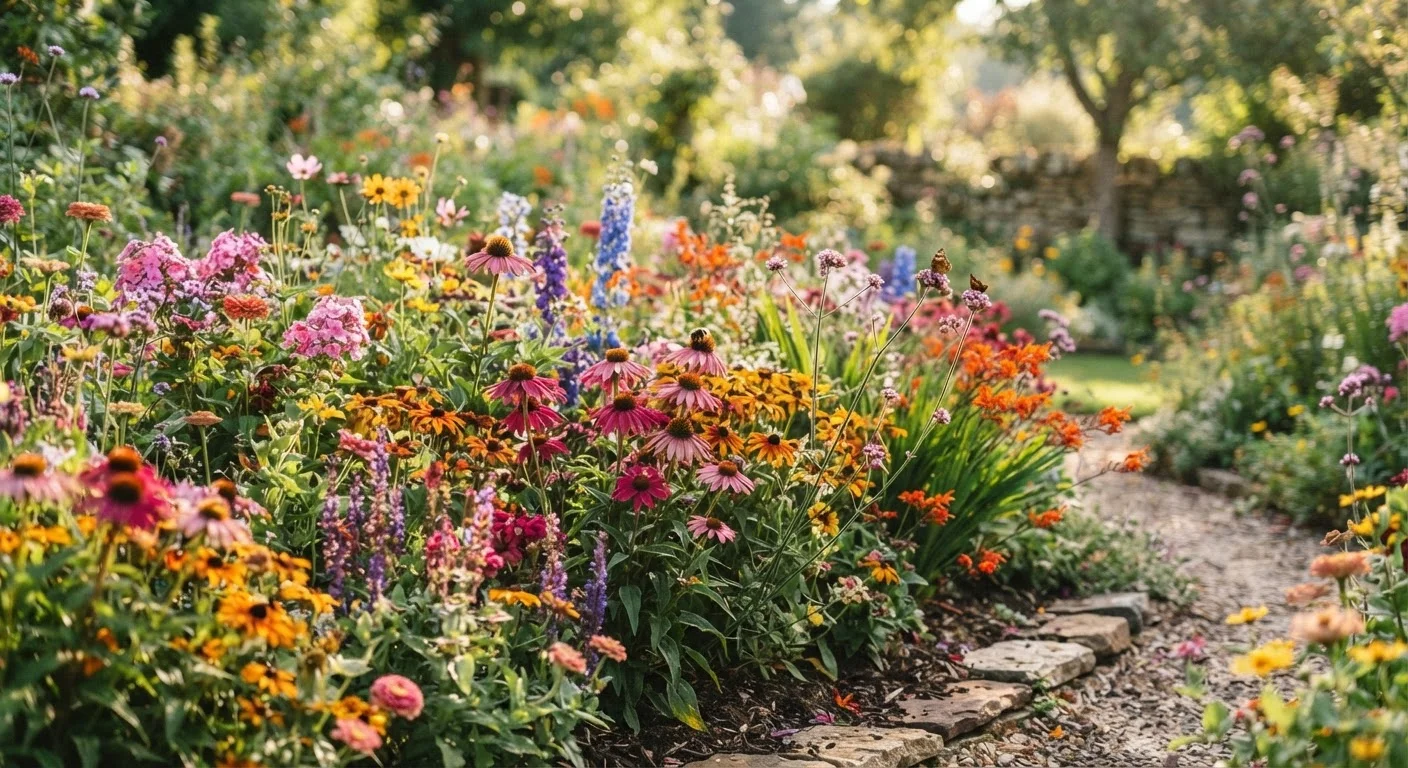
Understanding the difference between annuals and perennials helps you balance colour, cost, and long-term garden structure.
Option A
Annual Plants
The seasonal performers that deliver bold, immediate colour.
Best for: Gardeners who want flexible, high-impact displays that can be changed each growing season.
Option B
Perennial Plants
The long-term investment that builds garden structure year after year.
Best for: Gardeners looking to reduce replanting effort and establish a reliable, evolving garden backbone.
Key takeaways
- Annuals complete their full life cycle in one growing season, requiring replanting each year.
- Perennials return each year from their root system, building in size and impact over time.
- Annuals generally offer longer and more intense bloom periods within a single season.
- Perennials typically cost more upfront but reduce long-term replanting expense.
- Most successful gardens combine both types to balance colour, structure, and practicality.
- Matching plants to your USDA Hardiness Zone is essential for perennial success.
What Makes a Plant Annual or Perennial?
The terms annual and perennial describe a plant's life cycle — specifically, how many growing seasons it takes to complete that cycle. Understanding this single distinction will reshape how you shop, plan, and plant.
Annuals germinate, grow, flower, set seed, and die all within one growing season. Because their entire biological mission is reproduction, they tend to bloom abundantly and for a long time. Common examples include zinnias, marigolds, impatiens, and petunias. Once the season ends, the plant is finished — you'll replant or reseed next year.
Perennials complete their above-ground growth cycle in one season, but their root system survives winter dormancy to re-sprout the following spring. Plants like coneflowers (Echinacea), black-eyed Susans, hostas, and daylilies fall into this category. They typically bloom for a shorter window each season than annuals, but they return and often expand year after year.
A third category worth knowing: biennials (such as foxglove and hollyhock) take two years to complete their cycle, blooming in the second year before dying. They're less common in everyday planning but behave like short-lived perennials in practice.
Head-to-Head: Key Differences at a Glance
When deciding how to allocate space and budget in your garden, comparing annuals and perennials across practical criteria helps clarify trade-offs.
| Criterion | Annual Plants | Perennial Plants |
|---|---|---|
| Life cycle | One growing season | Returns each year |
| Bloom duration (per season) | Long — often all season | Shorter — 2–6 weeks typically |
| Upfront cost | Generally lower per plant | Generally higher per plant |
| Long-term cost | Ongoing — replant yearly | Lower over time; dividable |
| Establishment time | Fast — productive first season | Slower — often 2–3 years to peak |
| Design flexibility | High — change yearly | Lower — long-term commitment |
| Winter care needed | None — plant dies | Varies by species and zone |
| Best use in the garden | Colour, gap-filling, trials | Structure, backbone, spreading |
One factor the table can't fully capture is aesthetic rhythm. Annuals tend to give you colour from early summer through frost — a long, high-intensity display. Perennials bloom in waves, each species holding its peak for two to four weeks, which means thoughtful plant selection across bloom times is essential to avoid bare-looking beds mid-season.
If you're just getting started, our bed preparation checklist walks you through the groundwork before any plants go in the ground.
The Real Cost Calculation
Sticker price tells only part of the story. A flat of annual seedlings may cost less than a single perennial specimen, but you'll buy that flat every year. A perennial, once established, can be divided every three to five years and replanted elsewhere in your garden — essentially multiplying your investment for free.
That said, annuals offer one financial advantage that's easy to overlook: low-risk experimentation. Trying a new colour combination or plant variety costs little if it doesn't work out, because you weren't planning to keep it anyway. Perennials represent a longer commitment; a poorly placed perennial may take years of transplanting before you get it right.
2–3 years
Time for perennials to reach full display potential
Most perennial gardening guides note the common rule of thumb: 'sleep, creep, leap' — slow first year, moderate second, full growth by year three.
3–5 years
Typical division interval for established perennials
Dividing clump-forming perennials on this cycle rejuvenates the plant and yields free divisions for expanding planting areas.
For gardeners starting from seed rather than buying transplants, annuals are often easier to start and faster to mature — a meaningful cost reducer. Our guide on seeds vs. seedlings breaks down that decision in full.
Planning a Garden That Uses Both
The most resilient and visually interesting gardens aren't built on one type alone. A practical layered approach works like this:
- Establish a perennial backbone first. Choose perennials suited to your USDA Hardiness Zone and site conditions (sun, soil, moisture). Position them knowing they'll spread — leave them room to grow into. Check your zone at the USDA Plant Hardiness Zone Map if you're unsure.
- Fill gaps with annuals. New perennial plantings often look sparse for the first year or two. Annuals fill that visual space while the perennials settle in, and they help suppress weeds in open soil.
- Use annuals for colour continuity. Many perennials have a defined bloom window. Annuals placed nearby can carry colour through the periods between perennial flushes.
- Plan for succession. Map out which perennials bloom in spring, summer, and late summer or fall. Then decide which annuals will complement or bridge those phases.
A seasonal gardening calendar is a practical tool for tracking when to sow annuals, divide perennials, and prepare beds — matching tasks to the rhythm of the year.
Also consider your watering setup. Perennials often become more drought-tolerant as they establish deeper roots, while some annuals need consistent moisture to keep flowering. Our article on effective watering practices can help you build habits that suit both plant types.
Common Planning Mistakes to Avoid
Even experienced gardeners slip into a few predictable traps when mixing annuals and perennials:
- Planting perennials too close together. They look small at first, but many double or triple in spread within a few seasons. Check mature spread dimensions before planting.
- Ignoring bloom timing. If all your perennials peak in June, the garden may look tired from July onward. Stagger bloom times intentionally.
- Treating all annuals as full-sun plants. Many popular annuals — impatiens and begonias, for example — actually perform better in shade. Match light requirements carefully.
- Neglecting soil preparation for perennials. Because perennials stay put for years, getting their soil conditions right from the start matters more than it does for annuals.
If you're setting up a new growing area, whether raised or in-ground, our comparison of raised beds vs. in-ground planting can help you choose the right structure for your perennial investments.
Half-Hardy Annuals: A Middle Ground
Some plants sold as annuals in colder US climates are actually tender perennials — they'd survive year-round in frost-free zones. Geraniums (Pelargonium), for example, are perennial in USDA Zones 10–11 but treated as annuals in most of the country. If you live in a warm climate, it's worth checking a plant's hardiness zone range before assuming it needs yearly replacement.
All published content on this website is for informational and educational purposes only and should not be taken as professional advice. We recommend that readers seek expert opinion before making any decisions. The website is not responsible for any actions taken based on the information provided on this website. We are not liable for any inaccuracies, modifications, or omissions in information. Moreover, external links or third-party content are provided for convenience; we are not liable for their correctness. Users are advised to verify every piece of information before they use it for any purpose.