
The Streaming Fatigue Problem: Why Having More Choices Feels Like Having None

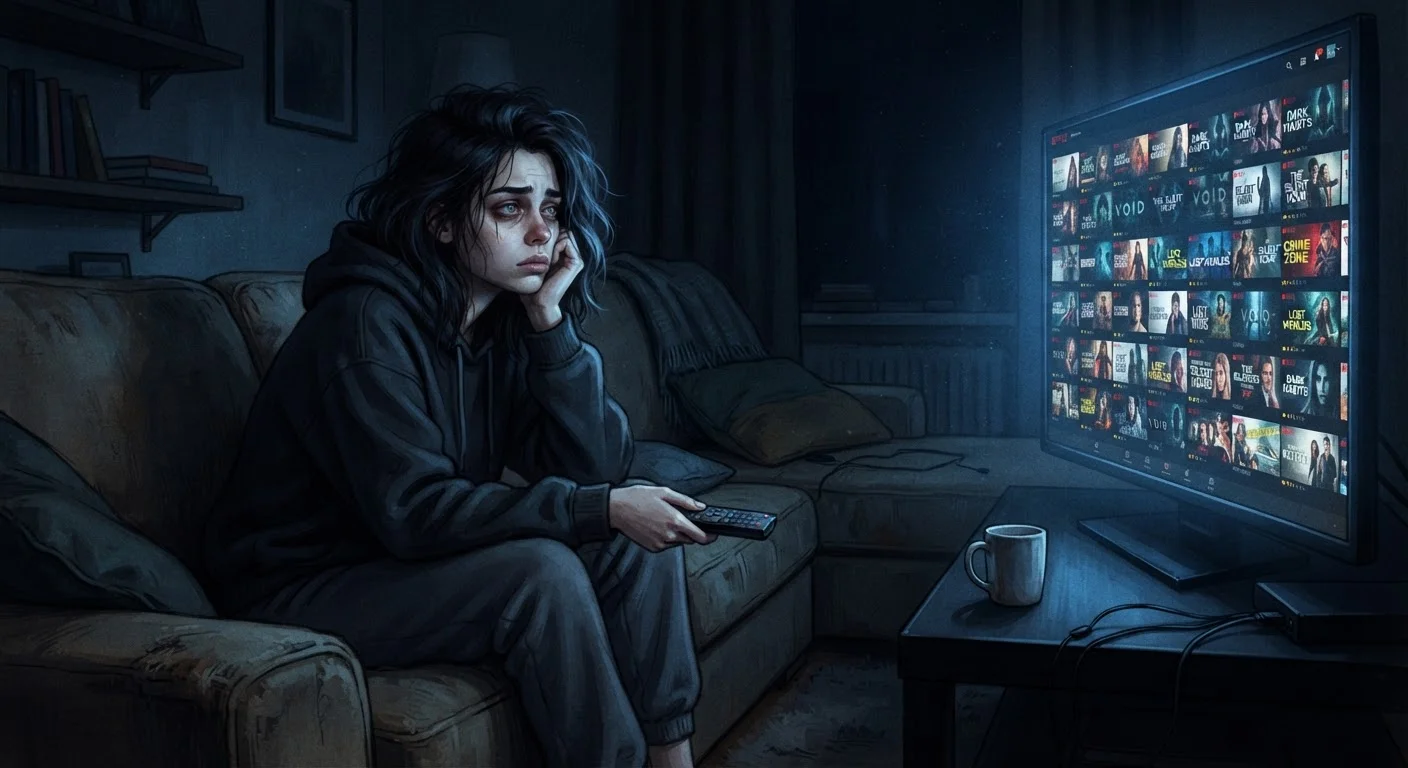
Decision paralysis is real in the age of streaming. Here's what causes it and how viewers can reclaim enjoyment from an overcrowded content landscape.
Key takeaways
- Having dozens of streaming platforms doesn't make choosing what to watch easier — it often makes it harder.
- The paradox of choice is a documented psychological effect where more options lead to less satisfaction.
- Streaming platform algorithms can reinforce viewing habits rather than helping viewers discover genuinely new content.
- Simple personal strategies — like watchlists, genre moods, and platform rotation — can significantly reduce decision paralysis.
- Streaming fatigue is worsened when subscribers feel pressure to 'get their money's worth' from multiple services.
The Paradox of the Infinite Queue
There has never been more television. Hundreds of original series, films, documentaries, and specials are released every year across a growing roster of streaming platforms — and yet a significant number of viewers report spending more time scrolling than actually watching. That irony sits at the heart of streaming fatigue.
The phenomenon isn't just anecdotal. Behavioral psychology has long established that too many choices can be just as paralyzing as too few. When every option requires evaluation, and when the perceived cost of a 'bad pick' feels real, the brain often chooses the path of least resistance: nothing. Or a rewatch of something already familiar and safe.
This connects directly to the fractured state of the broader TV landscape. As the streaming wars have reshaped how Americans watch television, the shared cultural experience of appointment viewing has splintered into dozens of siloed catalogs — each competing loudly for attention, each adding to the cognitive load viewers carry every time they open an app.
Why Your Brain Struggles With the Remote
The psychological mechanism behind streaming fatigue is well-documented. Researcher Barry Schwartz popularized the concept of the 'paradox of choice,' arguing that while some choice is better than none, excessive choice produces anxiety, decision avoidance, and post-decision regret. Streaming platforms — designed to surface as much content as possible — are practically built to trigger this effect.
When you open a streaming app, you're not just choosing a show. You're implicitly evaluating dozens of options against each other, weighing your mood, your available time, your desire for something new versus something comfortable. That's a surprisingly heavy cognitive task, and the brain resists it.
“The secret to happiness is low expectations — and nowhere is this more applicable than in choosing what to watch. The more options we have, the more we worry we're missing the best one.”
— Barry Schwartz, Psychologist and author of 'The Paradox of Choice'
There's also a compounding guilt layer. Subscribers who pay for multiple platforms often feel unspoken pressure to consume enough content to 'earn' each subscription. That pressure transforms leisure into something that feels more like an obligation — which is about as far from relaxation as you can get.
If you're curious about how the underlying streaming ecosystem works — from subscription tiers to algorithm mechanics — a new viewer's map through the streaming landscape lays out the full picture in plain terms.
The Algorithm Isn't Exactly Helping
You might expect that sophisticated recommendation engines would solve the decision problem — and they do, partially. But streaming algorithms are primarily optimized for engagement, not discovery. They tend to surface content you're statistically likely to click on based on your watch history, which means they often recycle familiar genres, tones, and formats rather than introducing genuinely new ones.
The result is a paradox within the paradox: you're surrounded by thousands of titles, but your personalized homepage might feel surprisingly narrow. Viewers who want to branch out often have to actively work against the platform's suggestions — a frustrating dynamic that explains why great shows go unnoticed.
7+ minutes
Average time spent choosing what to stream
Industry observers and UX researchers have estimated that viewers spend an average of seven or more minutes browsing before selecting content — time that often ends in no selection at all.
200+
Major streaming platforms available in the US
By some counts, American viewers have access to more than 200 streaming services ranging from major subscription platforms to niche free ad-supported services, according to media industry analysts.
~30%
Viewers who regularly rewatch familiar content
Surveys from entertainment research firms have found that a substantial share of streaming viewers regularly default to rewatching previously seen content rather than exploring new titles.
Breaking the loop requires intentional effort: seeking out curated lists from critics, following recommendations from trusted friends, or deliberately exploring genres the algorithm hasn't seen you touch before.
Practical Ways to Reclaim the Couch
Streaming fatigue is real, but it's also manageable with a few shifts in approach — none of which require canceling everything and going back to cable.
- Use a watchlist deliberately. Add titles as you hear about them — from friends, reviews, or social conversations — rather than trying to browse cold. A pre-curated personal list removes the blank-slate decision problem.
- Choose by mood, not by browsing. Deciding you want 'a thriller under 90 minutes' or 'a comfort comedy' before opening an app narrows the field dramatically and gives your brain a filtering rule to work with.
- Set a time limit on the decision. Give yourself a firm 10-minute window to pick something. If nothing has landed, default to the top item on your watchlist. Removing infinite scroll time reduces friction significantly.
- Rotate platforms rather than juggling all of them simultaneously. Focusing on one service at a time — then pausing or canceling before moving on — both reduces cognitive load and manages subscription costs. Building a sustainable streaming stack walks through exactly how to structure this kind of rotation without overspending.
None of these are complicated, but they require treating your leisure time with the same intentionality you'd bring to any other limited resource. Watching TV should feel like a reward, not a homework assignment.
Try the 'Mood First' Method
Before you open any streaming app, decide on one emotional descriptor for what you want — 'funny,' 'tense,' 'heartwarming,' 'mind-bending.' Use that word as your search filter or watchlist sorter. It gives your brain a single criterion to evaluate against, cutting decision time dramatically and making the experience feel like choosing rather than being chosen for.
Frequently Asked Questions
All published content on this website is for informational and educational purposes only and should not be taken as professional advice. We recommend that readers seek expert opinion before making any decisions. The website is not responsible for any actions taken based on the information provided on this website. We are not liable for any inaccuracies, modifications, or omissions in information. Moreover, external links or third-party content are provided for convenience; we are not liable for their correctness. Users are advised to verify every piece of information before they use it for any purpose.