
How TV Pilot Season Works — and Why Streaming Changed It

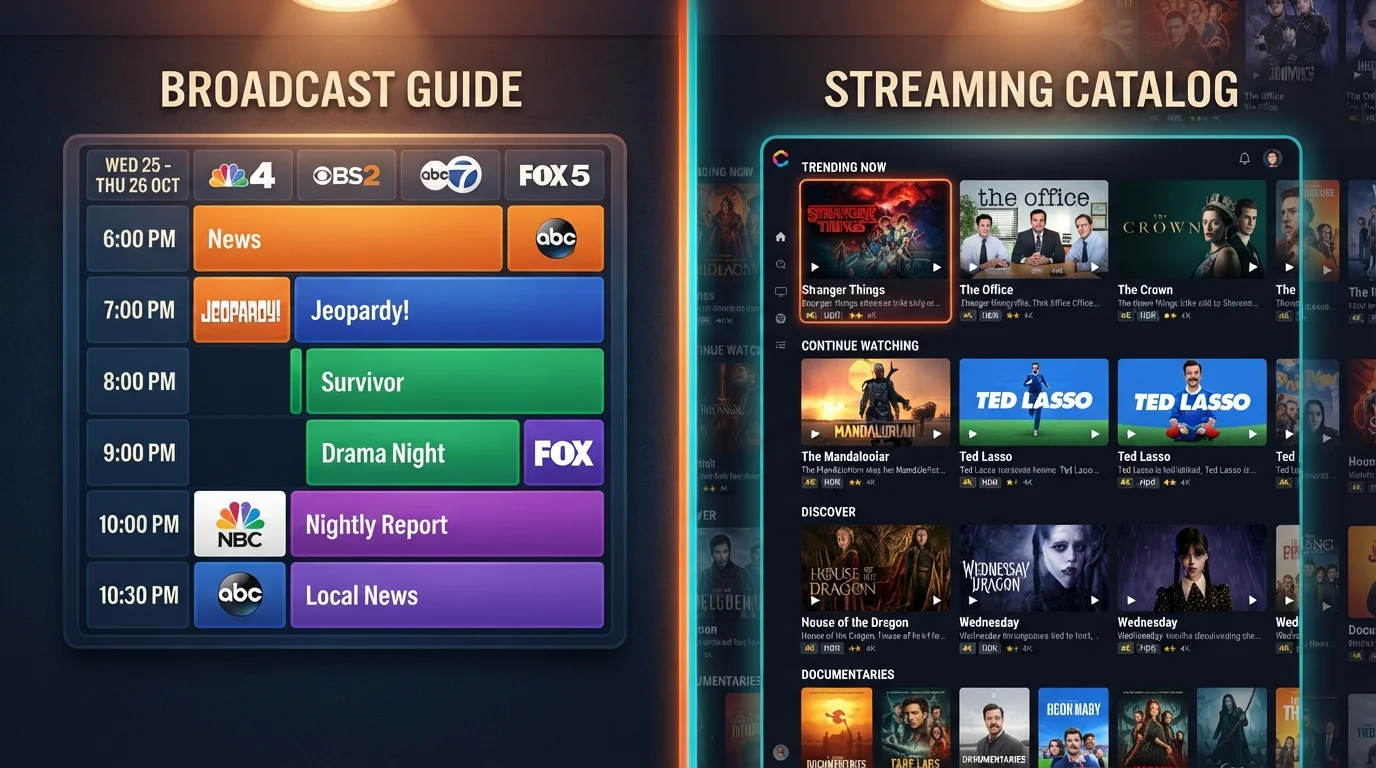
Traditional networks run on pilot season cycles. Streaming upended that rhythm. Here's how new shows get greenlit and what that means for what ends up on screen.
Key takeaways
- Traditional broadcast networks follow a structured annual pilot season running roughly January through May.
- Streaming platforms operate on rolling, year-round development cycles with no fixed season.
- Pilots are sample episodes used to test a show's concept, cast, and creative direction before a full series commitment.
- Streaming services often skip traditional pilots entirely, ordering full seasons directly based on pitch and creative team.
- The collapse of pilot season has created both more creative freedom and more unpredictable cancellations for viewers.
The Classic Broadcast Model: A Season for Everything
For most of television's history, getting a show on the air was a highly choreographed annual ritual. Each fall, broadcast networks launched their new lineups — and the machinery that produced those lineups kicked into gear months earlier through what the industry calls pilot season.
The cycle works roughly like this: writers and producers pitch show ideas to networks in late fall. Promising pitches receive script orders — the network pays for a full pilot script to be written. The strongest scripts then receive a pilot production order, meaning an actual episode gets filmed. Finally, networks evaluate those completed pilots during spring screening sessions, picking winners to slot into their fall schedules and discarding the rest.
This entire process culminates in the broadcast upfronts — high-profile events held each May in New York where networks present their new fall lineups to advertisers. Upfronts are where commercial deals get done, which is why the schedule announced there tends to stick. The advertising revenue model made this rigid calendar almost mandatory: networks needed to sell ad slots months in advance, which required knowing what was actually going to air.
The result was a system where hundreds of pilots might be produced in a single year, but only a fraction ever reached living rooms. It was expensive, somewhat wasteful, and brutally competitive — but it also created a shared cultural rhythm that Americans could count on.
What Streaming Did to the Calendar
When streaming services scaled up their original content ambitions, they didn't inherit broadcast television's constraints — and that freedom reshaped development completely. Unlike broadcast networks, platforms such as Netflix, Amazon Prime Video, and Hulu don't depend on selling advertising in advance. Their revenue comes from subscriptions, which means they can greenlight content whenever the creative package is ready, not when the advertising calendar demands it.
This shift produced two major changes. First, streaming platforms moved to year-round development, evaluating and ordering shows in any month rather than clustering decisions into spring. Second, many platforms began bypassing the pilot process entirely through what are called straight-to-series orders — committing to a full season upfront based on pitch materials, creative track record, and attached talent rather than a produced sample episode.
Straight-to-Series Orders Predate Streaming
Straight-to-series orders aren't purely a streaming invention — premium cable networks like HBO and Showtime pioneered the approach for prestige drama for decades. What streaming platforms did was scale the practice dramatically, making it the norm rather than the exception for high-profile projects.
Straight-to-series orders aren't purely a streaming invention — premium cable networks like HBO and Showtime pioneered the approach for prestige drama — but streaming platforms industrialized it at a scale broadcast TV never matched.
The practical effect for viewers? New content arrives constantly rather than in a single fall wave. But it also means shows can disappear just as unpredictably. Understanding why streaming platforms cancel shows often requires looking at subscriber metrics and licensing math rather than simple ratings — a very different logic than broadcast ever used.
The Tradeoffs: Creative Freedom vs. Structural Risk
The loosening of pilot season has genuine creative upsides. Showrunners argue that a full-season commitment gives writers room to build a story arc from the very first episode rather than engineering a pilot designed primarily to sell itself to a network executive. The pressure to make a pilot feel like a complete, sellable artifact — regardless of whether that serves the story — is a known creative distortion in the traditional model.
But the streaming model introduces its own tensions. Without the filtering function that pilot season performed, more shows get made — which sounds great until you realize it also means more shows get cancelled quickly when they don't immediately move the subscriber needle. The business logic behind streaming cancellations can feel opaque and sudden to audiences who've invested in a series.
There's also a cultural fragmentation effect. When all major networks launched new shows simultaneously in September, Americans were watching a largely shared slate. Today, new originals debut every week across dozens of platforms, making it harder for any single show to dominate the national conversation. The streaming wars have genuinely fractured the shared TV experience in ways that are still playing out.
How a show arrives also shapes how audiences experience it — which connects directly to release strategy. The debate between binge drops and weekly episode releases is really a downstream consequence of the same structural shift that dismantled pilot season.
What Still Survives From the Old System
It would be an overstatement to call pilot season dead. Broadcast networks — ABC, CBS, NBC, Fox, The CW — still operate modified versions of the traditional cycle, though the timeline has compressed and the upfronts have evolved into hybrid events that include streaming arms alongside broadcast schedules. For advertiser-supported television, the economic logic that created pilot season hasn't disappeared; it's adapted.
Cable networks occupy a middle ground, often developing year-round like streamers but sometimes maintaining looser seasonal patterns tied to advertiser relationships. Premium cable, which pioneered prestige drama outside the pilot-season framework, remains a model for how to run quality development without a rigid annual calendar.
For viewers trying to make sense of the current landscape — where new shows can appear any week, where a critically praised series might vanish after one season, and where no single network defines what's culturally essential — understanding the development pipeline helps explain a lot. The shows that reach screens aren't random; they're the output of deliberate, if increasingly fragmented, industry processes. Knowing how that machinery works makes it easier to appreciate not just what's on, but why.
This article is for informational and entertainment purposes only. Industry practices described reflect general trends and may vary across specific networks and platforms.
Frequently Asked Questions
All published content on this website is for informational and educational purposes only and should not be taken as professional advice. We recommend that readers seek expert opinion before making any decisions. The website is not responsible for any actions taken based on the information provided on this website. We are not liable for any inaccuracies, modifications, or omissions in information. Moreover, external links or third-party content are provided for convenience; we are not liable for their correctness. Users are advised to verify every piece of information before they use it for any purpose.