
Brake System Basics: Pads, Rotors, and Knowing When Something's Wrong

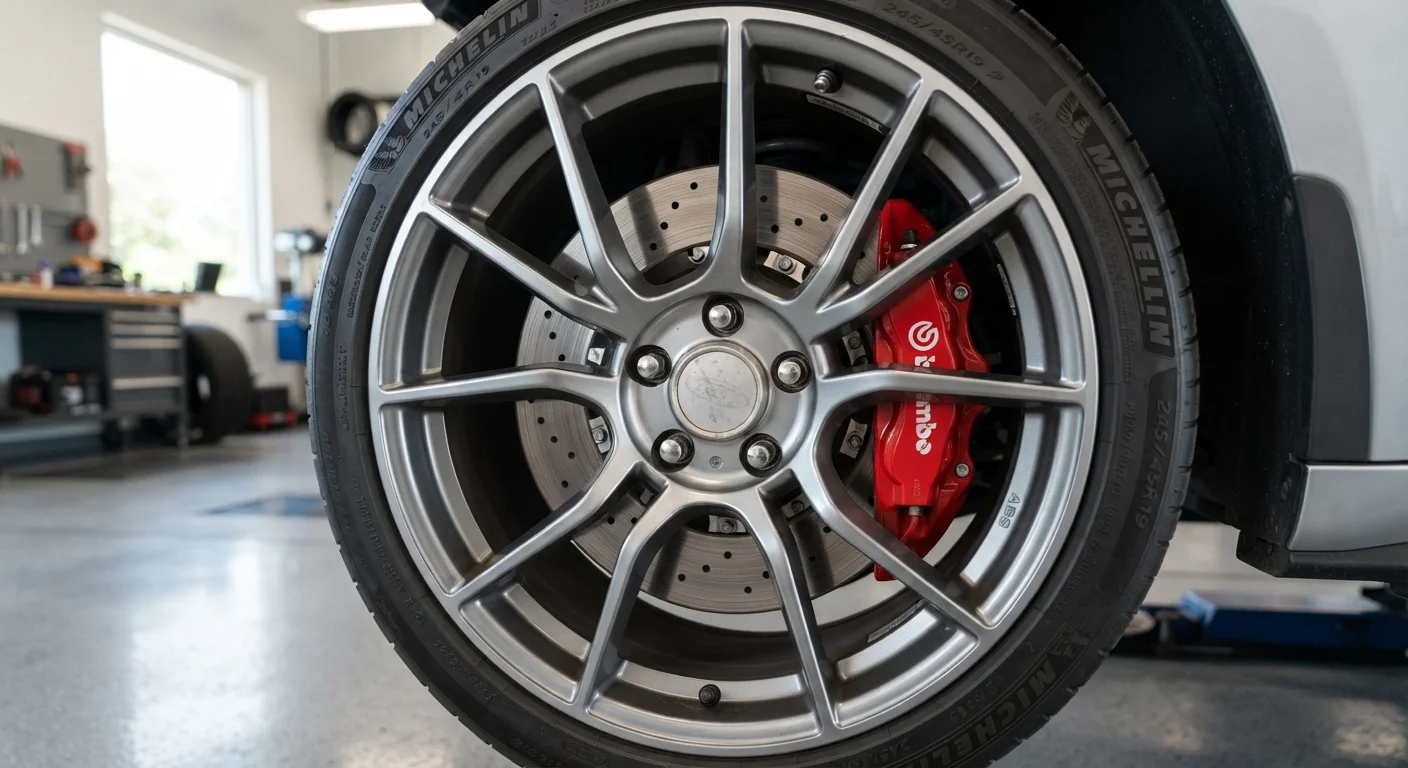
Understand how your car's braking system works, what normal wear looks like, and the warning signs that mean a professional check is overdue.
Key takeaways
- Brake pads are designed to wear down gradually and need periodic replacement — typically every 25,000–70,000 miles depending on driving habits.
- Squealing, grinding, or a soft brake pedal are among the clearest warning signs that professional inspection is needed.
- Rotors can warp or thin beyond safe limits and may need resurfacing or replacement alongside worn pads.
- Brake fluid should be inspected regularly and changed per your owner's manual — not just when something feels wrong.
- Delaying brake service rarely saves money; worn components can damage more expensive parts downstream.
How the Brake System Works
Press the brake pedal and a chain reaction begins almost instantly. The pedal pushes against a master cylinder that pressurizes brake fluid, sending hydraulic force through lines running to each wheel. At the wheel, a caliper uses that pressure to squeeze two brake pads against opposite faces of a spinning rotor. Friction converts the vehicle's forward momentum into heat, slowing the wheel — and the car.
Most modern vehicles use disc brakes on all four wheels, though some trucks and budget cars still use drum brakes on the rear axle. In a drum system, curved brake shoes press outward against the inner surface of a round drum rather than squeezing a rotor. The underlying principle is the same, but disc brakes generally dissipate heat faster and resist brake fade more effectively under repeated heavy use.
The hydraulic circuit is the thread tying it all together. This is why brake fluid condition matters — see how to check your brake fluid and other critical fluids for what to look for.
Brake Pads and Rotors: What Wears and Why
Brake pads are the consumable heart of the system. They're designed to wear down so the rotor doesn't have to. A new pad is typically around 10–12 mm thick; most manufacturers recommend replacement once the friction material reaches about 2–3 mm. The exact measurement varies by vehicle, so checking the owner's manual or asking a mechanic for the specification for your car is worthwhile.
Rotors, meanwhile, are exposed to enormous heat cycles. Over time they can develop surface rust (normal after a vehicle sits overnight), deep grooves from metal-on-metal contact when pads are fully depleted, or warping from uneven heat distribution. A warped rotor typically produces a pulsating sensation through the brake pedal when stopping. Rotors have a minimum thickness stamped on the edge — once they thin past that point, replacement is required for safe stopping.
25,000–70,000 mi
Typical brake pad lifespan range
Industry estimates vary widely based on vehicle type, driving style, and urban versus highway use.
~3 mm
Minimum safe brake pad thickness
Most manufacturers recommend replacement at or before this threshold; check your owner's manual for your specific vehicle's specification.
2–3 years
Recommended brake fluid change interval
Many automakers advise replacing brake fluid on a time-based schedule regardless of mileage, due to moisture absorption over time.
Driving style has an outsized effect on wear rate. City drivers who brake frequently wear pads significantly faster than highway commuters. Towing, carrying heavy loads, and aggressive deceleration all accelerate wear on both pads and rotors. As explained in why skipping small repairs leads to bigger bills, allowing pads to wear completely through can score the rotor surface, turning what would have been a pad replacement into a more expensive rotor replacement too.
Warning Signs You Should Not Ignore
Your braking system communicates. Learning to read those signals early keeps a manageable service call from becoming an urgent — and costly — repair.
- Squealing or high-pitched noise: Usually the wear indicator tab making contact with the rotor. This is your cue to schedule an inspection, not necessarily to pull over immediately.
- Grinding or metal-on-metal sound: The friction material is gone. Pads are grinding directly into the rotor with every stop. This is urgent — continuing to drive can rapidly damage the rotor and compromise stopping distance.
- Pedal pulsation or vibration: A pulsating pedal during braking typically indicates a warped rotor. You may also feel the steering wheel shimmy.
- Soft, spongy, or sinking pedal: Air in the brake lines, very low fluid, or a failing master cylinder. Do not drive the vehicle; have it inspected immediately.
- Pulling to one side when braking: Often caused by a stuck caliper, uneven pad wear, or a brake hose issue. Can affect vehicle control.
- Burning smell after driving: Overheated brakes or a dragging caliper. Allow the vehicle to cool and have it inspected before further driving.
Your dashboard's brake warning light is another signal worth taking seriously — learn what your warning lights actually mean before assuming it's a sensor glitch.
What to Expect When Brakes Are Serviced
A standard brake inspection involves removing the wheels and physically measuring pad thickness and rotor condition. A qualified mechanic will check caliper function, inspect brake lines and hoses for cracks or leaks, assess fluid condition, and look for any uneven wear patterns that might indicate a hardware issue. This is consistent with what a mechanic reviews during a routine service.
If pads need replacing, the mechanic will typically recommend evaluating rotors at the same time. Rotors may be resurfaced on a brake lathe if they're thick enough, or replaced outright. Calipers are inspected for seized pistons and pins; a stuck caliper causes one pad to drag constantly against the rotor, accelerating wear and generating heat.
Brake fluid is often overlooked until something goes wrong. Many manufacturers recommend a fluid change every two to three years because absorbed moisture lowers the fluid's boiling point, increasing the risk of brake fade under hard use. This is a low-cost service compared to the consequences of ignoring it.
For a broader picture of what routine upkeep involves across your whole vehicle, the complete owner's maintenance overview is a useful starting point.
This article is for general informational purposes only. Brake system work involves critical safety components — always consult a qualified mechanic before performing or deferring any brake-related repairs.
Frequently Asked Questions
All published content on this website is for informational and educational purposes only and should not be taken as professional advice. We recommend that readers seek expert opinion before making any decisions. The website is not responsible for any actions taken based on the information provided on this website. We are not liable for any inaccuracies, modifications, or omissions in information. Moreover, external links or third-party content are provided for convenience; we are not liable for their correctness. Users are advised to verify every piece of information before they use it for any purpose.