
Why Skipping Small Repairs Often Leads to Bigger Bills

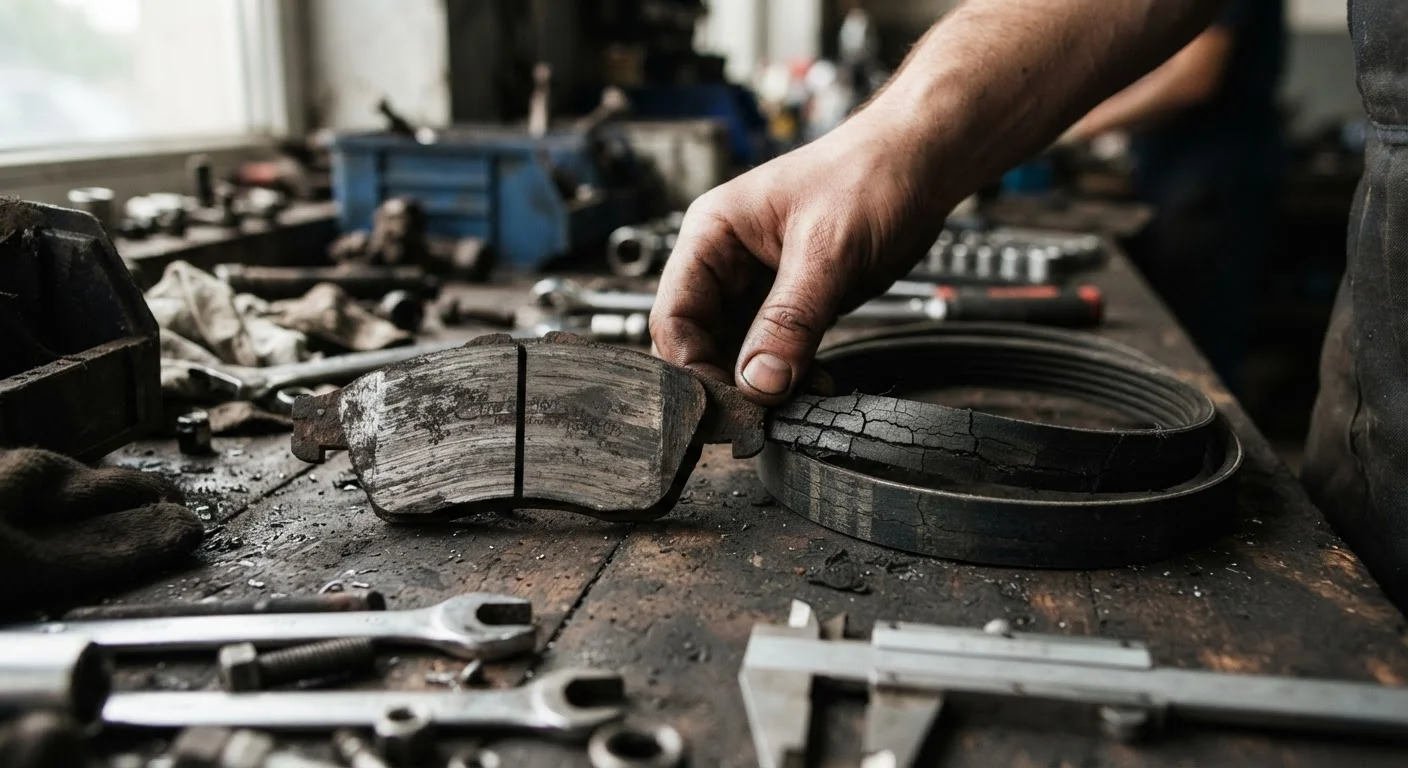
Discover how deferred maintenance on minor issues — worn brake pads, low coolant, a cracked belt — can escalate into costly failures.
Key takeaways
- Ignoring minor repairs like low coolant or worn brake pads typically multiplies repair costs within months.
- Most deferred maintenance failures follow a predictable chain — one neglected part stresses adjacent components.
- Routine visual checks and scheduled service intervals catch the majority of small issues before they escalate.
- The cost difference between proactive maintenance and reactive repair can run into hundreds or thousands of dollars.
The Compounding Cost of 'I'll Deal With It Later'
Automotive repair bills rarely arrive as single, isolated surprises. More often, they're the predictable result of a small issue that was noticed, noted — and then quietly ignored. A faint squeal from the brakes. A slow coolant leak. A belt that looks a little cracked but hasn't snapped yet. These are the warning signs that, when dismissed, set off a chain reaction of damage that costs far more to fix than the original problem ever would have.
It's not laziness that drives most deferred maintenance — it's a completely understandable instinct to triage finite budgets and time. But the math rarely works in the driver's favor. Addressing a worn brake pad before it contacts the rotor might cost $150–$250 per axle. Waiting until metal grinds on metal can mean rotor replacement is also needed, pushing that bill to $400–$700 or more for the same axle — not including any caliper damage.
Understanding why small repairs escalate is the first step toward breaking the cycle. The mistakes below are the most common ways drivers inadvertently turn minor maintenance into major expenses.
Ignoring brake pad wear until you hear grinding metal.
Why it happens: The initial warning squeal is easy to rationalize — it might stop temporarily when conditions change, which leads drivers to assume it isn't urgent.
Letting a slow coolant leak go unaddressed until the engine overheats.
Why it happens: A slow leak may not produce visible puddles and the temperature gauge might only flicker occasionally, making it easy to dismiss as a sensor quirk.
Driving on a visibly cracked or glazed serpentine belt past its service life.
Why it happens: The belt appears to be doing its job — the car starts, the AC works, nothing seems wrong — so replacing it feels unnecessary until it fails.
Ignoring a check engine light because the car 'seems to drive fine.'
Why it happens: Without a visible or audible symptom, a dashboard warning light can feel abstract — especially if the car's behavior hasn't changed.
Skipping oil changes beyond the manufacturer's recommended interval.
Why it happens: Extended-life oil marketing and the old 3,000-mile rule have created confusion about how frequently oil actually needs changing, and it's easy to push the interval 'just a little longer.'
Building a Maintenance Habit That Actually Sticks
The drivers who consistently avoid large repair bills aren't necessarily more mechanically gifted — they've simply built a habit of paying attention on a schedule. A monthly five-minute walk-around check of tire pressure, fluid levels, and obvious wear can catch the majority of developing issues. Many modern vehicles also surface maintenance reminders through the instrument cluster or a companion app, making it easier than ever to stay ahead of the schedule.
Don't Confuse 'Running Fine' With 'Problem-Free'
Many developing mechanical issues produce no noticeable symptoms until the component fails outright. A serpentine belt can look visibly cracked for weeks before snapping — and when it does, it can disable the alternator, power steering, and water pump simultaneously. Driving without symptoms is not the same as driving without risk. Scheduled visual inspections and service intervals exist precisely because many failures are silent until they're catastrophic.
If you're unsure whether a particular job is within your skill level, the boundary between DIY and professional work is worth thinking through carefully. See our guide on DIY maintenance vs. taking your car to a garage for a practical framework on knowing when to call a mechanic.
It's also worth examining whether some of what you've heard about maintenance schedules is actually true. Common assumptions — about oil change intervals, engine warm-up routines, and more — can lead drivers to either over-service or under-service their vehicles. Our look at car maintenance myths that cost drivers money separates evidence from habit.
Finally, deferred vehicle maintenance isn't just a mechanical problem — it's a financial one. Small, avoidable repair bills are structurally similar to the spending habits that quietly drain savings: easy to dismiss individually, damaging in aggregate. Treating vehicle upkeep as a non-negotiable budget line — rather than an optional expense — is one of the more practical things any driver can do for their financial health.
This article is for general informational purposes only. Repair costs vary significantly by vehicle make, model, region, and service provider. Consult a qualified mechanic for diagnosis and guidance specific to your vehicle.
All published content on this website is for informational and educational purposes only and should not be taken as professional advice. We recommend that readers seek expert opinion before making any decisions. The website is not responsible for any actions taken based on the information provided on this website. We are not liable for any inaccuracies, modifications, or omissions in information. Moreover, external links or third-party content are provided for convenience; we are not liable for their correctness. Users are advised to verify every piece of information before they use it for any purpose.