
Your Car's Warning Lights, Decoded

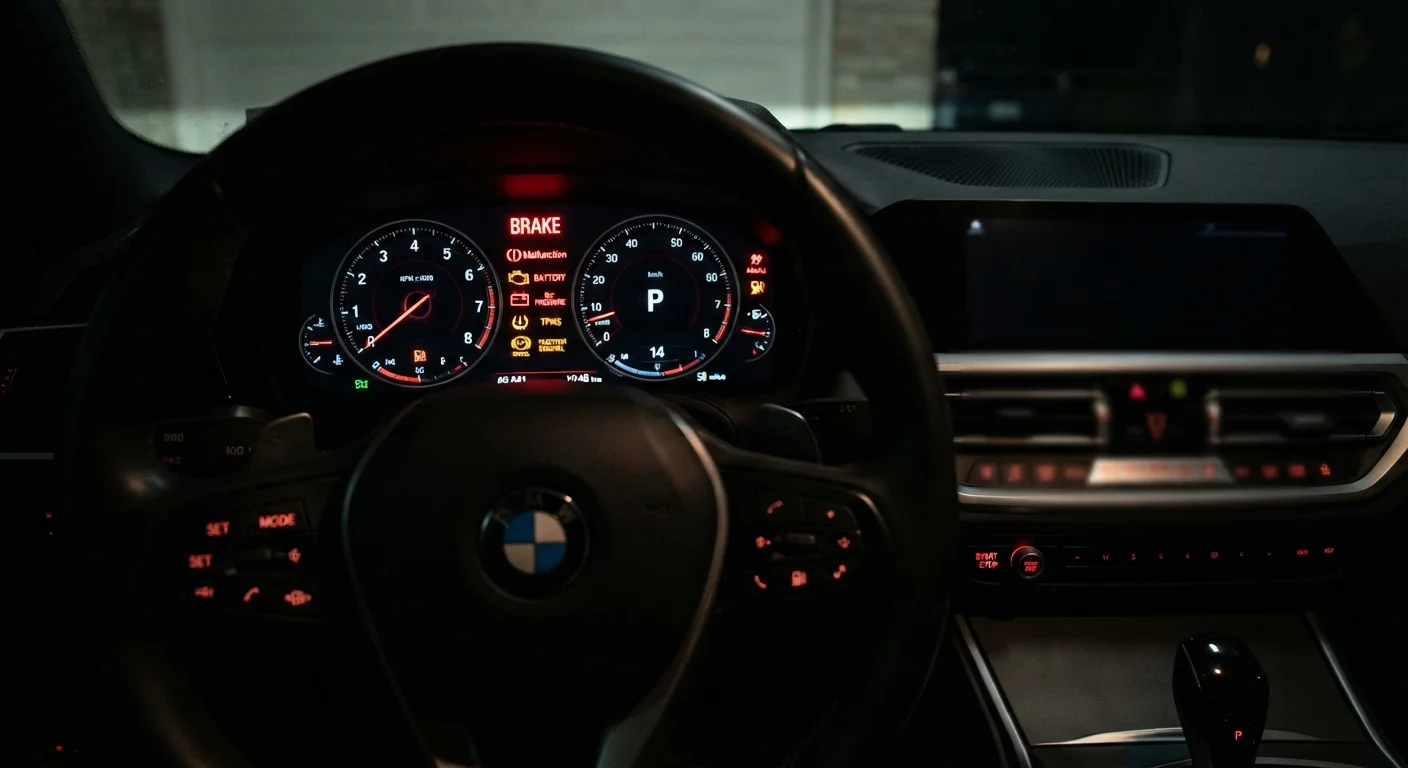
From check engine to TPMS, learn what your dashboard warning lights actually mean and when to act on them.
How Warning Lights Work
Your vehicle's onboard diagnostic system — known as OBD-II on all US cars built after 1996 — continuously monitors dozens of sensors across the engine, transmission, brakes, and emissions systems. When a sensor reading falls outside acceptable parameters, it triggers a dashboard warning light and, in most cases, stores a diagnostic trouble code (DTC) that a mechanic can read with a scan tool.
Warning lights fall into two broad categories based on color:
- Red lights signal a serious or potentially immediate problem. Stop driving as soon as it is safe to do so.
- Amber/yellow lights indicate a condition that needs attention soon but is generally not an immediate safety emergency.
- Green and blue lights are informational — confirming that a feature like high beams or cruise control is active.
Understanding this color system is the first step. The next is knowing what each symbol actually means. As part of a broader approach to ownership, the complete car maintenance overview covers how warning lights fit into a full vehicle care routine.
OBD-II
Onboard Diagnostics, second generation — a standardized system built into all US passenger vehicles sold after 1996 that monitors vehicle systems and stores diagnostic trouble codes when problems are detected.
Diagnostic Trouble Code (DTC)
A standardized alphanumeric code stored by a vehicle's computer when a sensor detects a fault. A mechanic or scan tool retrieves these codes to identify the source of a warning light.
TPMS
Tire Pressure Monitoring System — a sensor-based system that alerts the driver when one or more tires drops significantly below the recommended inflation pressure.
Malfunction Indicator Lamp (MIL)
The technical name for the check engine light. It illuminates when the OBD-II system detects a fault related to the engine, transmission, or emissions system.
Alternator
A generator driven by the engine that produces electrical power to run the vehicle's systems and recharge the battery while the engine is running.
Catalytic Converter
An emissions control device in the exhaust system that converts harmful combustion byproducts into less toxic gases. Engine misfires can overheat and destroy it quickly.
The Most Common Warning Lights, Explained
Below are the dashboard indicators drivers encounter most frequently, along with what each one actually means and how urgently you should respond.
| OBD-II Required Since | 1996 (all US passenger vehicles) (US Environmental Protection Agency mandate) |
| TPMS Required Since | September 2007 (all new US passenger vehicles) (TREAD Act, US DOT) |
| CEL Trigger Threshold | Typically 2 consecutive drive cycles with a fault (OBD-II readiness monitor standards) |
| TPMS Alert Threshold | 25% below recommended tire pressure (NHTSA TPMS final rule) |
| Flashing CEL Urgency | Stop driving as soon as safely possible |
| Red Light Protocol | Pull over safely; do not continue driving |
Check Engine Light (CEL)
The CEL — also called the Malfunction Indicator Lamp — is the most misunderstood light on any dashboard. It can signal anything from a loose gas cap to a failing catalytic converter. If the light is steady, schedule a diagnostic appointment within a few days. If it is flashing, pull over safely as soon as possible — a flashing CEL typically means the engine is misfiring, which can rapidly damage the catalytic converter. A scan tool reading from a shop will tell you exactly which code was stored.
Oil Pressure Warning
This red light — often shaped like an oil can — means your engine has lost adequate oil pressure, not necessarily that you're low on oil. Either way, this is a stop immediately situation. Running an engine with low oil pressure for even a few minutes can cause severe and permanent internal damage. Pull over safely, turn off the engine, and check the oil level with the dipstick. If the level is fine and the light remains on after restarting, do not drive the vehicle — have it towed.
Battery / Charging System
A battery-shaped amber or red light means the vehicle's charging system isn't maintaining the battery voltage it needs. Common causes include a failing alternator, a worn serpentine belt, or a battery nearing the end of its service life. You may have enough charge to drive a short distance to a shop, but do not risk a long trip — the vehicle could stall without warning when the battery is fully depleted.
Tire Pressure Monitoring System (TPMS)
Required on all US passenger vehicles sold after September 2007, the TPMS light — a cross-section of a tire with an exclamation mark — illuminates when one or more tires is significantly under-inflated (typically 25% below the recommended pressure). Check all four tires with a gauge and inflate to the pressure listed on the driver's door jamb sticker, not the number printed on the tire sidewall. Cold weather commonly triggers this light because air contracts in lower temperatures. For pre-trip peace of mind, the pre-journey vehicle check includes tire pressure as a key step.
Brake System Warning
This red light can mean your parking brake is engaged — or it can signal low brake fluid or a hydraulic fault in the braking system. If the parking brake is off and the light stays on, treat it as urgent. Low brake fluid can point to worn brake pads or, more seriously, a leak in the brake lines. The brake system basics guide explains the full warning sign picture for brakes.
Engine Temperature Warning
A red thermometer icon means your engine is overheating. Turn off the air conditioning immediately (it adds engine load), and if the temperature gauge doesn't drop within a minute, pull over and shut the engine off. Do not open the radiator cap while the engine is hot. Overheating causes warped cylinder heads and blown head gaskets — repairs that can run into thousands of dollars.
What to Do After a Light Comes On
A common mistake drivers make is either ignoring warning lights entirely or panicking and making rushed decisions. A few grounded steps help you respond appropriately:
- Check your owner's manual first. Every warning light is described in detail there, including manufacturer-specific guidance. The owner's manual guide explains how to get the most out of this often-ignored resource.
- Note the color and whether it's flashing. These two factors immediately tell you the urgency level.
- Use an OBD-II scanner if you have one. Inexpensive handheld scanners and smartphone-connected adapters can read stored trouble codes, giving you a starting point before you visit a shop.
- Don't assume a cleared light means a fixed problem. Disconnecting the battery or using a scan tool to erase a code doesn't resolve the underlying issue — the light will return. It's also worth noting that some car maintenance myths lead drivers to believe clearing a code is a legitimate fix.
- When in doubt, have it inspected by a qualified mechanic. For anything beyond a loose gas cap or low tire pressure, professional diagnosis is the safest and most cost-effective path.
This article is for general informational purposes only. Always consult a licensed, qualified mechanic for diagnosis and repair of your specific vehicle.
All published content on this website is for informational and educational purposes only and should not be taken as professional advice. We recommend that readers seek expert opinion before making any decisions. The website is not responsible for any actions taken based on the information provided on this website. We are not liable for any inaccuracies, modifications, or omissions in information. Moreover, external links or third-party content are provided for convenience; we are not liable for their correctness. Users are advised to verify every piece of information before they use it for any purpose.