
Good Debt vs. Bad Debt: Is the Distinction Actually Useful?

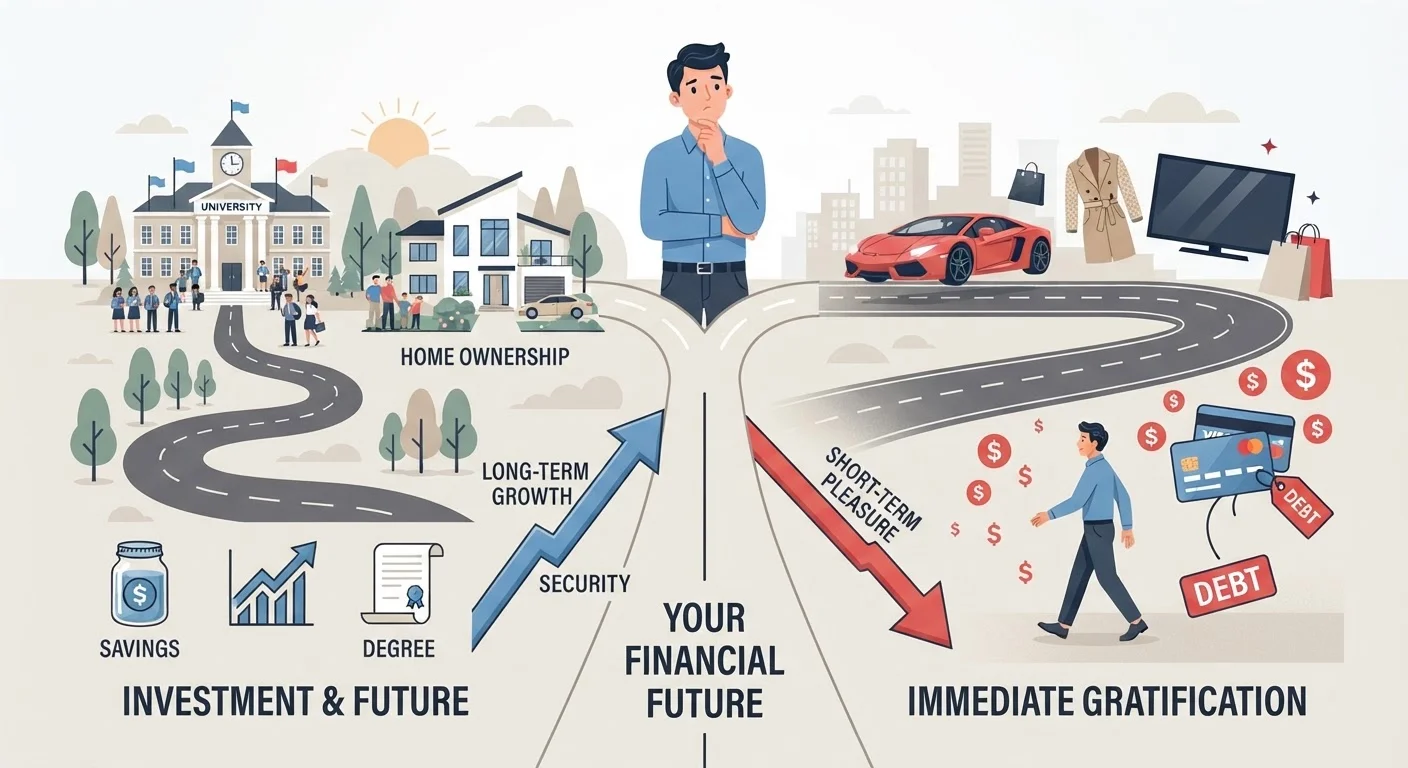
The idea that some debt is 'good' is widely repeated — but what does it really mean? Unpack the concept and its practical limits.
Key takeaways
- The good debt / bad debt framework is a teaching tool, not a financial guarantee.
- Context matters: the same type of debt can be helpful or harmful depending on interest rate, amount, and repayment ability.
- Mortgages and student loans are often called 'good debt,' but both carry real risks if overborrowed.
- High-interest consumer debt is widely considered 'bad,' yet sometimes borrowing is the most practical option available.
- The most useful question is not what category debt falls into, but whether you can manage it sustainably.
- Consulting a licensed financial professional can help you evaluate specific borrowing decisions for your situation.
Where the Good Debt / Bad Debt Idea Comes From
The distinction between good and bad debt has been a staple of personal finance education for decades. The basic logic runs like this: borrowing to acquire something that grows in value or generates income is productive — it can leave you better off than if you hadn't borrowed at all. Borrowing to pay for things that lose value immediately or don't contribute to future wealth is costly without much upside.
This framing became popular partly because it gave people a simple mental model at a time when consumer credit was expanding rapidly. It offered a way to distinguish between, say, a home loan and a retail store credit card. For a broad overview of how debt and credit work together, see our foundational guide for first-time borrowers.
The framework is genuinely useful as an introduction. But it has always had gaps — and those gaps matter when people use it to justify borrowing decisions without examining the specifics.
What Typically Gets Called 'Good Debt'
Three categories dominate the good-debt conversation: mortgages, student loans, and business loans. Each has a logic behind it.
- Mortgages are tied to real estate, an asset class that has historically appreciated over long time horizons in many markets. Homeownership also builds equity — the portion of the property's value you actually own — over time.
- Student loans are framed as investments in human capital: education that raises your earning potential and career options. The theory holds up when the income boost from a degree meaningfully outpaces the cost of borrowing.
- Business loans are intended to fund revenue-generating activity — equipment, inventory, or expansion that should produce returns exceeding the borrowing cost.
What these have in common is the expectation of a financial return. But expectations don't always match outcomes. A degree in a low-demand field financed with large loans at high interest rates may not deliver the anticipated income. A property bought at peak prices in a contracting market may not appreciate. The label doesn't change the math.
~$1.77T
Total US student loan debt outstanding
According to Federal Reserve data, outstanding student loan balances in the United States have grown substantially over the past two decades, underscoring that 'good debt' carries real aggregate risk.
20%+
Average credit card APR in recent years
The Consumer Financial Protection Bureau (CFPB) has reported that average credit card interest rates have climbed, making unpaid balances increasingly costly for households carrying revolving debt.
~$12T
Total US mortgage debt outstanding
Federal Reserve data shows mortgage debt is the largest single category of household debt in the US — reflecting how central home financing is to American borrowing patterns.
What Gets Labeled 'Bad Debt' — and Why
Consumer debt — especially high-interest credit card balances — is the go-to example of bad debt. The reasoning is straightforward: when you carry a revolving balance on a card charging 20% or more annually, the interest compounds quickly, and you're often paying for goods you've already used or that have already lost value.
Auto loans sit in a gray zone. A vehicle is a depreciating asset, but reliable transportation is often essential for earning income. The same purchase can be financially reasonable or reckless depending on the price, the interest rate, and whether less expensive alternatives existed.
Payday loans and similar high-cost short-term products are broadly considered the most damaging form of consumer debt, with fees that can equate to triple-digit annual percentage rates (APRs). These are not disputes about categories — the cost structure makes them objectively expensive.
If you're weighing how to handle existing consumer debt, our article on credit card debt versus personal loan repayment breaks down the trade-offs in practical terms.
Where the Framework Breaks Down
The most significant problem with the good/bad framework is that it classifies debt by type rather than by circumstances. A mortgage is not inherently safe — borrowing at the edge of your income, with a variable rate, on a property in a falling market, can be financially devastating. A student loan for a two-year certification program costing $8,000 is a very different risk profile than $120,000 borrowed for a degree with limited job market demand.
The framework also implies that good debt is worth taking on freely, which can lead people to rationalize over-borrowing. "It's an investment" is not sufficient analysis. The relevant questions are: what is the actual interest rate, what is the realistic return, and how does the payment fit into your overall budget?
Understanding the role of collateral also changes how risk works. Secured versus unsecured debt — meaning whether an asset backs the loan — is often a more functionally important distinction than good versus bad.
The Context That Changes Everything
The same dollar amount borrowed at 4% versus 18% interest creates dramatically different repayment burdens. Two people taking out 'identical' good debt can end up in very different financial positions based on their rates, terms, and income stability. Always evaluate the specific loan terms — not just the purpose of the borrowing.
A More Practical Way to Evaluate Debt
Rather than asking which category a debt falls into, consider a set of questions that apply regardless of type:
- What is the total cost? Look at the interest rate and the full repayment cost over the loan's life, not just the monthly payment.
- Can you manage the payment? A payment that strains your budget is risky even if the debt is for a "good" purpose.
- What is the realistic return? For investment-framed borrowing, be honest about outcomes. Not every degree leads to high income; not every market appreciates.
- Is there an alternative? Sometimes debt is necessary. Other times, saving, adjusting expectations, or seeking assistance reduces or eliminates the need to borrow.
If you're dealing with multiple debts, understanding repayment strategies can also help. The debt snowball versus debt avalanche comparison outlines how different approaches suit different situations. And for a broader look at the full credit landscape, see our end-to-end resource on credit and debt obligations.
This article is for general informational and educational purposes only and does not constitute personalized financial, tax, or legal advice. Readers should consult a qualified, licensed financial professional before making decisions about their own borrowing or repayment circumstances.
Frequently Asked Questions
All published content on this website is for informational and educational purposes only and should not be taken as professional advice. We recommend that readers seek expert opinion before making any decisions. The website is not responsible for any actions taken based on the information provided on this website. We are not liable for any inaccuracies, modifications, or omissions in information. Moreover, external links or third-party content are provided for convenience; we are not liable for their correctness. Users are advised to verify every piece of information before they use it for any purpose.