
Emergency Fund or Investments: Where Should Extra Money Go First?

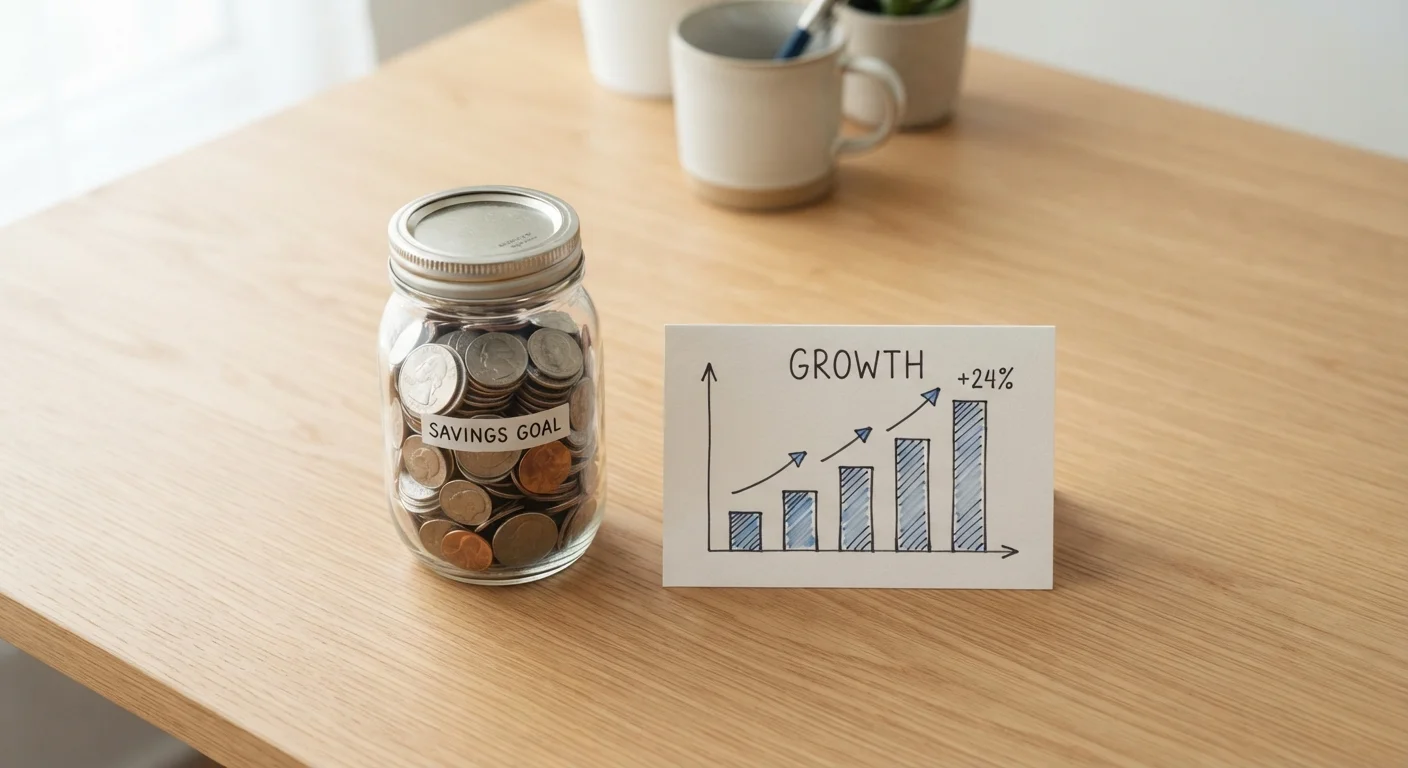
Weighing up whether to build a safety net or start investing? Here's how to think through the decision based on your situation.
Option A
Emergency Fund
The financial safety net that keeps everything else standing.
Best for: Anyone who lacks a cash cushion to cover unexpected expenses without going into debt.
Option B
Investments
The long-term engine for growing your money over time.
Best for: People with a stable income, manageable debt, and an existing cash reserve ready to put money to work.
Key takeaways
- An emergency fund should generally come before investing if you have no financial cushion at all.
- High-interest debt changes the calculus — paying it down often beats investing for most people.
- A starter emergency fund of one month's expenses can act as a bridge while you begin building both habits.
- Investing earlier gives your money more time to grow through compounding, so delay has a real cost.
- The right order depends on your income stability, existing debt, and personal risk tolerance.
- Most financial educators suggest three to six months of essential expenses as a full emergency fund target.
Why the Order Matters More Than the Amount
When extra money shows up — a raise, a tax refund, a side gig payment — the temptation is to do something meaningful with it immediately. The question of what to do often comes down to two options: build an emergency fund or start investing. Both are genuinely good financial moves. But the sequence matters, and getting it wrong can cost you in ways that aren't always obvious at first.
If you invest before you have any cash reserve and an emergency hits, you may be forced to sell investments at a loss, or worse, turn to high-interest credit to cover the shortfall. On the other hand, keeping every spare dollar in a low-yield savings account while skipping years of compound growth has a real long-term cost too. This isn't a situation where one answer fits everyone — it depends on where you are right now.
If you haven't yet laid out a clear picture of your income, expenses, and financial obligations, a foundational budget is the right place to start before deciding where to send extra money.
Head-to-Head: Emergency Fund vs. Investments
Understanding how these two approaches differ — in purpose, risk, and return — helps clarify why most financial educators treat them as sequential rather than interchangeable.
| Criterion | Emergency Fund | Investments |
|---|---|---|
| Primary purpose | Protection from unexpected expenses | Long-term wealth growth |
| Typical return | Minimal (savings account rate) | Variable; historically positive long-term |
| Liquidity | High — accessible within days | Varies; selling may incur losses or delays |
| Risk level | Very low | Low to high, depending on asset type |
| Recommended size | 3–6 months of essential expenses | As much as your timeline and risk tolerance allow |
| When to prioritize | No cash buffer exists; income is unstable | Buffer is in place; employer match available |
| Effect of delay | Increases vulnerability to financial shock | Reduces total compound growth over time |
The emergency fund's core job is protective: it prevents a crisis from becoming a financial catastrophe. Investments, by contrast, are about growth — and growth requires patience and the ability to absorb short-term losses without panic-selling. Mixing up these roles is a common mistake early on. For a deeper look at what actually belongs in a cash reserve, see our article on what qualifies as an emergency fund expense.
The Case for Building Your Emergency Fund First
Financial stability has a sequence, and for most people, the emergency fund comes first — not because investing isn't valuable, but because without a buffer, everything else is fragile. Here's the core logic:
- Debt prevention: Without savings, a $1,000 emergency often becomes $1,000 in credit card debt at 20%+ interest. That's a hole that takes months to climb out of.
- Investment protection: If your money is in the market and you need cash urgently, you may have to sell at the worst time — a market dip. A cash reserve means your investments can stay invested.
- Psychological stability: Research in behavioral finance consistently finds that financial anxiety impairs decision-making. A cash cushion reduces that anxiety and helps you stick to a long-term plan.
The conventional target is three to six months of essential expenses — enough to cover a job loss or major unexpected cost without derailing everything else. That said, even a starter fund of one month's expenses provides meaningful protection while you work toward the full amount.
The Case for Starting to Invest Sooner
Delay has a measurable cost when it comes to investing. The reason is compound growth — the process by which returns generate their own returns over time. The longer your money is invested, the more this effect compounds. Waiting five years to begin investing doesn't just mean five years of missed returns; it means those returns never get to compound into future growth either.
There are also specific situations where investing before completing your emergency fund makes rational sense:
- Employer 401(k) matching: If your employer matches contributions up to a certain percentage of your salary, not contributing enough to capture that match leaves guaranteed money on the table. Most financial educators treat this as a priority even before a full emergency fund is in place.
- Low-interest debt environment: If your only debt carries a very low interest rate, the expected long-term return from investing may reasonably exceed the cost of that debt, though this involves risk and is never guaranteed.
The key distinction is that beginning to invest doesn't mean abandoning the goal of building savings — it means running both tracks at once, even if contributions to each are modest at first.
A Practical Framework for Making the Decision
Rather than treating this as a strict either/or choice, most people benefit from a tiered approach that addresses the most urgent financial vulnerability first:
- Capture any employer 401(k) match — this is effectively a risk-free return and typically takes priority.
- Build a starter emergency fund — aim for one month of essential expenses in an accessible savings account.
- Pay down high-interest debt — credit card debt above roughly 7–8% interest often warrants attention before increasing investment contributions.
- Grow the emergency fund to three to six months of essential expenses.
- Increase investment contributions — now with a proper cushion in place, you can invest more aggressively without the fragility that comes from having no buffer.
This isn't a rigid rulebook — personal circumstances vary significantly. Income stability, family obligations, existing assets, and risk tolerance all shape the right answer for any individual. If you're uncertain how to fit these priorities into your broader financial picture, a complete guide to building savings momentum can help you see the full picture. For personalized guidance, consider speaking with a licensed financial advisor who can assess your specific situation.
It's also worth noting that this decision intersects with how you structure your budget overall. If you're still refining how you allocate income, our practical budgeting starting point walks through the process step by step. And if you're weighing whether to keep savings in one account or spread them across multiple places, the trade-offs of consolidating savings is worth reviewing.
This article is for general informational purposes only and does not constitute personalized financial, investment, or tax advice. Consult a qualified financial professional before making decisions based on your individual circumstances.
All published content on this website is for informational and educational purposes only and should not be taken as professional advice. We recommend that readers seek expert opinion before making any decisions. The website is not responsible for any actions taken based on the information provided on this website. We are not liable for any inaccuracies, modifications, or omissions in information. Moreover, external links or third-party content are provided for convenience; we are not liable for their correctness. Users are advised to verify every piece of information before they use it for any purpose.