
Reading a Room: What Paint Sheen Actually Does to Light and Space

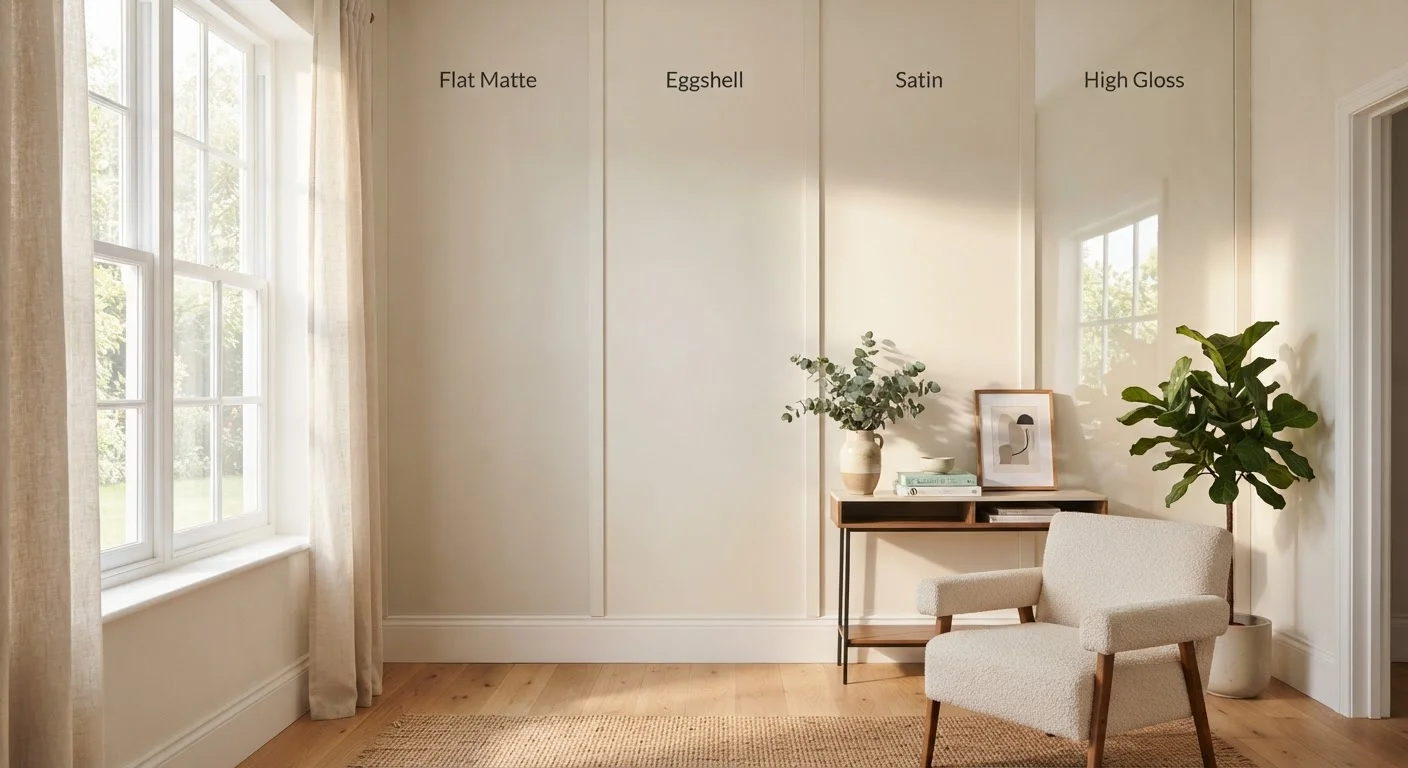
Flat, eggshell, satin, semi-gloss — each finish changes how a room looks and functions. Here's what the difference means in practice.
Key takeaways
- Higher sheen levels reflect more light, making surfaces appear brighter but also highlighting imperfections.
- Flat and matte finishes absorb light and are forgiving of uneven walls, but are harder to clean.
- Satin and eggshell strike a practical middle ground suitable for most living spaces.
- Semi-gloss and gloss finishes are durable and moisture-resistant, making them ideal for kitchens, bathrooms, and trim.
- Sheen interacts directly with your room's existing light sources and wall texture — test samples before committing.
- The same paint color can look noticeably lighter or darker depending solely on the sheen level chosen.
The Sheen Spectrum Explained
Walk the paint aisle of any home improvement store and you'll encounter a lineup of finish names — flat, matte, eggshell, satin, semi-gloss, gloss. These aren't just marketing labels. Each one describes a measurable point on a reflectivity scale, and where your paint lands on that scale changes how the room reads.
Here's a plain-English breakdown of the most common sheens, from least to most reflective:
- Flat / Matte: No shine. Absorbs light rather than bouncing it. Excellent at hiding surface imperfections like small dents, patches, or uneven texture.
- Eggshell: A very subtle glow — just enough to distinguish it from flat. More washable than flat, and the go-to for most bedrooms and low-traffic living spaces.
- Satin: A soft, velvety sheen that reflects moderate light. Durable and easy to clean, making it practical for hallways, family rooms, and children's rooms.
- Semi-Gloss: Noticeably reflective and very durable. Moisture-resistant properties make it the standard choice for kitchens, bathrooms, and trim work.
- Gloss / High-Gloss: Mirror-like and extremely hard-wearing. Most often used on trim, cabinets, and furniture rather than full walls, because it magnifies every surface flaw.
Each step up the scale adds reflectivity and durability — but also reduces forgiveness for imperfect wall prep.
How Sheen Interacts With Light
Light and sheen have a direct, physical relationship. A glossy surface bounces light back at close to the angle it hits, creating visible highlights. A flat surface scatters light in all directions, softening and diffusing it. This is why the same paint color — same pigment, same formula — can look noticeably different depending on the sheen you choose.
In a north-facing room that receives cool, indirect light, a higher-sheen finish can help brighten surfaces by returning more of that limited light to the eye. In a south-facing room flooded with warm afternoon sun, that same sheen might create glare or make colors feel washed out. A matte or eggshell finish in a sun-drenched room keeps colors richer and more even throughout the day.
Test Your Sheen Before Committing
Always paint a sample patch — at least 12 by 12 inches — and observe it at different times of day and under your room's artificial lighting before buying full quantities. Sheens behave very differently under warm incandescent bulbs versus cool LED light, and what looks right in the store can surprise you on the wall.
This interaction also works vertically. Painting a ceiling in flat white — regardless of the wall sheen — softens overhead light and reduces the harsh bounce that semi-gloss ceilings can produce. Most professional painters default to flat on ceilings for exactly this reason.
For a deeper look at how light sources themselves affect a room's atmosphere, see our guide on layering ambient, task, and accent lighting. The two decisions — sheen and lighting — are more connected than most homeowners realize.
Matching Sheen to the Room's Purpose
Sheen selection shouldn't be uniform throughout a home. Different rooms have different demands, and the practical durability of a finish matters as much as its visual effect.
Bedrooms and formal living rooms are typically low-traffic and benefit from eggshell or matte finishes. The softer look suits relaxed spaces, and the lower reflectivity allows colors to sit quietly on the wall rather than competing for attention.
Family rooms, hallways, and children's bedrooms take more wear. Satin is generally the practical standard here — it can handle routine wiping without wearing through the way flat paint does.
Kitchens and bathrooms need moisture resistance. Semi-gloss is the most common choice for walls in these rooms, and it's especially appropriate for surfaces near sinks, stovetops, or shower enclosures. High humidity causes lower-sheen paints to absorb moisture, which can lead to staining or mold growth over time.
Trim, doors, and built-ins nearly always look best in semi-gloss or gloss. The higher sheen makes architectural details crisp, creates visual contrast with the walls, and produces a surface that handles the regular scuffs and hand contact those areas receive.
Sheen also intersects with color strategy. If you're working with darker or more saturated hues, a lower sheen often lets the color read more accurately. For guidance on how color choices shape the overall mood of a space, our article on colour psychology in home interiors covers that ground in detail.
Surface Prep: Why It Matters More With Higher Sheens
One of the most important — and frequently overlooked — consequences of choosing a high-sheen paint is that it reveals rather than conceals. Any surface imperfection that exists before you paint — a poorly patched hole, a sanding ridge, a seam in drywall — will become more visible under a semi-gloss or gloss finish, especially when light rakes across the wall at a low angle.
Flat and matte paints do the opposite. Their light-scattering properties smooth out visual inconsistencies, which is why they're commonly used on ceilings and on walls in older homes where plaster may be uneven.
This means that the higher the sheen you want, the more thorough your surface preparation needs to be. Filling, sanding, and priming properly are not optional steps when finishing in semi-gloss — they are requirements for a result that looks professional rather than amateurish.
If you're working in a compact space and want to understand how sheen interacts with other visual tools, our piece on decorating principles for small rooms explains how scale, light, and surface choices work together to affect perceived space.
When in doubt, request sample pots and test patches in your actual room — observed under both daylight and your artificial lighting — before committing to a full application. It's a small investment that prevents an expensive repaint.
Frequently Asked Questions
All published content on this website is for informational and educational purposes only and should not be taken as professional advice. We recommend that readers seek expert opinion before making any decisions. The website is not responsible for any actions taken based on the information provided on this website. We are not liable for any inaccuracies, modifications, or omissions in information. Moreover, external links or third-party content are provided for convenience; we are not liable for their correctness. Users are advised to verify every piece of information before they use it for any purpose.