
Password Sharing Crackdowns: What Streaming Services Are Actually Enforcing

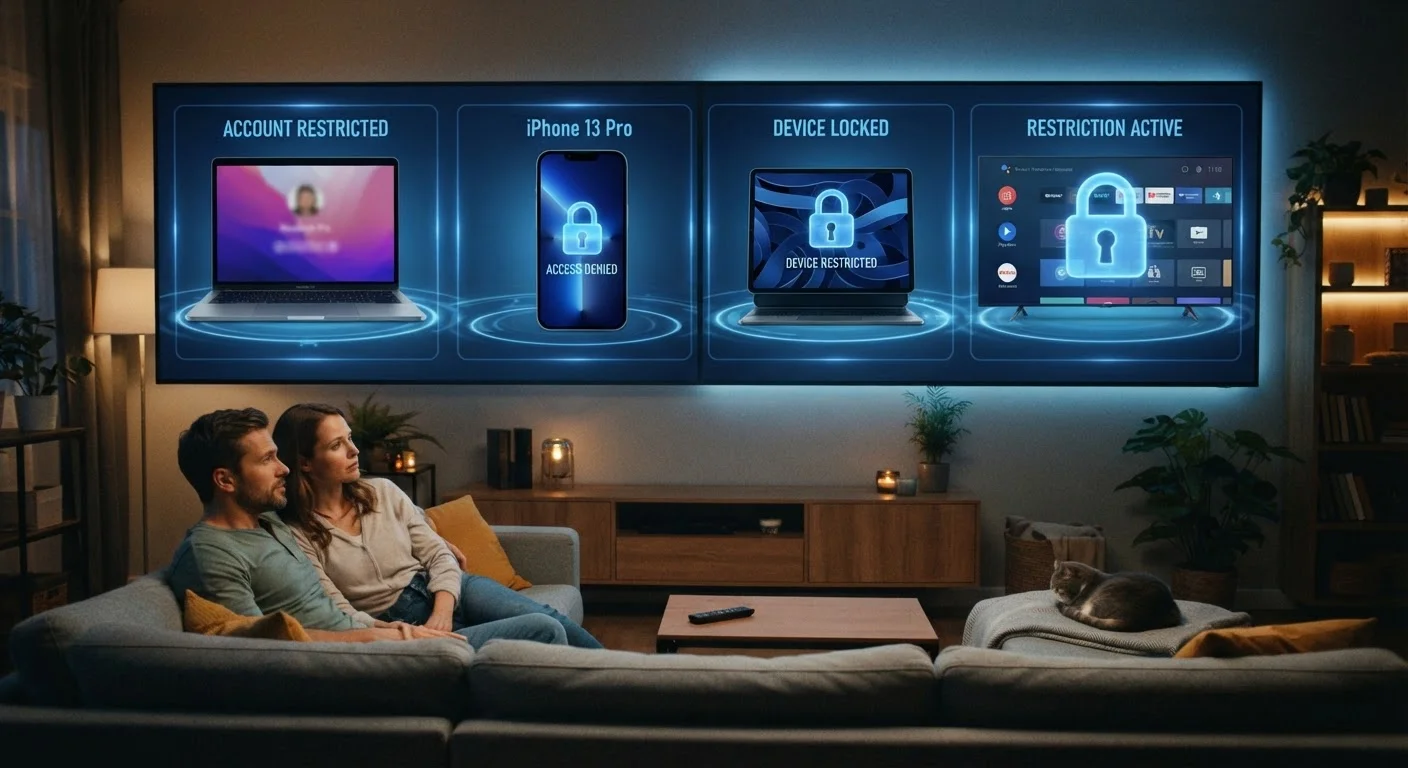
Major platforms have tightened account sharing rules. Here's a clear breakdown of what the policies say, how enforcement works, and what viewers should know.
Why Platforms Cracked Down — and When It Started
For years, sharing a streaming password with a sibling across the country or a college roommate felt practically encouraged. Platforms rarely objected, and subscriber growth masked any concern about lost revenue. That calculus changed dramatically around 2022–2023, when subscriber growth plateaued for several major services and investors began pressing for profitability over expansion.
Netflix moved first at scale, rolling out household verification requirements in the United States in mid-2023. Other platforms followed with varying urgency. The shared reasoning: an account is licensed to a household, not a social circle. What changed wasn't the letter of the terms of service — most platforms had always prohibited sharing outside a primary household — but the willingness to actually enforce those terms.
Understanding how the streaming wars have reshaped viewing habits helps explain why this moment arrived when it did: competition intensified costs, and platforms needed to demonstrate sustainable business models.
| Netflix US household enforcement began | Mid-2023 (Netflix public announcements, 2023) |
| Industry-standard policy basis | Accounts licensed to one household, not shared socially |
| Primary detection methods | IP geolocation, device fingerprinting, verification prompts |
| Extra member slots | Available on select Netflix plans; availability varies by plan and region (Netflix Help Center) |
| Travel use | Generally permitted via device verification; ongoing remote use is restricted |
| Platforms with active enforcement (as of writing) | Netflix most aggressive; Disney+, Max, others at varying stages |
How Each Major Platform Defines "Household"
The term household is central to every platform's policy — but its technical definition varies in meaningful ways.
Netflix
Netflix defines a household as the collection of devices connected to the internet at the account holder's primary residence. It uses IP addresses, device IDs, and network activity to establish what it considers the "home" location. Devices that regularly connect from a different network may be flagged. Subscribers can add an extra member slot (where available) for an additional monthly fee, allowing one person outside the household to maintain access under the same account.
Disney+ and Hulu
Both Disney-owned services require that account use be limited to the subscribing household. Disney+ has introduced account-sharing restrictions in markets outside the US, with US enforcement policies continuing to evolve. Hulu's terms similarly restrict sharing to one household but, as of the time this was written, active technical enforcement in the US has been less aggressive than Netflix's approach.
Max (formerly HBO Max)
Max's terms of service limit use to a single household. The platform has signaled intentions to restrict account sharing more formally, though the pace of rollout has varied by region and plan tier. Subscribers should consult Max's current help documentation for the most accurate status.
Paramount+ and Peacock
Both platforms prohibit sharing outside a household in their terms, but neither has publicly announced technical enforcement mechanisms comparable to Netflix's. That could change as the industry norm continues shifting.
For a fuller picture of what different subscription tiers include and exclude, see our guide to streaming service tiers.
How Enforcement Actually Works
Platforms don't rely on an honor system. The technical infrastructure behind enforcement typically involves several overlapping signals:
- IP address geolocation: If a device regularly streams from a location that doesn't match the registered home IP, it may trigger a review.
- Device fingerprinting: Platforms track which devices are actively in use on an account and can identify patterns inconsistent with a single residence.
- Verification prompts: Netflix, for example, has required users to verify their device by entering a code sent to the account holder's email or phone. Failure to verify within a time window can block access.
- Travel exceptions: Most platforms acknowledge that subscribers travel. Netflix allows temporary access on the road using its device verification flow. Some platforms distinguish between travel use and ongoing remote use.
What enforcement typically does not involve: manual review of individual accounts or real-time monitoring of content being watched. The detection is algorithmic and pattern-based.
It's also worth noting that enforcement can feel inconsistent — some accounts sharing across households go months without issues, while others are flagged quickly. This inconsistency is a feature of probabilistic detection systems, not a loophole that can be reliably exploited.
What Viewers Should Actually Do
If you currently share an account with someone outside your household — or receive access from someone else — here's a practical framework for thinking through your options:
- Check the specific platform's current policy page. Policies are actively evolving, and platform help centers are the authoritative source for what's enforced today.
- Evaluate whether an extra member slot makes sense. Where platforms offer it, this option preserves shared access at a lower cost than two full subscriptions. It may not be available on all plan tiers.
- Consider whether consolidating subscriptions changes your math. Our breakdown of the real costs of streaming can help you think through what you're actually paying across all services.
- For legitimate multi-location households — such as college students who maintain a primary home address — document your situation and contact platform support if access is disrupted. Most platforms have processes for these cases.
It's also worth understanding that policies around device restrictions connect to other fine-print realities. For instance, offline download rules carry similar household and device-limit restrictions that catch viewers off guard.
This article provides general informational guidance about publicly stated streaming platform policies. Policy details can change; always refer to each platform's official help center for current, binding terms.
All published content on this website is for informational and educational purposes only and should not be taken as professional advice. We recommend that readers seek expert opinion before making any decisions. The website is not responsible for any actions taken based on the information provided on this website. We are not liable for any inaccuracies, modifications, or omissions in information. Moreover, external links or third-party content are provided for convenience; we are not liable for their correctness. Users are advised to verify every piece of information before they use it for any purpose.