
Cancel Culture: Sorting the Facts from the Moral Panic

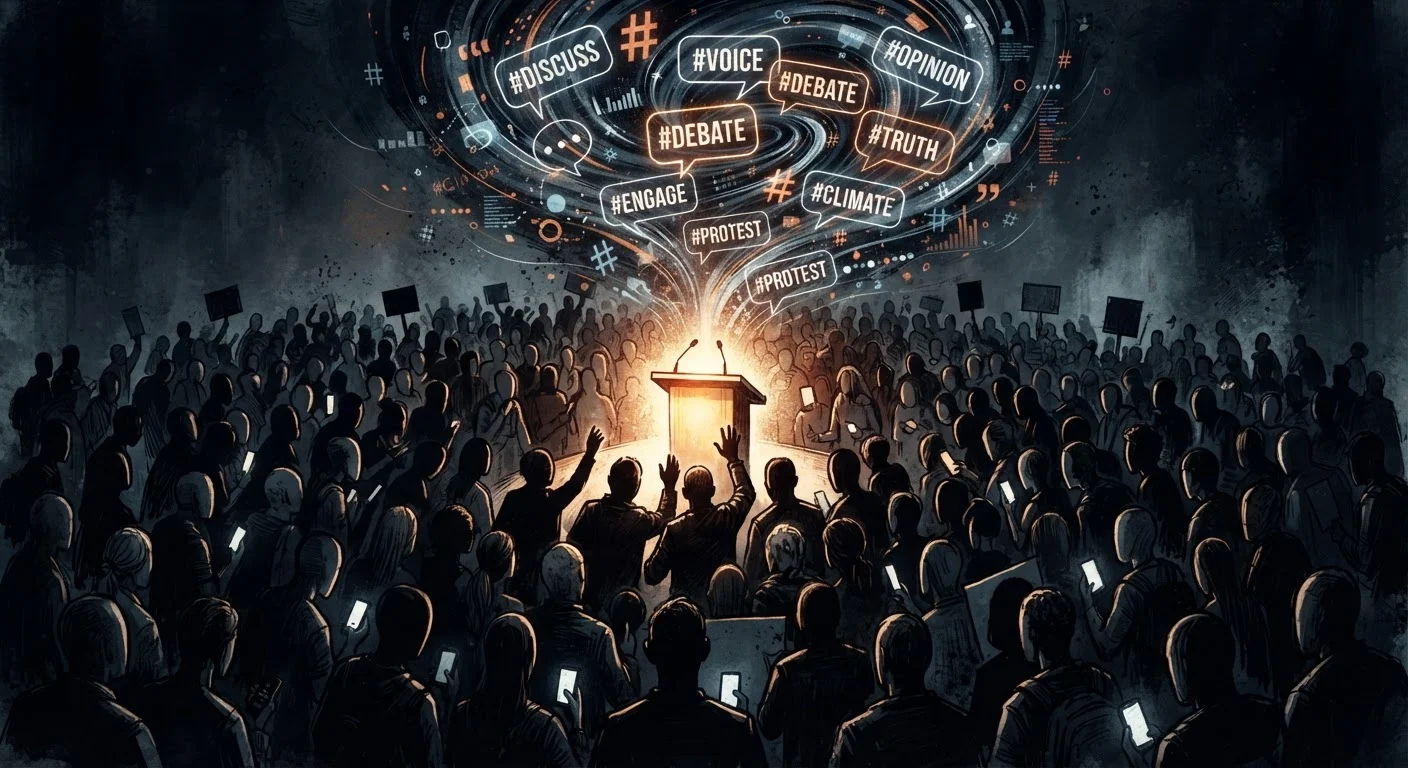
Is cancel culture a genuine accountability mechanism or an overhyped media narrative? A grounded look at the evidence.
Key takeaways
- Most people labeled 'cancelled' retain their careers, platforms, and public visibility long-term.
- Cancel culture discourse is often amplified by media framing rather than reflecting widespread coordinated action.
- Online criticism and social accountability are not new phenomena — the internet has simply accelerated their reach.
- Context matters enormously: the severity of consequences varies widely depending on the offense and the person's power.
- Public outrage and genuine accountability are meaningfully different things, and conflating them distorts both.
Why the Cancel Culture Debate Generates More Heat Than Light
Few phrases in contemporary culture trigger stronger reactions than 'cancel culture.' Depending on who's talking, it's either a long-overdue accountability reckoning or a mob-driven assault on free expression. What it rarely is, in these heated conversations, is clearly defined.
The term itself is slippery. It has been used to describe everything from a celebrity losing a brand deal after a resurfaced offensive tweet, to a private person losing their job after a viral video, to a public figure facing sustained criticism for policy positions. Bundling all of these under one label makes meaningful analysis nearly impossible — and that ambiguity is part of why the debate generates so much passion and so little clarity.
What we can do is look at specific claims that circulate widely and hold them up against available evidence. That's the goal here: not to score points for either 'side,' but to bring some grounded perspective to a conversation that desperately needs it. As patterns of viral outrage increasingly shape how pop culture gets covered and interpreted, getting this right matters more than ever.
The Myths, the Facts, and What the Evidence Actually Shows
The following myth-and-fact pairs draw on available research, journalism, and cultural history to address the most persistent misconceptions in the cancel culture debate. None of this should be read as minimizing genuine harm — whether that's harm caused by the original conduct being criticized, or harm caused by disproportionate online punishment. Both are real. The goal is accuracy, not absolution.
Myth
Once you're cancelled, your career is over for good.
Fact
Research and observation consistently show that most public figures who face cancellation campaigns retain their careers and audiences.
Studies examining the careers of figures labeled 'cancelled' — including work by researchers tracking social-media-driven controversies — have found that the majority continue working, publishing, performing, or broadcasting within months of the controversy. Some even report increased name recognition and revenue in the aftermath. High-profile examples of lasting professional destruction are the exception, not the rule, and they tend to involve criminal conduct rather than social media criticism alone.
The perception of irreversible damage is partly a product of how loudly the cancellation moment is covered versus how quietly the recovery unfolds. Comebacks don't generate the same traffic as takedowns.
Myth
Cancel culture is a new phenomenon born from social media.
Fact
Public shaming, boycotts, and social ostracism have existed throughout recorded history — digital platforms have changed the scale and speed, not the fundamental dynamic.
Historians point to everything from colonial-era tar-and-feathering to the Hollywood blacklist of the 1950s as earlier forms of collective social punishment for perceived transgressions. Advertisers pulling sponsorships from radio hosts, communities shunning members who violated norms, and newspaper campaigns to destroy reputations all predate Twitter by decades or centuries.
What social media has genuinely changed is the speed of mobilization, the geographic reach of any single controversy, and the permanence of the digital record. These are real and meaningful differences — but they don't make the phenomenon itself new. As the article on misreadings in pop culture coverage explores, mistaking acceleration for invention is one of the most common analytical errors in cultural commentary.
Myth
Cancel culture primarily targets the powerful and privileged.
Fact
While high-profile cases involve celebrities and executives, ordinary people with small platforms can face disproportionately severe consequences from viral pile-ons.
Private individuals — teachers, service workers, random bystanders caught on video — have faced job loss, harassment campaigns, and lasting reputational damage from viral moments in ways that prominent figures with legal teams and publicists typically avoid. The power differential between the person being criticized and the crowd doing the criticizing is rarely discussed in broad 'cancel culture' debates, which tend to center on the famous.
This asymmetry matters. A celebrity can weather a storm that would devastate a private citizen. Treating both as equivalent obscures the real harm that can occur when internet attention falls on someone without institutional resources to manage it.
[warning_callout]Myth
Criticizing cancel culture means you oppose accountability.
Fact
Skepticism about cancel culture as a concept is compatible with — and often rooted in — a genuine commitment to fair, proportionate accountability.
Many critics of 'cancel culture' rhetoric are not arguing against consequences for harmful behavior. They are questioning whether mob-driven online pressure produces fair outcomes, whether the punishment matches the offense, and whether the process allows for growth or redemption. These are legitimate questions about justice, not defenses of bad conduct.
Conversely, defenders of public accountability mechanisms often note that powerful figures have historically faced very few consequences for genuine harm. The debate is less about whether accountability should exist and more about who controls it, how it's applied, and what standards govern it. Framing the entire conversation as 'pro-accountability vs. anti-accountability' flattens a legitimately complex discussion. How culture shapes our moral intuitions is itself a factor worth examining here.
Myth
Most cancellation campaigns reflect widespread, coordinated public opinion.
Fact
Research on online outrage suggests that viral pile-ons are often driven by a small, highly active minority — and may not represent majority sentiment.
A notable study published in academic literature on social media dynamics found that the majority of users on major platforms report rarely or never engaging in outrage-driven call-out behavior. The loudest voices in any controversy tend to be a vocal subset, but platform algorithms amplify conflict and emotional intensity, making fringe activity appear mainstream.
This matters because both the media coverage of cancellations and the defensive backlash against cancel culture can be responding to a distorted picture of public opinion. The impression of a massive, unified public turning on someone may reflect a few hundred or thousand very active accounts rather than millions of deeply held convictions. For more on navigating this kind of information noise, the piece on staying critically informed in fast-moving media landscapes offers useful habits of mind.
[important_callout]The takeaway isn't that nothing matters online — it clearly does. It's that the most extreme narratives, from both directions, tend to obscure more than they reveal. Proportionality, context, and who holds power in any given situation are the factors that most reliably explain outcomes — not a single, monolithic force called 'cancel culture.'
For a related look at how institutional power shapes what gets cancelled in a very different context, see our piece on why streaming platforms pull the plug on popular shows — the business logic there is illuminating contrast to the social dynamics explored here.
All published content on this website is for informational and educational purposes only and should not be taken as professional advice. We recommend that readers seek expert opinion before making any decisions. The website is not responsible for any actions taken based on the information provided on this website. We are not liable for any inaccuracies, modifications, or omissions in information. Moreover, external links or third-party content are provided for convenience; we are not liable for their correctness. Users are advised to verify every piece of information before they use it for any purpose.