
Live TV on Streaming Platforms: What It Offers and Where It Falls Short

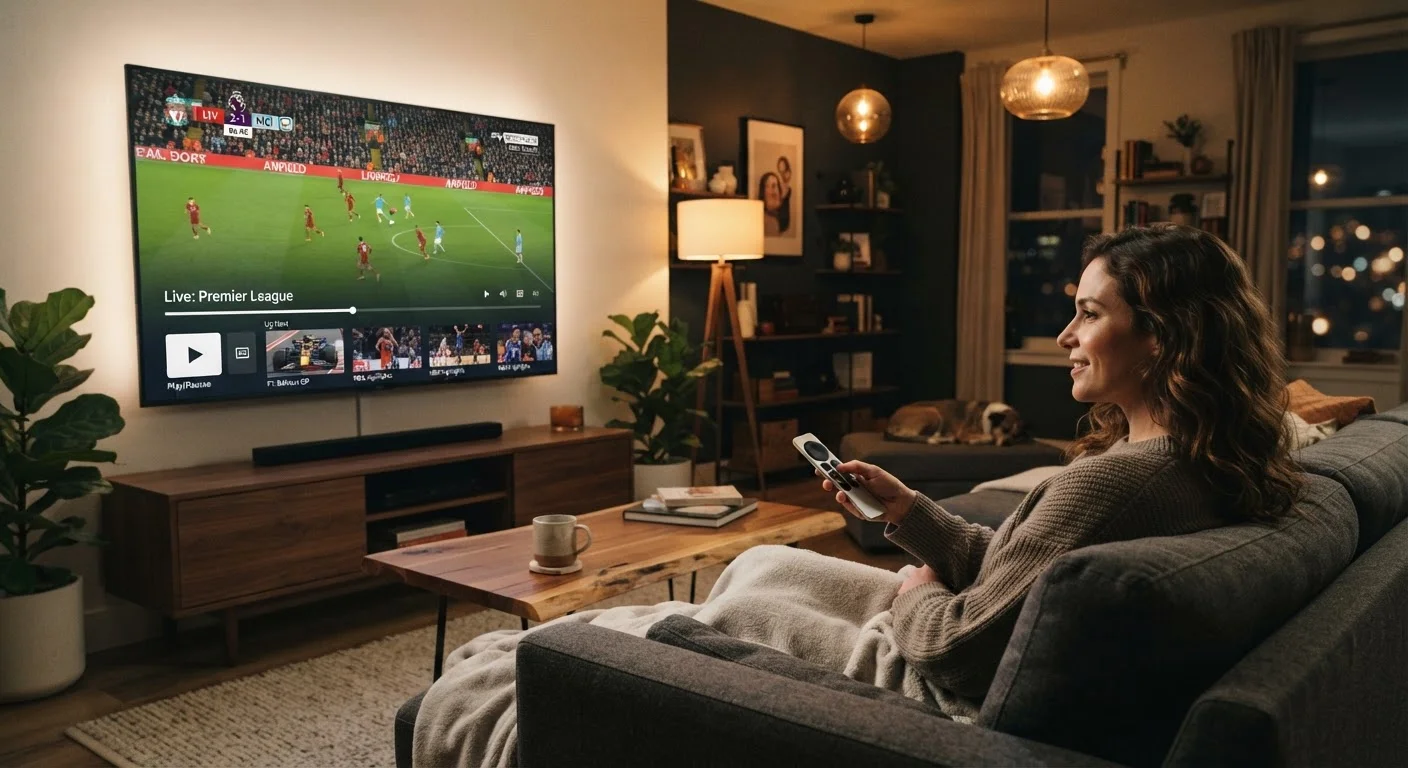
Streaming services have moved into live TV — sports, news, events. Here's an honest look at what live streaming delivers well and where it still struggles to compete.
Our Verdict
Live TV on streaming platforms has genuinely matured — it's flexible, increasingly comprehensive for news and some sports, and far easier to manage than a legacy cable package. But latency issues, fragmented rights deals, and inconsistent reliability mean it still can't fully replace traditional broadcast for every viewer. For many households, it's an excellent primary option; for die-hard sports fans or those in areas with spotty internet, the gaps remain real.
Best suited for cord-cutters comfortable with a reliable broadband connection who primarily want news, general entertainment, and occasional live events rather than exhaustive local sports coverage.
Key takeaways
- Streaming platforms now carry live sports, news, and events, but coverage varies widely by platform and region.
- Buffering, latency, and blackout restrictions remain persistent pain points for live streaming viewers.
- Consolidating live TV into a streaming package can reduce costs compared to traditional cable bundles.
- No single platform currently replicates the full live TV experience that traditional cable or satellite delivers.
- Internet speed and reliability directly determine live streaming quality in ways that cable TV is not affected by.
How Live TV Became a Streaming Priority
For most of streaming's first decade, live TV was cable's ace in the hole. On-demand libraries were impressive, but the Super Bowl, breaking news, and playoff runs kept millions tethered to their cable boxes. That calculus has shifted noticeably. Platforms including Hulu, YouTube TV, Sling TV, and FuboTV have built dedicated live TV tiers, while services like Peacock, Paramount+, and ESPN+ have layered live sports directly into their on-demand offerings.
The result is a genuinely competitive ecosystem. As our look at cable versus streaming explores, the gap between the two worlds has narrowed considerably — though it hasn't closed. Understanding exactly where live streaming excels and where it stumbles is the real work for any viewer trying to build a sensible entertainment setup.
Watch live TV on virtually any internet-connected device
Smartphones, tablets, smart TVs, and laptops all support most live streaming apps, freeing viewers from the single-TV model of traditional cable.
No long-term contracts or cancellation fees
Most live TV streaming services operate month-to-month, letting subscribers start and stop as needed — a flexibility cable providers rarely match.
Cloud DVR included in most live TV bundles
Cloud-based recording lets viewers save and time-shift live broadcasts without physical hardware, often with multi-hour or unlimited storage depending on the plan.
Major network channels widely available
ABC, CBS, NBC, and Fox are included in most live TV streaming packages, covering news, prime-time programming, and major national sporting events.
Potentially lower cost than full cable packages
For viewers with moderate live TV needs, a targeted streaming bundle can cost less than a legacy cable subscription that bundles dozens of unwanted channels.
What Live Streaming Gets Right
The strongest case for live TV on streaming platforms begins with flexibility. Viewers can access live channels on phones, tablets, smart TVs, and laptops — devices that traditional cable equipment simply doesn't reach. Multi-device support means a household isn't anchored to one television, and most platforms allow simultaneous streams across screens.
Cost structure is another genuine advantage. Rather than a locked-in, long-term cable contract, many live streaming services operate on monthly subscriptions with no termination fees. That makes it practical to subscribe for major sports seasons and pause subscriptions during quieter months — a kind of consumption model cable never offered. For a deeper look at managing those costs across multiple subscriptions, this guide to building a sustainable streaming stack offers a useful framework.
Cloud DVR functionality has also matured. Most live TV streaming packages now include cloud recording with generous storage windows, letting viewers time-shift live content without physical hardware. Local channel access — ABC, CBS, NBC, Fox — is included in most major live TV bundles, which covers a substantial portion of news, sports, and network programming.
~76%
US adults with broadband who use streaming regularly
According to Pew Research Center data, a substantial majority of American broadband households now use streaming as a primary or major source of TV content.
30–60s
Typical live stream delay vs. broadcast signal
Industry analysis consistently puts live streaming latency at 30 to 60 seconds behind traditional broadcast, with some platforms working toward sub-10-second delivery.
$70–$80+
Average monthly cost of major live TV bundles
Published pricing for leading live TV streaming services has risen significantly since their launches, with most full-featured packages now in the $70–$80 per month range before add-ons.
Where Live Streaming Still Falls Short
The limitations are real and worth taking seriously before cutting the cord entirely.
Latency is the most persistent technical frustration. Live streams delivered over the internet typically run 30 to 60 seconds — sometimes longer — behind an equivalent broadcast signal. For sports, this creates a scenario many viewers have experienced firsthand: hearing a neighbor's cheer before the play even happens on screen. This delay is inherent to how streaming video is packaged and delivered, and while improvements are being made, it hasn't been solved at scale.
Sports rights remain deeply fragmented. Regional sports networks (RSNs) — the channels that carry most local professional team games — have been a persistent gap in streaming bundles. Deals between leagues, regional broadcasters, and streaming platforms are complex and frequently incomplete, meaning fans of specific teams may find their home games simply unavailable on any streaming service without a cable or satellite subscription.
Internet dependency is another structural vulnerability. Unlike a cable signal, live streaming is entirely contingent on broadband quality. Congestion, outages, or insufficient speeds translate directly into buffering, reduced picture quality, or dropped streams — at the exact moments viewers least want disruption. For households in rural areas or those with inconsistent service, this is a significant practical barrier.
Stream latency runs 30–60 seconds behind broadcast
Due to how internet video is encoded and delivered, live streams consistently lag behind cable or antenna signals — a real problem during live sports when results spread faster than the delay.
Regional sports networks largely absent from streaming
Local professional team games broadcast on RSNs remain a stubborn gap in most streaming bundles, forcing some sports fans to maintain cable or satellite access for home-market coverage.
Entirely dependent on internet speed and reliability
Buffering, quality drops, and outright failures during live events are tied directly to broadband performance — a vulnerability cable TV doesn't share.
Rights fragmentation means coverage gaps
Sports broadcasting rights are distributed across multiple platforms and broadcasters, so no single live streaming service carries everything, and major events can require separate subscriptions.
Costs can approach cable when fully assembled
Stacking a live TV bundle with additional on-demand services to fill content gaps can erode the expected cost savings, sometimes matching traditional cable pricing.
The Subscription Cost Reality
A common assumption is that streaming automatically saves money over cable. The reality is more nuanced. A fully equipped live TV streaming setup — combining a live TV bundle with the additional on-demand services needed to fill content gaps — can approach or even exceed what a comparable cable package costs. Understanding how streaming tiers are structured is essential for anyone doing this math accurately, since ad-supported and premium options carry meaningfully different price points and content restrictions.
The flexibility advantage is genuine, but it requires active management. Without the discipline to rotate or pause subscriptions, streaming costs can quietly compound. That said, for viewers whose live TV needs are genuinely limited — primarily network news and occasional major events — a stripped-down streaming approach can represent real savings over a full cable bundle.
Antenna as a Free Supplement
A digital over-the-air (OTA) antenna — available at most electronics retailers for a modest one-time cost — can pull in local ABC, CBS, NBC, PBS, and Fox broadcasts with zero latency and no monthly fee. For many streaming households, pairing a streaming bundle with an OTA antenna covers the majority of live TV needs and sidesteps the latency issue entirely for local network content. It's worth checking which signals are receivable in your area before building your setup.
How to Decide What Works for You
The right framework depends on what live content actually matters to you. Viewers who primarily watch network news, award shows, and major national sports events will find live streaming a capable primary option. Those who follow local professional teams and rely heavily on RSN coverage will encounter the most friction — and may need to supplement streaming with an antenna or accept certain games won't be accessible.
It's also worth auditing your internet situation honestly. Streaming live TV at acceptable quality generally requires a consistent connection of at least 25 Mbps, with higher speeds recommended for 4K streams or multi-room use. If your broadband reliability is uneven, live streaming's weaknesses will be most acute precisely when you want reliability most.
For a broader orientation to the streaming landscape — including how different types of platforms are structured and what they're optimized for — a new viewer's map through the streaming landscape provides helpful grounding. Live TV is now a legitimate part of that map, even if it doesn't yet dominate every corner of it.
All published content on this website is for informational and educational purposes only and should not be taken as professional advice. We recommend that readers seek expert opinion before making any decisions. The website is not responsible for any actions taken based on the information provided on this website. We are not liable for any inaccuracies, modifications, or omissions in information. Moreover, external links or third-party content are provided for convenience; we are not liable for their correctness. Users are advised to verify every piece of information before they use it for any purpose.