
Inside the Meme Economy: How Internet Humor Becomes Cultural Currency

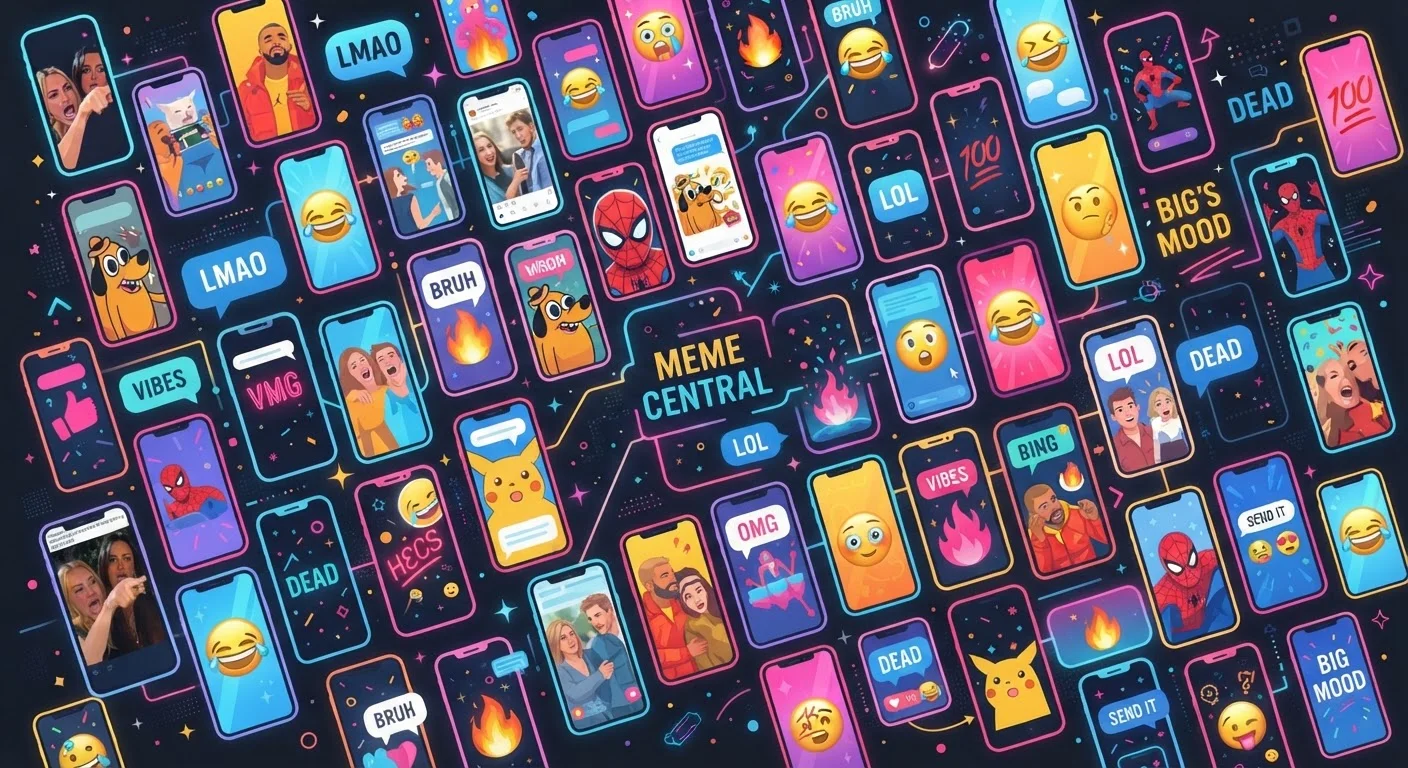
Memes aren't just jokes — they're a fast-moving language. Here's how they're created, spread, and eventually retired.
Key takeaways
- Memes function as a shared cultural language that evolves through community remixing.
- A meme's "value" rises with recognition and falls with overexposure or co-optation.
- Platform architecture shapes how fast and how far a meme travels.
- Brands and media outlets entering meme culture often accelerate its expiration.
- Understanding meme lifecycles helps you read what a moment actually means culturally.
What Memes Actually Are (Beyond the Jokes)
The word "meme" gets thrown around loosely, but it has a specific structure worth understanding. At its core, a meme is a unit of cultural information that spreads through imitation and variation. In digital life, that typically means an image macro, video clip, audio snippet, or phrase that communities adopt as a shared template — then remix to fit their own contexts.
Think of the format as a kind of fill-in-the-blank grammar. The original image of a distracted boyfriend, a Drake approval reaction, or a specific TikTok audio cue establishes a structure. Individual users supply the content, plugging in their own references, grievances, or observations. The result is humor that feels both universal (everyone recognizes the template) and personal (the specific fill feels tailored to your experience).
This is why memes communicate so efficiently. They carry enormous context in a single image — a shorthand that assumes shared cultural literacy. If you get the reference, you're in; if you don't, you're outside the loop. That in-group/out-group dynamic is a big part of what gives memes their social energy. For a deeper look at what the science and sociology say about why certain formats catch fire, see our breakdown of viral moments.
The Lifecycle: From Niche to Mainstream to Retired
Every meme follows a recognizable arc, even if the speed varies wildly. It begins in a specific community — a subreddit, a Discord server, a corner of stan Twitter — where insiders develop and iterate on the format. This is the "high value" phase: the meme is legible to in-group members but not yet saturated.
As a format spreads outward, it hits a broader audience and its cultural cachet shifts. More people using it means more creative variations, which is exciting — but it also means the template is moving closer to full mainstream absorption. Once major news outlets write explainers about it, or a brand tweets it with a product logo grafted on, the meme has effectively been claimed by the mainstream. That's typically when its original community moves on.
The final stage is retirement or ironic resurrection. Some memes become so overexposed they're cringe — actively avoided by anyone who wants to seem culturally current. Others get reclaimed ironically years later, used because they're dated, as a kind of nostalgic wink. Understanding this cycle helps explain why the same format can feel fresh and stale within weeks.
55%
Americans who share memes regularly
A 2022 Pew Research Center survey found that roughly 55% of U.S. adults say they share humorous or meme content online at least occasionally.
72 hrs
Typical peak window for a trending meme format
Cultural analysts who track social media trends commonly observe that most meme formats reach their peak circulation within 48–72 hours of breaking into mainstream feeds.
3x
Faster spread on TikTok vs. legacy platforms
Research on content velocity suggests short-form video platforms distribute trending formats significantly faster than text-and-image-based predecessors, though exact multipliers vary by format type.
How Platform Architecture Shapes Meme Travel
Not all memes move the same way, and a lot of that comes down to platform design. Reddit's upvote system rewards formats that generate broad recognition across communities. TikTok's algorithm pushes audio-driven trends to users who've never sought them out — creating massive cross-demographic reach that older platforms couldn't replicate. Twitter/X operates more on speed and wit, favoring text-based formats and rapid-fire riffing.
These differences produce distinct meme cultures. A format that thrives on TikTok (visual, participatory, often audio-anchored) can feel completely alien if someone tries to port it to Reddit, where context-heavy jokes and image macros dominate. Platform-hopping memes often mutate significantly in translation — which is itself a form of cultural evolution. How virality works differently across platforms is worth understanding if you want to track where a meme truly originated versus where you first encountered it.
The platforms also set the rules on what can spread. Content moderation, algorithmic suppression, and community norms all filter what reaches mainstream feeds — meaning the meme landscape you see is already curated, often invisibly.
When Memes Become Cultural Currency
The "economy" metaphor is useful because memes genuinely function like currency in social exchanges. Dropping a timely, well-placed meme in a group chat signals cultural fluency. Misusing a format — getting the tone wrong, deploying it too late, or applying it to the wrong context — can read as awkward or tone-deaf. In this sense, meme literacy is a real social skill.
At a larger scale, memes shape how cultural moments get remembered. A politician's gaffe, a celebrity's red-carpet look, a film's most quotable line — these often become memes before they become news stories, and the meme framing can define how the event is processed collectively. This is why journalists and cultural analysts pay close attention to what's circulating: it's a fast, real-time readout of public sentiment.
It's worth being careful, though, about over-reading memes as social movements. A trending format can reflect a genuine mood without constituting organized opinion. Mistaking viral trends for lasting movements is one of the most common errors in pop culture coverage — and being meme-literate means knowing the difference.
If you want to sharpen your broader vocabulary for reading online culture, our plain-English glossary of modern pop culture terms is a solid companion piece.
Frequently Asked Questions
All published content on this website is for informational and educational purposes only and should not be taken as professional advice. We recommend that readers seek expert opinion before making any decisions. The website is not responsible for any actions taken based on the information provided on this website. We are not liable for any inaccuracies, modifications, or omissions in information. Moreover, external links or third-party content are provided for convenience; we are not liable for their correctness. Users are advised to verify every piece of information before they use it for any purpose.