
Amateur Astronomy: Everything You Need to Know Before Looking Up

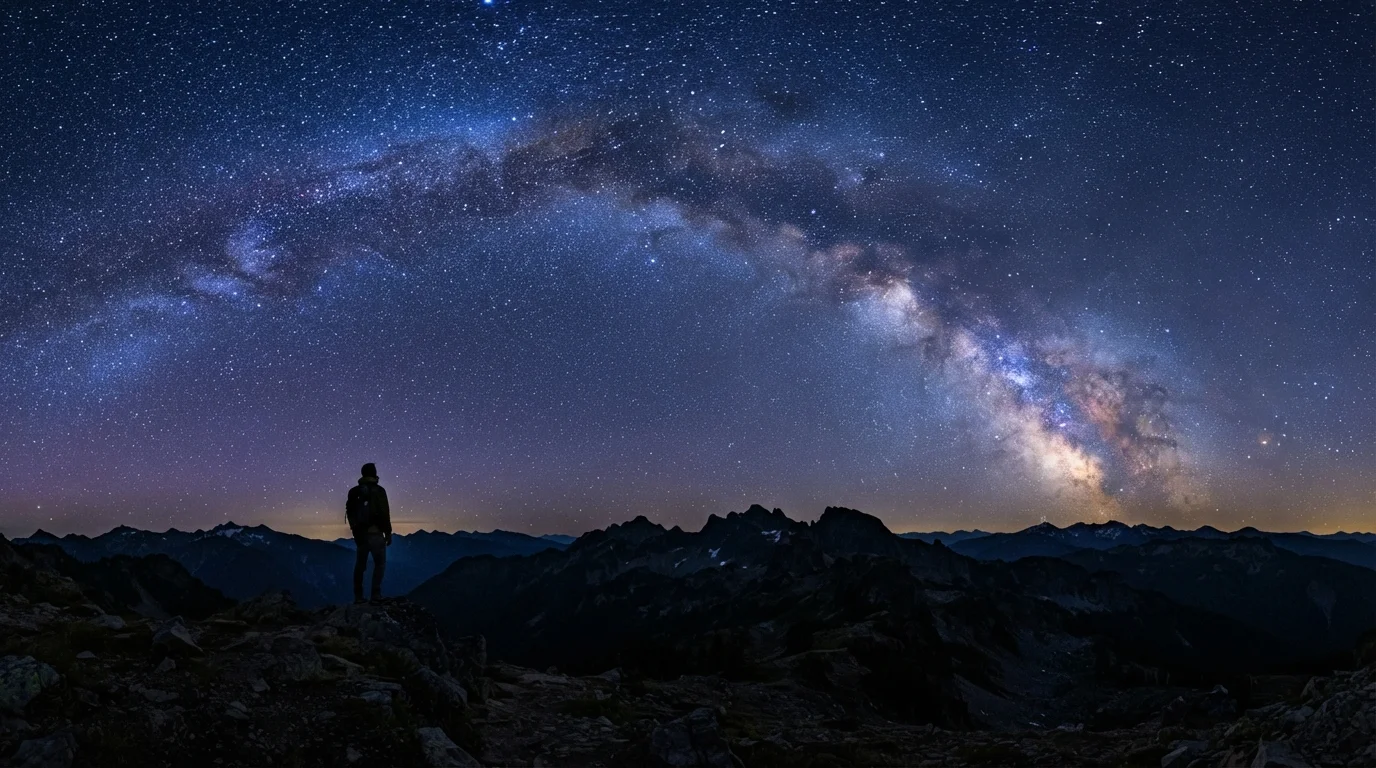
A thorough introduction to stargazing for adults starting from scratch — covering equipment, key concepts, dark-sky basics, and where to go next.
Start here
Why Amateur Astronomy Hooks People for Life
Learn the language
Key Concepts Every Beginner Should Know
Gear up
Your First Equipment: Start Simple
Find your spot
Dark Skies: Why Location Changes Everything
Keep going
Building Your Astronomy Practice
Key takeaways
- You can start stargazing tonight with no equipment beyond your own eyes.
- Understanding a few core concepts dramatically improves what you'll see and enjoy.
- Light pollution is the single biggest obstacle most urban beginners face.
- Binoculars are often better first tools than entry-level telescopes for new observers.
- Amateur astronomy communities are welcoming and an excellent source of practical mentorship.
Why Amateur Astronomy Hooks People for Life
There's a specific moment many stargazers describe: the first time they realize that faint smudge above the horizon isn't a cloud — it's an entirely separate galaxy, millions of light-years away. That cognitive jolt, the sudden sense of genuine cosmic scale, is what converts a casual glance skyward into a lifelong obsession.
Unlike hobbies that demand athleticism or elaborate studio space, amateur astronomy is open to nearly anyone with curiosity and patience. It rewards incremental knowledge: the more you learn, the richer each session becomes. In that way, it shares real DNA with other quiet, observation-based pursuits — if you've ever wondered why birdwatching turns casual observers into devoted enthusiasts, the same slow-burn satisfaction applies here, just pointed upward instead of into the trees.
There's also a welcome screen-free quality to the practice. Astronomy pulls you outside, slows your attention, and reminds you that the most spectacular visual experiences on Earth don't require a subscription.
Key Concepts Every Beginner Should Know
A little vocabulary goes a long way when you're starting out. Understanding a handful of foundational ideas makes reading star charts, interpreting what you see, and talking to other observers much easier.
Magnitude
A numerical scale measuring the brightness of stars and other objects. Counterintuitively, lower numbers mean brighter objects — the Sun is around -27, while the faintest naked-eye stars are around +6.
Aperture
The diameter of a telescope's main lens or mirror. Larger aperture gathers more light, making faint objects visible and revealing finer detail on planets.
Deep-sky objects
Anything beyond our solar system other than individual stars — including galaxies, nebulae, and star clusters. These are typically faint and benefit from dark skies and larger aperture.
Seeing
An astronomer's term for atmospheric steadiness on a given night. Poor seeing causes stars to twinkle and shimmer, blurring fine planetary detail even in good equipment.
Bortle scale
A nine-level numeric scale that measures the darkness of the night sky at any given location. Class 1 is the darkest possible; Class 9 represents the brightest urban skies.
Zenith
The point in the sky directly overhead from where you're standing. Objects near the zenith are viewed through less atmosphere, giving cleaner, steadier views.
One concept that surprises many newcomers is averted vision — the technique of looking slightly to the side of a faint object rather than directly at it. The center of your eye's retina is optimized for color and detail in daylight; the rod-heavy edges are far more sensitive to faint light. Using averted vision can make otherwise invisible nebulae suddenly pop into view.
Your First Equipment: Start Simple
The most common beginner mistake is buying a telescope before learning the sky. A modest pair of 7×50 or 10×50 binoculars — the numbers indicating magnification and lens diameter in millimeters — will reveal the craters of the Moon, Jupiter's four largest moons, and the core of the Andromeda Galaxy. They're also forgiving of the shaky, uncertain hand of someone still learning to navigate the night sky.
When you're ready to move to a telescope, two designs dominate the beginner market: refractors (which use lenses, producing sharp planetary views) and reflectors (which use mirrors, offering more aperture for the money and better performance on deep-sky objects). A Dobsonian reflector — a mirror telescope mounted on a simple swivel base — has long been a community favorite for beginners because it provides significant aperture without complexity.
Let Your Eyes Adjust Before Judging the Sky
Give yourself at least 20–30 minutes away from all bright lights before deciding what the sky looks like. Many beginners step outside, glance up for two minutes, and conclude the sky is disappointing — when in fact their eyes simply haven't dark-adapted yet. A red-light flashlight is a worthwhile small investment to preserve your night vision during a session.
A star chart, either printed or via a smartphone app, is arguably more important than optics in your first year. Many astronomy apps use your device's sensors to overlay constellation lines and object labels on a live sky view — a genuinely powerful learning tool. For those who enjoy tech-assisted hobbies, it's worth comparing these to the broader world of smart gadgets covered in our guide to everyday smart gadgets.
Dark Skies: Why Location Changes Everything
Light pollution is the single biggest variable separating a frustrating experience from a transformative one. The Bortle scale, a nine-point measurement of night-sky brightness, runs from Class 1 (pristine dark sky, visible zodiacal light, thousands of naked-eye stars) down to Class 9 (inner-city sky where only the Moon, a handful of bright stars, and major planets are visible). Most suburban backyards sit at Class 5 or 6.
Even a 45-minute drive away from a metropolitan area can drop you two or three classes on the Bortle scale, revealing an entirely different sky. Dedicated dark-sky preserves exist across the US — areas where outdoor lighting is actively managed. Organizations like the International Dark-Sky Association maintain maps of certified dark-sky parks and communities that are freely accessible online.
One practical note: your eyes need roughly 20–30 minutes to fully dark-adapt after exposure to bright light. Use a red-filtered flashlight (red light disrupts night vision far less than white) and keep phone screen brightness low while observing.
Building Your Astronomy Practice
Consistency matters more than gear. Observing for even 20 minutes on a clear night two or three times a month builds familiarity with seasonal sky changes faster than any book. Over a full year, you'll watch constellations wheel in and out of view, track planets migrating across the zodiac, and develop an intuitive sense of the sky's rhythm.
Local astronomy clubs are genuinely one of the best accelerators available to beginners. Most host regular public star parties where members set up an array of telescopes and welcome newcomers to look through them, ask questions, and absorb practical knowledge informally. The social dimension makes the hobby stick in a way solo learning often doesn't.
Online communities extend that network considerably, and dedicated forums have accumulated decades of beginner guidance on observing techniques, equipment advice, and object lists. A popular entry challenge is the Messier catalog — 110 objects (galaxies, nebulae, and star clusters) that French astronomer Charles Messier compiled in the 18th century. Tracking down all 110 over a season or two gives beginners an engaging, achievable goal that systematically covers the sky's highlights.
Like starting a garden from zero, amateur astronomy rewards patience with small, regular investments of time. You don't need to master everything at once — the sky will always be there, and so will the next clear night.
Frequently Asked Questions
All published content on this website is for informational and educational purposes only and should not be taken as professional advice. We recommend that readers seek expert opinion before making any decisions. The website is not responsible for any actions taken based on the information provided on this website. We are not liable for any inaccuracies, modifications, or omissions in information. Moreover, external links or third-party content are provided for convenience; we are not liable for their correctness. Users are advised to verify every piece of information before they use it for any purpose.