
Tyre Care Fundamentals: Pressure, Tread Depth, and Rotation

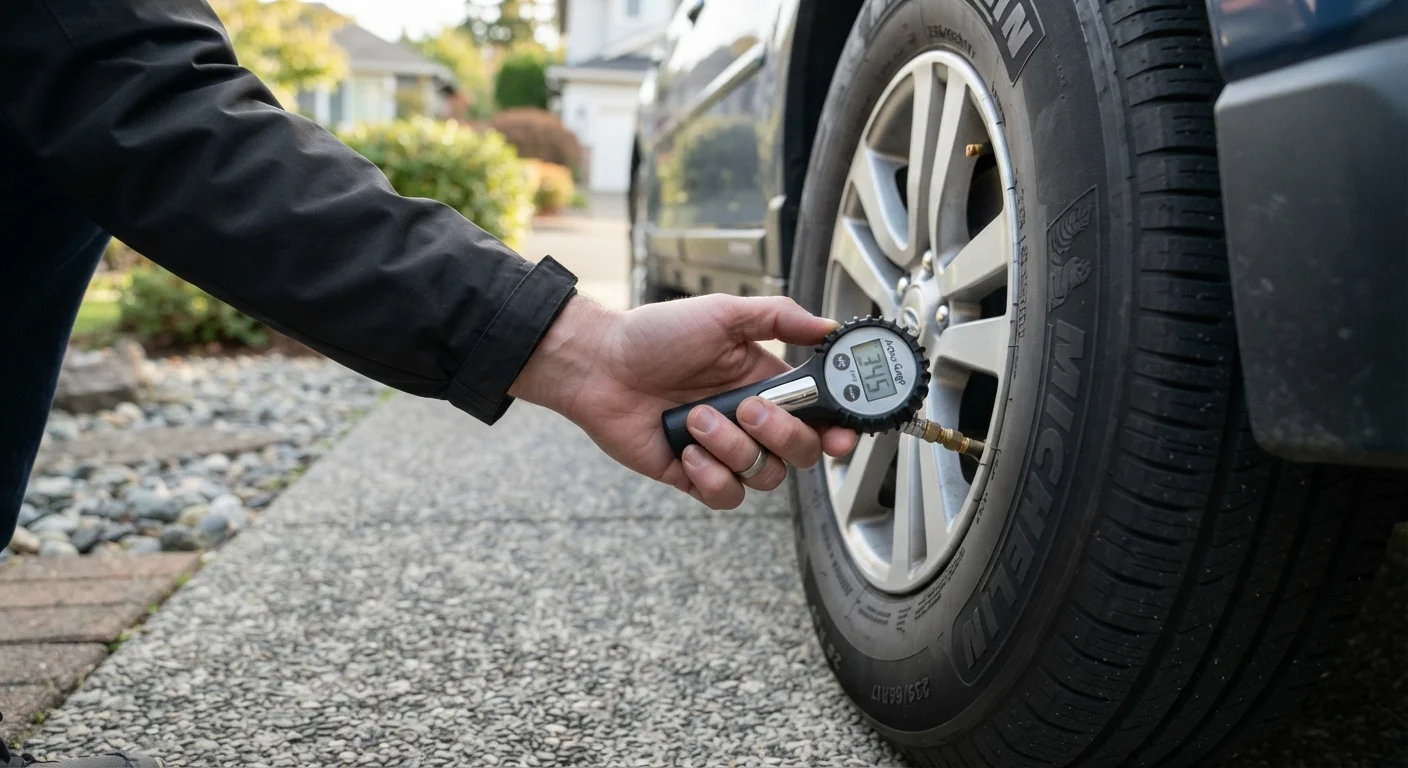
Learn how to check tyre pressure correctly, measure tread depth safely, and understand why rotation matters for even wear.
Start here
Why Tyre Care Matters More Than Most Drivers Realize
Next
Checking and Setting Tyre Pressure Correctly
Then
Measuring Tread Depth and Knowing When to Replace
Build on it
Tyre Rotation: Why It Matters and How Often to Do It
Pull it together
Putting It All Together: A Simple Tyre Routine
Key takeaways
- Check tyre pressure when tyres are cold, using the PSI on the door placard — not the tyre sidewall.
- The penny test is a quick tread-depth check; replace tyres at or below 2/32 of an inch.
- Most vehicles benefit from tyre rotation every 5,000–7,500 miles to promote even wear.
- Under-inflated tyres reduce fuel economy and increase the risk of a blowout.
- Uneven tread wear is often a symptom of a deeper issue like misalignment or worn suspension parts.
Why Tyre Care Matters More Than Most Drivers Realize
Tyres are the only part of your vehicle that actually contacts the road, yet tyre maintenance is one of the most commonly skipped items on the average driver's to-do list. The payoff for attention here is concrete: properly maintained tyres grip better in rain, respond faster in emergency manoeuvres, and last thousands of miles longer than neglected ones.
There are also direct financial stakes. Under-inflated tyres create more rolling resistance, which the US Department of Energy has linked to measurable decreases in fuel economy. Replacing a set of tyres prematurely because of avoidable wear adds up to a significant out-of-pocket cost — one that routine checks can help postpone considerably. For a fuller picture of how tyre care fits alongside other seasonal tasks, see the Seasonal Car Maintenance Calendar used by many proactive drivers.
The three pillars of tyre care — pressure, tread depth, and rotation — are each simple to understand and, in most cases, easy to act on yourself.
Checking and Setting Tyre Pressure Correctly
Tyre pressure is measured in PSI. The right target for your vehicle is on the sticker inside the driver's door jamb or in your owner's manual — not the maximum figure moulded into the tyre's sidewall, which is the tyre's structural limit, not a driving recommendation.
Check Pressure Cold for an Accurate Reading
Heat from driving expands the air in your tyres and will give you a falsely high pressure reading. Always check tyre pressure before your first drive of the day or after at least three hours of the vehicle sitting still. This small habit is the single most important factor in getting an accurate measurement.
When to check: Always check pressure when tyres are cold — meaning the car has been parked for at least three hours or driven fewer than a mile. Heat from driving expands air and gives an artificially high reading. Morning, before your first trip, is ideal.
Step-by-step pressure check
- Remove the valve cap from the tyre's valve stem (the small rubber or metal nub on the wheel).
- Press a tyre pressure gauge firmly onto the valve stem. Digital gauges are the most accurate and easiest to read for beginners.
- Compare the reading to the target PSI for your vehicle.
- If pressure is low, add air at a gas station pump or a portable compressor. Add in short bursts and recheck.
- If pressure is too high, press the small pin inside the valve stem briefly to release air, then recheck.
- Replace the valve cap securely.
Temperature matters: a cold winter morning can reduce tyre pressure noticeably compared to a warm summer afternoon. Getting into the habit of checking pressure monthly keeps you ahead of those swings. Your owner's manual also lists whether your vehicle has a Tyre Pressure Monitoring System (TPMS), which alerts you when pressure drops significantly — but TPMS is not a substitute for manual checks, since it typically warns only after pressure has dropped well below the safe target.
Measuring Tread Depth and Knowing When to Replace
Tread depth is what allows your tyre to channel water away from the contact patch during rain. As tread wears down, that ability diminishes — increasing stopping distances and the risk of hydroplaning.
PSI
Pounds per square inch — the unit used to measure air pressure inside a tyre. Your vehicle's door placard lists the target PSI for safe driving.
Tread depth
The measurement from the top of the tyre's rubber tread to the bottom of its deepest groove. More depth means better water evacuation and grip.
Tread wear indicator
Small raised rubber bars built into tyre grooves at 2/32 inch. When the surrounding tread wears flush with these bars, the tyre has reached its minimum safe depth.
Valve stem
The small rubber or metal tube extending from the wheel rim through which you add or release air. It has a screw-in cap to keep out dirt.
TPMS
Tyre Pressure Monitoring System — a sensor built into many modern vehicles that alerts the driver when tyre pressure drops significantly below the safe level.
Hydroplaning
When a tyre rides up on a layer of water instead of maintaining contact with the road surface, causing a temporary loss of steering and braking control.
Two practical ways to check tread depth
- The penny test
- Insert a US penny into the tread groove with Lincoln's head pointing down toward the tyre. If you can see the top of Lincoln's head, the tread is at or below 2/32 inch — the legal minimum in the US — and the tyre should be replaced.
- The quarter test
- Insert a quarter the same way. If Washington's head is fully visible, tread is at or below 4/32 inch. Many safety experts recommend replacing tyres at this point, particularly in wet-climate regions.
- Built-in wear indicators
- Modern tyres have small rubber bars moulded into the tread grooves at 2/32 inch. When the tread surface is flush with these bars, the tyre has reached the end of its legal service life.
Check tread depth at multiple points across the tyre width, not just one groove. Uneven wear patterns — where one edge is more worn than the other — point to inflation or alignment problems that deserve a professional look. For context on how tyre condition relates to your braking ability, the Brake System Basics guide explains how stopping performance depends on both tyres and brakes working together.
Tyre Rotation: Why It Matters and How Often to Do It
Rotation means moving each tyre to a different position on the vehicle on a regular schedule. The reason is straightforward: different wheel positions wear tyres at different rates. On a front-wheel-drive car, the front tyres handle acceleration, steering, and most of the braking force simultaneously — they wear faster. On a rear-wheel-drive vehicle, the reverse is true. Rotation spreads that uneven workload so all four tyres wear at a more similar rate.
General interval: Most manufacturers recommend rotation every 5,000 to 7,500 miles, often aligning with oil change intervals. Check your owner's manual for the figure specific to your vehicle.
Common rotation patterns
| Drive type | Common pattern |
|---|---|
| Front-wheel drive | Front to rear (same side); rear cross to front |
| Rear-wheel drive | Rear to front (same side); front cross to rear |
| All-wheel drive | Full X-pattern or follow manufacturer guidance |
If your tyres are directional (they have an arrow on the sidewall indicating which way they must rotate), they can only be moved front to rear on the same side — not crossed. A shop handling your rotation will account for this automatically.
Persistent uneven wear even after regular rotation is worth investigating — it may indicate wheel misalignment or worn suspension components. Those are jobs for a qualified mechanic. The common car maintenance myths article addresses some popular misconceptions about tyre rotation intervals that lead drivers to skip this step.
Putting It All Together: A Simple Tyre Routine
Good tyre care does not require specialist knowledge or expensive tools. A digital tyre gauge (widely available for under $20) and five minutes a month covers the pressure check. The penny and quarter tests cost nothing and take seconds. Rotation is inexpensive when bundled with routine service visits.
A practical monthly habit: on the first day of each month, check all four tyres — and the spare if your vehicle carries one — for visible damage, embedded objects, and pressure. Do a visual tread check every time you fill up with fuel; it takes ten seconds per tyre.
Keeping up with these basics is one of the most cost-effective things you can do as a vehicle owner. For a broader maintenance framework that incorporates these tyre checks alongside fluid top-ups, battery tests, and more, the Car Maintenance From the Ground Up overview is a useful companion resource.
This article is for general informational and educational purposes. For tyre replacement, alignment concerns, or any repair work involving vehicle safety systems, consult a qualified automotive professional.
Frequently Asked Questions
All published content on this website is for informational and educational purposes only and should not be taken as professional advice. We recommend that readers seek expert opinion before making any decisions. The website is not responsible for any actions taken based on the information provided on this website. We are not liable for any inaccuracies, modifications, or omissions in information. Moreover, external links or third-party content are provided for convenience; we are not liable for their correctness. Users are advised to verify every piece of information before they use it for any purpose.