
Understanding Your Owner's Manual: The Most Overlooked Maintenance Tool

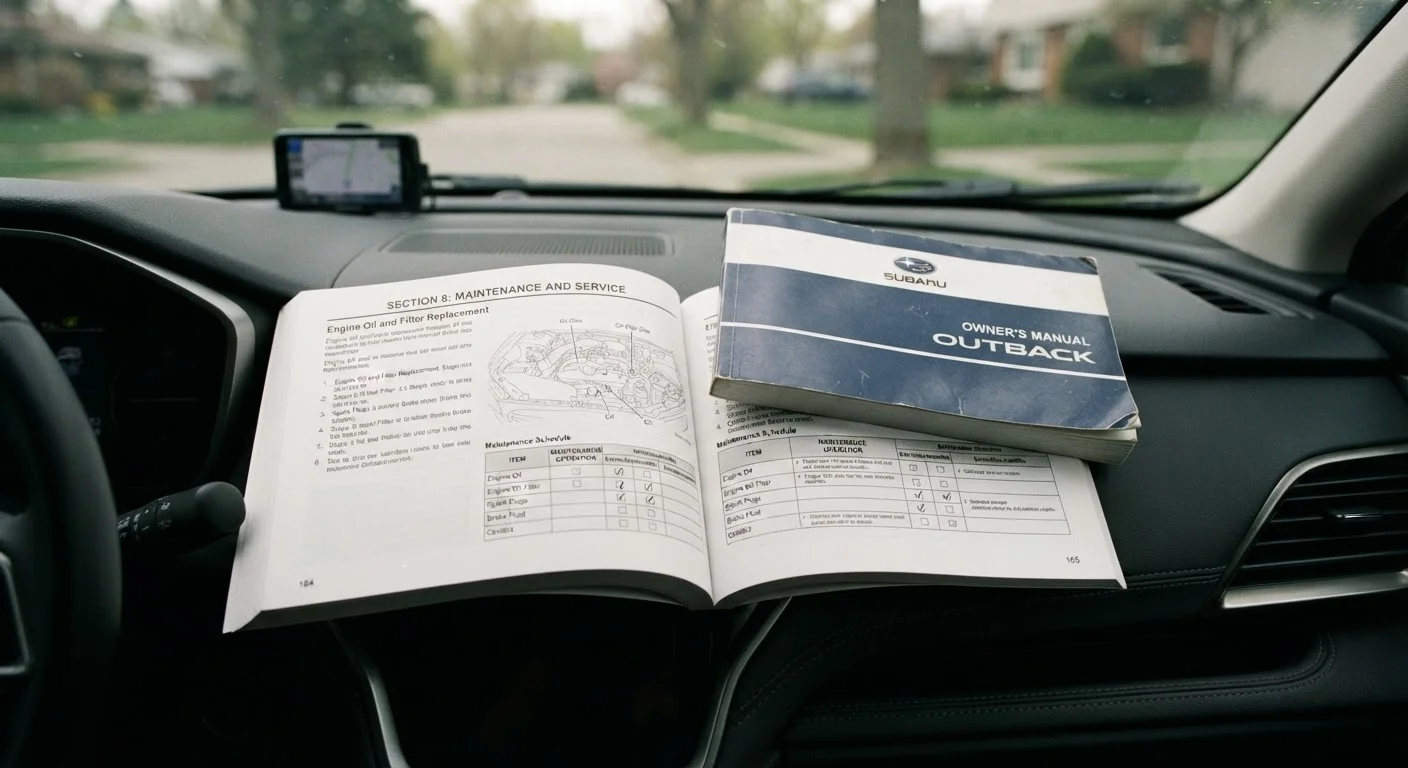
Your owner's manual holds manufacturer-specific service intervals, fluid specs, and tyre ratings. Here's how to actually use it.
Key takeaways
- Your owner's manual contains manufacturer-specific service intervals that override generic advice.
- Fluid specifications listed in the manual prevent costly compatibility errors when topping up or changing fluids.
- Tyre load ratings, pressure specs, and size data are all verified in the manual — not guessed.
- Many drivers overpay for unnecessary services because they never consulted their manual's actual schedule.
- Digital versions of most manuals are freely available from manufacturers if you've lost the physical copy.
Why Most Drivers Never Open the Manual
The owner's manual arrives in the glove box, gets buried under registration papers, and stays there for the life of the vehicle. Most drivers treat it as a last resort — something to skim when a warning light appears. That's a costly habit. The manual is the single most accurate maintenance resource for your specific vehicle, written by the engineers who designed it.
Generic maintenance advice — from well-meaning friends, quick-lube shops, or outdated internet posts — is rarely calibrated to your engine, transmission, or climate conditions. Your manual is. It specifies which oil viscosity your engine actually requires, how often your transmission fluid should be changed under normal versus severe driving conditions, and what tyre pressure your car was engineered to run on. None of those figures are universal. See our guide to common car maintenance myths for a closer look at how generic advice leads drivers astray.
The good news: you don't need mechanical knowledge to use the manual effectively. You just need to know where to look and what sections matter most.
Don't Follow Generic Intervals Blindly
Service intervals vary significantly between makes, models, and engine types. Following a one-size-fits-all schedule — such as the old 3,000-mile oil change rule — can lead to both unnecessary spending and missed manufacturer requirements. Always cross-reference any maintenance advice against your specific manual before acting on it.
What to Look for — and Where to Find It
Owner's manuals follow a broadly consistent structure, but the sections you'll use most are often buried in the middle. Here's where to focus:
- Maintenance schedule: Usually labeled "Scheduled Maintenance" or "Service Intervals." This table lists every service item — oil changes, filter replacements, spark plugs, belts — alongside the mileage or time interval at which each is due. This is the section that determines what your car actually needs, not what a shop's upsell menu suggests.
- Fluids and capacities: Lists the correct specification for engine oil, coolant, brake fluid, power steering fluid, and transmission fluid. Specifications are given as industry codes (e.g., SAE 5W-30, DOT 3) — match these exactly when purchasing. See our engine oil explainer for help decoding viscosity grades.
- Tyre information: Confirms the correct tyre size, load index, speed rating, and recommended cold inflation pressure for your vehicle. Note that the pressure figure on the tyre's sidewall is a maximum, not a target — always use the manual's figure or the placard on the driver's door jamb.
- Warning lights: Most manuals include a dashboard symbols index. Use it alongside our warning lights guide when an unfamiliar light appears.
Using the Wrong Fluid Can Cause Real Damage
Topping up with an incompatible transmission fluid, coolant mix, or brake fluid type can degrade seals, corrode components, or void your warranty. The correct specification is printed in your manual's fluids section — check it before purchasing anything at an auto parts store.
How to Use Your Manual: Step by Step
Working through your manual systematically takes under 30 minutes and pays dividends at every future service appointment. Follow these steps to extract the information that matters most.
Locate or Download Your Manual
If the physical copy is in your glove box, retrieve it. If it's missing, go to your manufacturer's official website and search by vehicle year, make, and model. Most manufacturers provide free PDF downloads. Confirm the manual matches your exact trim level, as some specs vary between trim tiers on the same model.
Find the Maintenance Schedule
Use the table of contents to locate the scheduled maintenance section. Identify whether your manual distinguishes between normal and severe driving conditions. Severe conditions typically include frequent short trips under 5 miles, stop-and-go urban driving, towing, or operating in extreme temperatures. If any of these apply to you regularly, use the severe-duty intervals.
Record Your Key Fluid Specifications
Turn to the fluids and capacities section. Write down the required oil viscosity grade (e.g., 0W-20), the engine oil capacity, coolant type, brake fluid specification, and any transmission or differential fluid grades listed. These codes are non-negotiable — using a substitute can void warranty coverage or cause component damage.
Note Your Tyre Specifications
Find the tyre section or check the specifications appendix. Record the tyre size (e.g., 225/50R17), the manufacturer-recommended cold inflation pressure for front and rear tyres, and the spare tyre pressure if applicable. Cross-reference this with the sticker on your driver's door jamb, which should match. For more on tyre maintenance, see tyre care fundamentals.
Compare the Schedule to Your Current Mileage
Check your odometer and compare it against each line in the maintenance schedule. Mark which services are overdue, which fall within the next 5,000 miles, and which are not yet due. This gives you a clear, manual-based picture of your vehicle's actual maintenance needs — independent of any third-party recommendation.
Putting the Information to Work
Once you've gathered the key specs from your manual, the next step is integrating them into a real maintenance routine. Log your current odometer reading alongside each service interval from the maintenance schedule. This tells you immediately which services are overdue, which are upcoming, and which a shop may be recommending prematurely.
When you bring your vehicle in for service, the manual gives you standing to ask informed questions. If a technician recommends a transmission flush at 30,000 miles but your manual specifies 60,000, you have the data to push back — politely but confidently. See what mechanics actually check during a routine service to understand what's standard so you can spot what isn't.
Consider keeping a running service log alongside the manual — noting the date, mileage, and work performed each time. This pairs naturally with maintaining a complete service history, which protects your vehicle's value and guides smarter decisions down the road. For a broader framework, our complete owner's maintenance overview covers everything from fluid checks to seasonal preparation.
Download a Digital Copy Now
Most manufacturers offer free PDF downloads of owner's manuals through their official websites. Search your make, model, and year — then save the file to your phone's cloud storage so it's always accessible, even at a shop or roadside.
All published content on this website is for informational and educational purposes only and should not be taken as professional advice. We recommend that readers seek expert opinion before making any decisions. The website is not responsible for any actions taken based on the information provided on this website. We are not liable for any inaccuracies, modifications, or omissions in information. Moreover, external links or third-party content are provided for convenience; we are not liable for their correctness. Users are advised to verify every piece of information before they use it for any purpose.