
Biking to Work Without Overhauling Your Entire Morning

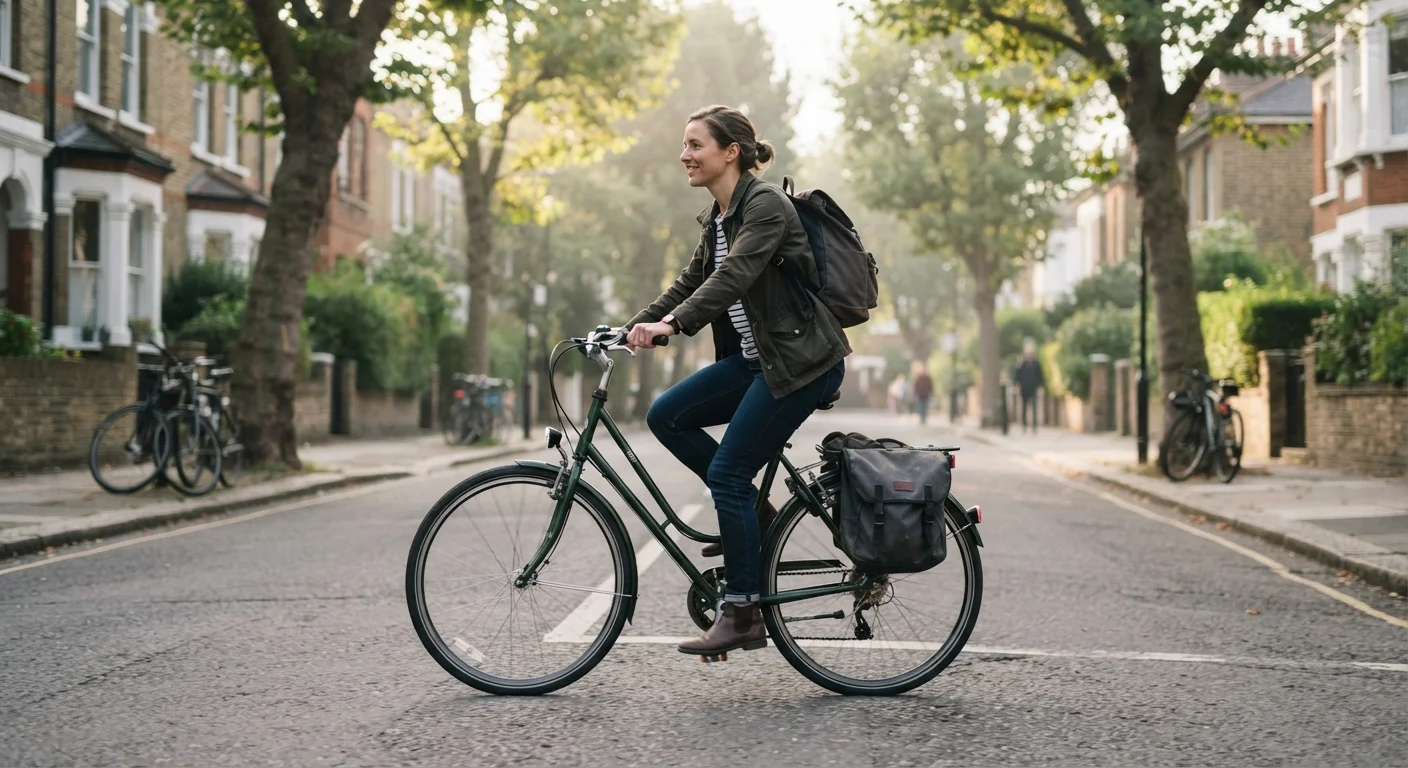
Cycling to work doesn't require heroic effort or a complete lifestyle shift. A practical look at making bike commuting fit a normal schedule.
Key takeaways
- A successful bike commute hinges on route planning and small logistical adjustments, not extreme fitness.
- Handling clothes, hygiene, and gear at work in advance removes the biggest daily friction points.
- Starting with one or two days per week makes the habit stick without overwhelming your schedule.
- Basic safety gear and a reliable lock matter more than an expensive bike.
- Bike commuting can meaningfully reduce transportation costs and double as daily exercise time.
Why Most People Give Up Before They Start
Bike commuting has a reputation for requiring more than it actually does. The mental image — spandex, a $2,000 road bike, and a shower on arrival — puts off the majority of people who could realistically do it in ordinary clothes on an ordinary bicycle. The truth is that most American bike commutes are well under 10 miles each way, which for a typical adult on a comfortable city bike takes somewhere between 30 and 50 minutes at a relaxed pace.
The real obstacles are logistical, not physical. Where do you put your bag? What do you do about sweating? What happens if it rains? These questions all have practical, low-effort answers — and solving them once is what makes the habit stick. For a broader look at how route choice, timing, and mode switching can reshape your whole commute, our overview of strategies that actually save commute time is a useful starting point.
What you will need
What You Actually Need to Get Started
You do not need a new bike. You need a bike that works — meaning the brakes stop you reliably, the tires hold air, and the chain doesn't skip. If you haven't ridden in a while, a tune-up at a local bike shop (typically modest in cost) is money well spent. Beyond that, the essentials are a helmet, a lock, and lights.
U-lock or heavy-duty chain lock
Secures your bike to a fixed object at your workplace or transit stop.
Front and rear bike lights
Required by law in most US states for riding before sunrise or after sunset; increases visibility year-round.
Rear rack and panniers (or a backpack)
Carries work clothes, a laptop, and daily essentials without straining your back.
Basic patch kit and hand pump
Lets you handle a flat tire on the road without calling for help.
Cycling gloves
Reduces hand fatigue and provides grip; adds minor padding in a fall.
Fenders
Keeps road spray off your clothes on wet mornings, a small but significant comfort improvement.
If you're curious whether an electric bike might make longer distances or hillier routes more manageable, our article on e-bikes as a commuting tool lays out the honest trade-offs without the sales pitch.
The Step-by-Step Plan
Following these steps in order keeps the process manageable and lets you identify friction points before they become reasons to quit. Treat the first few weeks as an experiment — gather information about what works for your specific commute, schedule, and workplace rather than trying to nail everything at once.
Map a safe, practical route before your first ride
Don't assume your car route is your bike route. Use a dedicated cycling map tool or your city's bike infrastructure map to find roads with bike lanes, low traffic, or separated paths. Your goal is a route that feels comfortable, not necessarily the shortest one. Walk or drive it first if you're unsure.
Note where you'll cross major intersections, how many traffic lights you'll hit, and whether there are sections that could be hazardous in low light or wet weather. Mark an alternate route for bad weather days.
Pre-stage clothes and supplies at your workplace
The single biggest barrier to bike commuting is figuring out how to arrive at work looking presentable. The easiest solution: don't carry everything every day. On a Monday (when you drive or take transit), bring a week's worth of work clothes and leave them at the office. Do the same with shoes, a toiletry kit, and any bulky accessories.
If your workplace has a gym or locker room, use it. If not, even a small bathroom sink works for a quick freshen-up. Compact options like a small towel, dry shampoo, or deodorant wipes make a meaningful difference.
Do a timed trial run on a non-work day
Ride your planned route on a weekend or day off at roughly the same time you'd leave for work. Track how long it actually takes, including stopping at intersections. Add five minutes for locking up and getting changed at work.
This removes the anxiety of the unknown on your first real commute day and gives you a reliable number to plug into your morning schedule. Most commuters find their bike time is more predictable than driving in traffic.
Adjust your morning routine by 15 minutes, not an hour
Most people overestimate how much extra time bike commuting requires. If your trial run showed the bike takes 25 minutes versus a 20-minute drive, you need five extra minutes — not a full schedule overhaul. Account for changing clothes at work (roughly 5–10 minutes) and you're looking at a 15-minute earlier start at most.
Set your bag out the night before. Fill your water bottle, check your tires, and confirm your lights are charged. These habits take under five minutes and prevent the frantic scrambling that makes mornings feel impossible.
Start with two days a week, not five
Committing to bike commuting every single day from the start is a reliable way to burn out within two weeks. Instead, pick two days — ideally not back-to-back — and hold to those. This gives you recovery time, keeps your car or transit card as a genuine backup, and lets you refine the routine before it becomes the norm.
After four to six weeks, most people naturally add a third day when they notice the habit working. The goal is a sustainable cadence, not a perfect record. If you're also working from home some days, the calculus shifts further — see how other commuters are thinking through mixed-mode weeks in our piece on telework and the commute calculus.
Build a simple backup plan for bad days
A backup plan is what separates a sustainable habit from a fragile experiment. Before your first commute week, decide: what will you do if it rains unexpectedly? What if you get a flat that you can't fix in time? Options include driving, rideshare, transit, or calling someone. Have the plan ready before you need it so a single disruption doesn't derail the whole effort.
Keep a small amount of transit fare or a rideshare app on your phone. Know the closest transit stop to your route. With a solid fallback in place, bad days stop feeling like failures.
Always Wear a Properly Fitted Helmet
Head injuries are the leading cause of serious cycling fatalities. A helmet is non-negotiable regardless of how short your route is or how confident you feel. Make sure the helmet sits level on your head and the chin strap is snug — you should be able to fit no more than two fingers between the strap and your chin. Replace any helmet that has been in a crash, even if it looks undamaged.
Bike commuting also doubles as exercise time, which matters if you're already stretched thin. Our piece on building a sustainable exercise habit when you have no free time explores how to make movement work within a packed day — the same principles apply here.
Making It Stick Beyond the First Month
The most common drop-off point for new bike commuters is around week three or four, when the novelty fades and the first genuinely inconvenient day hits. The riders who continue past that point usually share one trait: they planned for friction instead of hoping it wouldn't happen.
Track your rides informally — just a note of the date and any issues you ran into. After a month, you'll have real data on which days work best, what the recurring problems are, and how much time and money you're actually saving. Most riders find the financial savings are more significant than expected when you add up parking costs, fuel, and vehicle wear.
For a full framework for evaluating whether a commute mode change actually fits your life — covering gear, schedules, and backup plans in one place — see our guide to switching commute modes without disrupting your day.
All published content on this website is for informational and educational purposes only and should not be taken as professional advice. We recommend that readers seek expert opinion before making any decisions. The website is not responsible for any actions taken based on the information provided on this website. We are not liable for any inaccuracies, modifications, or omissions in information. Moreover, external links or third-party content are provided for convenience; we are not liable for their correctness. Users are advised to verify every piece of information before they use it for any purpose.