
The Seasonal Car Maintenance Calendar Every Driver Should Follow

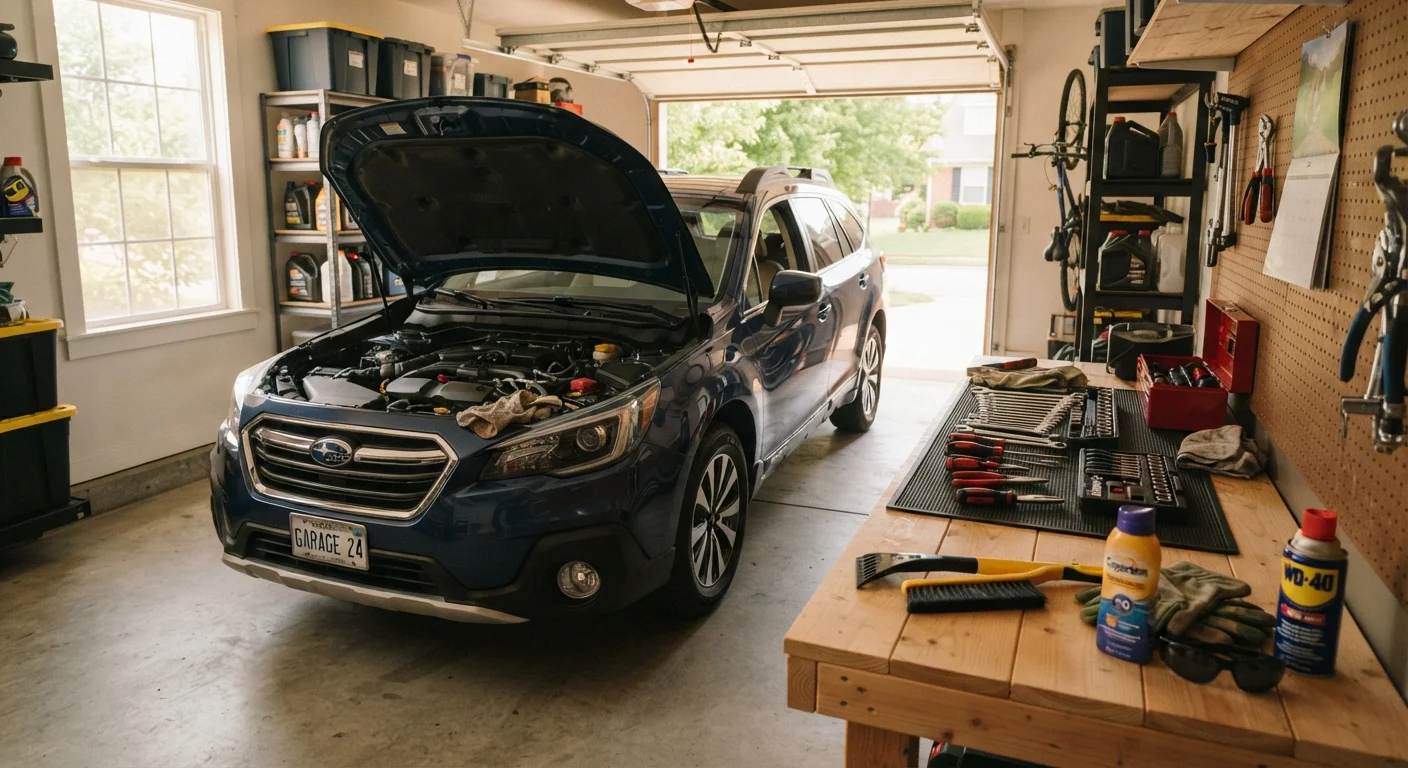
A month-by-month maintenance reference covering tyre checks, fluid top-ups, battery tests, and more across all four seasons.
Summary
28 items · 30–60 minutes per seasonal review
Key takeaways
- Seasonal checks catch wear and failures before they strand you or create safety risks.
- Most items on this checklist require no special tools and can be completed in a driveway.
- Tyres, battery, and fluids are the three systems most affected by temperature swings.
- Skipping seasonal maintenance is one of the leading causes of avoidable breakdown costs.
- Your owner's manual should always be your first reference for service intervals and fluid specs.
Why Seasonal Maintenance Beats Reactive Repairs
Most car problems don't appear without warning — they develop quietly over weeks or months. A battery weakened by summer heat often fails on the first cold morning of November. Tyre pressure that drops one PSI per 10°F of temperature change can leave you underinflated and unsafe by January without a single leak. Seasonal maintenance is how you stay ahead of that curve.
This calendar doesn't replace your manufacturer's scheduled service intervals — those are laid out clearly in your owner's manual, and understanding how to use it makes every task here more precise. What this checklist does is give you a rhythm: four natural checkpoints per year, aligned with the stresses each season places on your vehicle.
Before diving into the seasonal breakdown, gather a few basic tools. Then work through each group when the season changes — or within the first two weeks of a new season at the latest.
Tyre pressure gauge
Accurately measures PSI in each tyre so you can inflate or deflate to the manufacturer's spec.
Tread depth gauge
Measures remaining tyre tread to determine whether replacement is needed.
Flashlight or work light
Lets you inspect under the hood, beneath the vehicle, and inside wheel wells in low-light conditions.
Battery load tester
Tests whether the battery can hold a charge under starting conditions — many auto parts stores offer this as a free service.
Coolant test strips
Quick dip-test strips that check antifreeze concentration and freeze-point protection.
Microfiber cloths and cleaning supplies
Useful for wiping dipsticks cleanly and keeping sensors and reservoirs free of contamination.
The Four-Season Checklist
Work through each group when the corresponding season arrives. Items marked must are non-negotiable for safety and reliability. Should items are strongly recommended, and nice-to-have items add peace of mind. For a detailed look at what happens at a formal service visit, see what your mechanic checks during a routine service.
Spring (March–May)
Summer (June–August)
Fall (September–November)
Winter (December–February)
Keeping a written record of what you checked and when is a simple habit that pays off. A complete maintenance log helps guide future decisions and can add real value at resale time — here's why a full service history matters beyond just satisfying inspectors.
Common Mistakes That Undermine Your Seasonal Routine
Even drivers who intend to stay on top of maintenance fall into predictable traps. The most common is skipping checks because the car seems fine — but most fluid degradation and tyre wear happen gradually and silently. A car that drives normally can still have brake fluid that's absorbed too much moisture or coolant that's lost its corrosion inhibitors.
Don't DIY Tasks That Require Professional Equipment
Some checks on this list — such as brake inspection depth, refrigerant levels, and battery load testing — can be assessed at a surface level by any driver, but the actual repair or recharge requires professional tools and training. Attempting to add refrigerant, bleed brake lines, or perform electrical diagnostics without the right equipment can cause injury or additional damage. When in doubt, take the vehicle to a qualified mechanic.
Temperature Extremes Narrow Your Reaction Window
In very hot or very cold weather, vehicle systems that are marginal — a weak battery, a low coolant level, a worn tyre — fail faster and with less warning than in moderate conditions. This is why the fall and spring transitions are the most critical times to run a thorough check. Deferring even one or two items going into an extreme season increases your breakdown risk significantly.
Another frequent error is relying on myths rather than manufacturer specs. The idea that you need to change your oil every 3,000 miles, for instance, leads many drivers to spend money unnecessarily — common maintenance myths are genuinely costing drivers money. Always cross-reference what you read — including this checklist — against what your vehicle's manufacturer actually specifies for your model year and engine type.
Finally, don't overlook the financial side of vehicle ownership. Unplanned repairs are one of the most common household budget shocks. Treating maintenance as a fixed seasonal cost — rather than something you defer — is a basic budgeting discipline that pays for itself over time.
Planning for Long Drives and Extreme Conditions
Seasonal checks cover your baseline, but specific situations call for a more focused look. Before any long highway trip, run through a condensed pre-departure review — a pre-journey vehicle check you can complete in 20 minutes covers tyres, lights, fluids, and emergency kit without requiring mechanical expertise.
Tyres deserve extra attention at every seasonal transition. Cold weather compresses air, hot pavement accelerates wear, and neither hazard announces itself. Tyre pressure, tread depth, and rotation are three separate variables — checking all three at each seasonal boundary takes less than ten minutes and is one of the highest-value habits any driver can build.
Treat this calendar as a living tool. Add notes in the margin as your vehicle ages, flag items your mechanic flagged at the last visit, and revisit the full checklist every spring to make sure nothing has been deferred too long. Consistent, modest attention is always less expensive than urgent, reactive repair.
This article is for general informational purposes only. Always consult a qualified mechanic for diagnosis, repairs, or if you are unsure about any maintenance task. Refer to your vehicle's owner's manual for manufacturer-specific service intervals and specifications.
All published content on this website is for informational and educational purposes only and should not be taken as professional advice. We recommend that readers seek expert opinion before making any decisions. The website is not responsible for any actions taken based on the information provided on this website. We are not liable for any inaccuracies, modifications, or omissions in information. Moreover, external links or third-party content are provided for convenience; we are not liable for their correctness. Users are advised to verify every piece of information before they use it for any purpose.