
Employer Commuter Benefits: What They Cover and How to Use Them

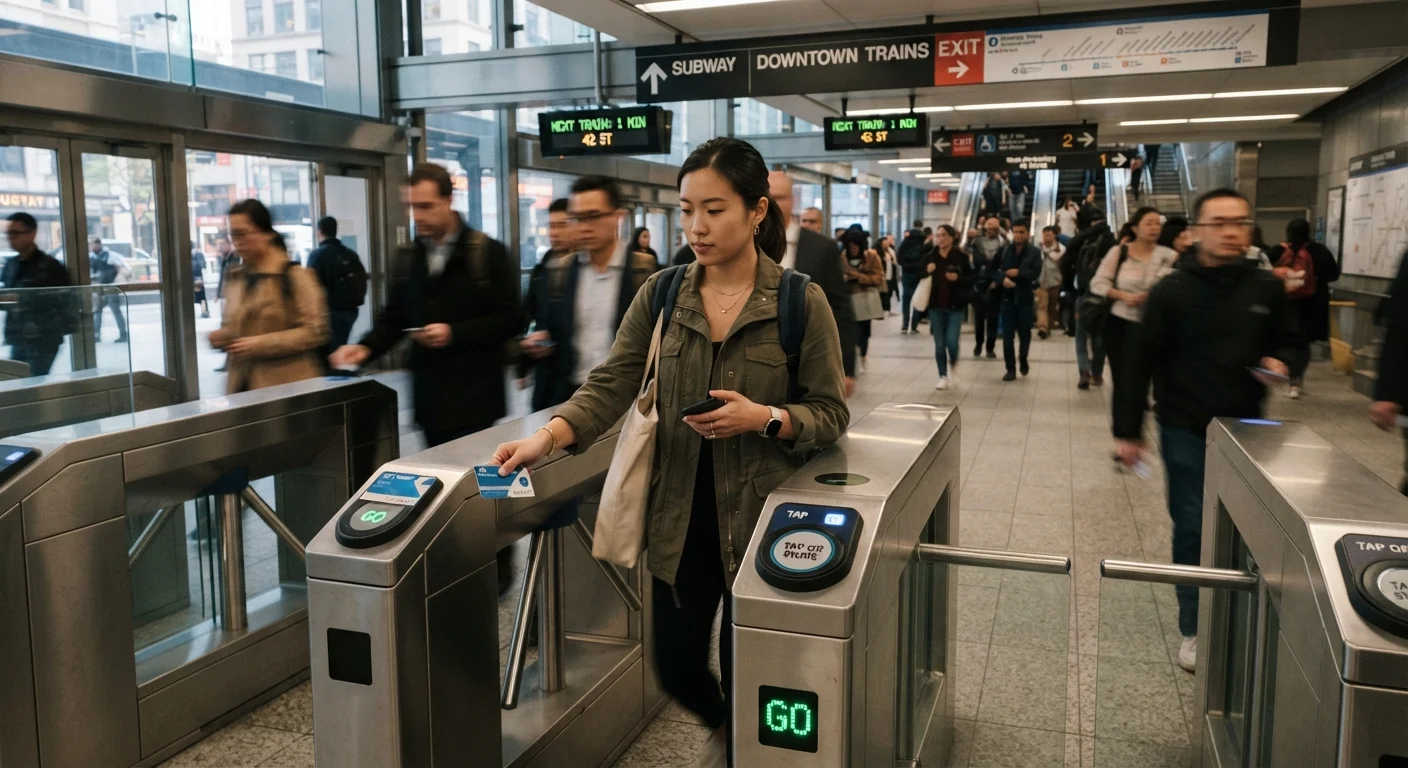
Many workers leave pre-tax commuter dollars on the table. Learn how transit and parking benefit programs work and who qualifies.
Key takeaways
- Pre-tax commuter benefits reduce your taxable income, lowering the federal taxes you owe on commuting costs.
- Transit passes and qualified parking are the two main expense categories covered by these programs.
- IRS-set monthly contribution limits apply separately to transit and parking benefits.
- Not all employers offer commuter benefits — eligibility depends entirely on your employer's plan.
- Unused funds in some benefit types may be forfeited, so planning your monthly elections carefully matters.
- Hybrid and remote workers should reassess their elections when their commuting patterns change.
How Employer Commuter Benefits Actually Work
Commuter benefits programs work by letting you direct a portion of your pre-tax pay into a designated account — or receive an employer subsidy — specifically for commuting costs. Because those dollars are excluded from your taxable wages before federal income tax is calculated, you pay tax on a smaller portion of your paycheck. Depending on your tax bracket, this can translate into meaningful annual savings on costs you'd be paying anyway.
There are two common delivery mechanisms. In a salary reduction arrangement, you elect an amount each month to withhold from your paycheck pre-tax; those funds are then used to purchase transit passes or reimburse qualified parking. In an employer-funded benefit, your employer simply provides a monthly subsidy — often in the form of transit vouchers or a loaded benefit card — at no payroll cost to you.
Many employers use a third-party benefits administrator to manage these programs. You typically enroll online, choose your monthly election amount (up to the IRS limit), and then use a benefit debit card or submit receipts for reimbursement, depending on the platform. Our commuter reference guide covers the broader landscape of transit pass types and benefit terms in one place.
What Expenses Are Covered
The IRS defines two primary categories of qualifying commuter expenses:
- Transit passes: This includes any pass, token, farecard, voucher, or similar item entitling you to ride mass transit — bus, subway, commuter rail, light rail, ferry, or a qualifying vanpool. The key requirement is that the transportation must be between your home and your primary place of work.
- Qualified parking: This covers parking at or near your principal place of work, or parking at a location from which you commute to work by mass transit, carpool, or vanpool. Street parking you pay for casually typically does not qualify — it generally needs to be at a commercial facility or employer-managed lot.
Notably, expenses that do not qualify include gas, tolls, standard car insurance, and mileage for solo driving. If you're unsure whether a specific expense is eligible, your HR department or the IRS Publication 15-B (Employer's Tax Guide to Fringe Benefits) is a reliable reference.
Many commuters underestimate their transit options, including vanpools that qualify for this benefit — so it's worth reviewing what's actually available in your area before assuming your only covered option is a subway pass.
$315/mo
2024 IRS transit benefit monthly limit
The IRS set the monthly pre-tax transit benefit limit at $315 for 2024, adjustable annually for inflation.
$315/mo
2024 IRS qualified parking monthly limit
Qualified parking carries the same $315 monthly limit as transit for 2024, and each category is counted separately.
~$1,500
Potential annual tax savings per employee
Estimates from benefits administrators suggest workers in mid-range tax brackets can save roughly $1,000–$1,500 per year by fully using pre-tax transit benefits.
Who Is Eligible and How to Enroll
Eligibility is determined by your employer, not the federal government. The IRS authorizes the tax benefit, but offering it is entirely voluntary on the employer's part. Large employers — particularly those in urban markets — are more likely to offer commuter benefits programs, and some cities (including New York, San Francisco, and Washington D.C.) have local ordinances requiring employers above a certain size to offer them.
If your employer does offer the benefit, enrollment typically happens through your HR portal or benefits platform. You'll choose a monthly contribution amount up to the current IRS limit — separate caps apply to transit and to parking. You can usually adjust your election from month to month, which makes the benefit more flexible than a health FSA.
If you've recently shifted to a hybrid or remote schedule, it's worth revisiting your elections. Overcontributing relative to what you actually spend can leave funds stranded in your account. Hybrid work changes the commute calculus in ways that directly affect how much you should be setting aside each month.
Making the Most of the Benefit
The most common mistake employees make is simply not enrolling — leaving pre-tax dollars unused when they're already paying commuting costs out of pocket. The second most common mistake is over-electing and losing funds at year-end or account closure due to forfeiture rules.
A few practical approaches help maximize the value of commuter benefits:
- Track your actual monthly commuting costs before setting your election amount. Average them over a representative period, accounting for vacation and days you work from home.
- Load transit passes in advance using your benefit card or vouchers — many transit agencies allow monthly pass purchases that map cleanly to benefit cycles.
- Confirm parking eligibility before assuming your garage qualifies. Ask your HR team or benefits administrator for a list of eligible facilities if you're unsure.
- Check whether your employer contributes on top of your own election — free employer funds are worth capturing before worrying about your own pre-tax contributions.
If you're new to public transit and considering making the switch to take full advantage of these benefits, our guide to commuting by public transit walks through fares, passes, and what to expect. Digital tools can also simplify the transition — transit apps and route planners make it easier to navigate new systems confidently.
This article provides general information about employer commuter benefit programs for educational purposes only. Tax rules, IRS limits, and employer plan terms vary and are subject to change. Consult a qualified tax professional or your HR department for guidance specific to your situation.
Frequently Asked Questions
All published content on this website is for informational and educational purposes only and should not be taken as professional advice. We recommend that readers seek expert opinion before making any decisions. The website is not responsible for any actions taken based on the information provided on this website. We are not liable for any inaccuracies, modifications, or omissions in information. Moreover, external links or third-party content are provided for convenience; we are not liable for their correctness. Users are advised to verify every piece of information before they use it for any purpose.