
When AI Confidence and AI Accuracy Diverge

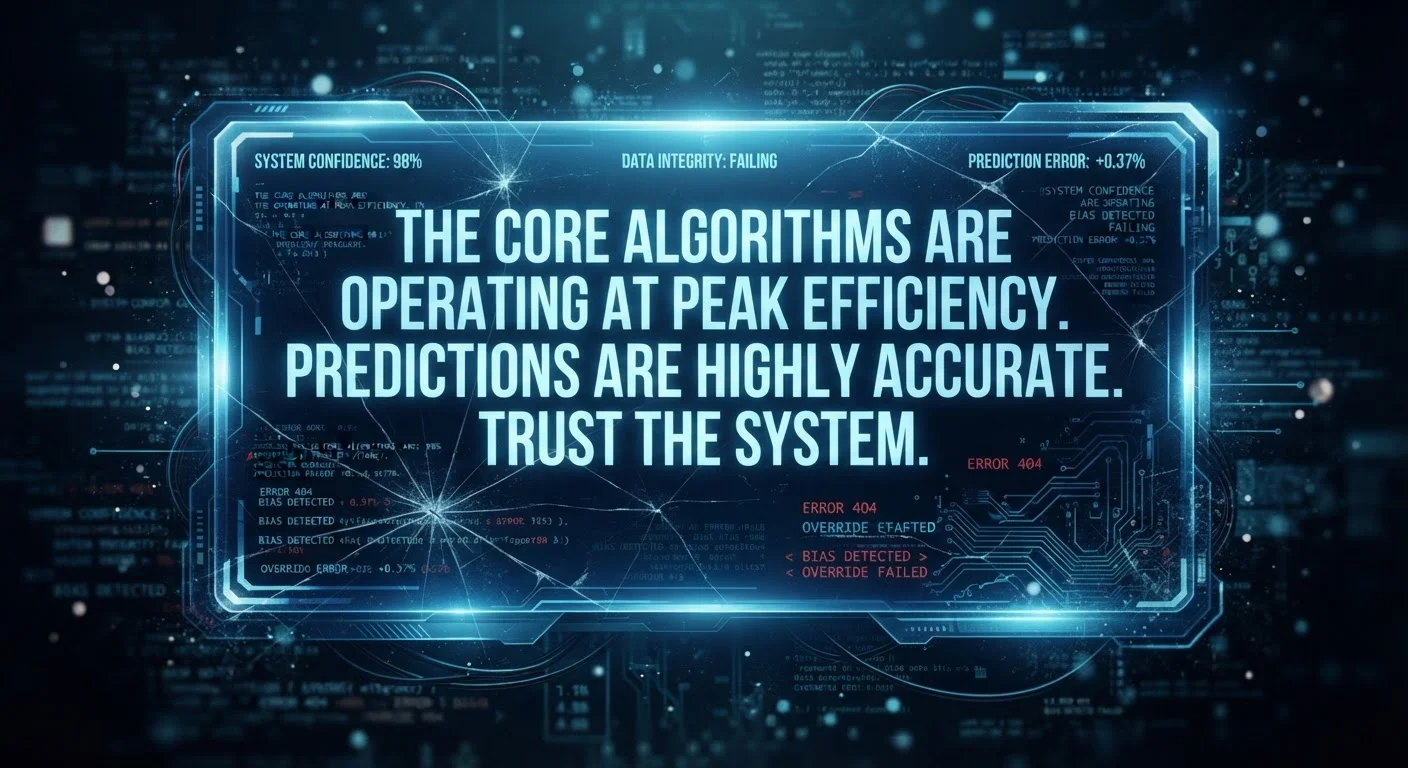
AI systems can sound authoritative while being wrong. Understanding why this happens — and how to spot it — is an increasingly essential everyday skill.
Key takeaways
- AI language models generate confident-sounding text regardless of whether the underlying information is accurate.
- Treating AI output as a finished answer rather than a starting point is one of the most common and costly mistakes users make.
- Cross-referencing AI responses with authoritative sources remains the most reliable safeguard against AI-generated misinformation.
- Understanding why AI systems produce errors helps users ask better questions and interpret responses more critically.
- Critical evaluation of AI output is a learnable skill that becomes more valuable as these tools become more embedded in daily life.
Why AI Sounds So Sure of Itself
Modern AI language models are built to produce fluent, coherent, authoritative-sounding text. That's a feature, not a flaw — but it creates a meaningful problem for everyday users. The same mechanism that makes an AI response feel polished and credible also makes it difficult to tell, at a glance, when that response is simply wrong.
These systems don't reason through facts the way a person does. They predict the most statistically plausible next word or phrase based on patterns learned from enormous amounts of text. Confidence in tone is baked into that process because confident, well-structured writing is what fills most of the internet. The result: an AI can describe a historical event that never happened, cite a study that doesn't exist, or misquote a living expert — and do all of it in the same steady, assured register it would use to correctly explain how photosynthesis works.
This divergence between confidence and accuracy isn't a glitch that will be patched away. It's a structural characteristic of how these tools currently work, and understanding it is the first step toward using them responsibly. For a broader look at how automation shapes decision-making, see our analysis of the trade-offs behind a fully automated world.
Common Mistakes When Trusting AI Output
The following errors appear consistently among people who use AI tools for research, writing, or decision-making. Recognising them is the first step toward avoiding them.
Accepting specific facts — names, dates, citations — without verification.
Why it happens: AI responses are grammatically and stylistically indistinguishable from well-researched writing, making fabricated details easy to overlook. Users often assume specificity implies accuracy.
Using AI output as a substitute for domain expertise in high-stakes decisions.
Why it happens: The convenience and speed of AI responses can make consulting a specialist feel unnecessary, particularly when the AI's answer sounds thorough and well-reasoned.
Failing to notice when an AI confidently fills in gaps it doesn't actually know.
Why it happens: Language models are designed to produce complete, coherent answers. When knowledge runs out, they tend to extrapolate plausibly rather than say "I don't know" — a phenomenon often called hallucination.
Copying AI-generated text directly into professional or public-facing documents without review.
Why it happens: Time pressure and the high quality of AI prose encourage users to skip the editing step, treating generated text as finished work rather than a starting draft.
Assuming a confident, detailed AI answer means the question was within the AI's reliable knowledge.
Why it happens: People naturally associate detail and fluency with expertise. If a response is long, structured, and specific, it feels authoritative — even if it's built on a shaky or outdated foundation.
Building a More Critical Relationship With AI
~20%
AI factual error rate in independent evaluations
Multiple independent studies and audits of large language models have found factual error rates ranging from roughly 15–25% depending on the domain and query type tested.
68%
Users who don't verify AI-generated facts
A 2023 survey by the Reuters Institute found a substantial majority of AI tool users rarely or never cross-check AI-generated information against other sources.
The practical antidote to misplaced AI confidence is treating every AI-generated response as a draft, not a verdict. This doesn't mean dismissing AI tools — it means positioning them correctly in your workflow.
Start by identifying the category of task you're using AI for. For creative brainstorming, summarising ideas you already understand, or drafting text you'll revise, AI performs well and errors are easy to catch. For factual claims — dates, names, statistics, legal or medical information — independent verification is non-negotiable. A simple rule: the higher the stakes of acting on wrong information, the more verification the response deserves.
Developing this habit also means paying attention to the type of confidence an AI projects. Hedged language like "generally," "typically," or "it's often the case" can signal that the model is working from broad patterns rather than specific knowledge. Suspiciously precise claims — exact figures, named individuals, specific citations — warrant the most scrutiny, because these are exactly the details AI models are most likely to fabricate plausibly.
For practical habits around evaluating new technology claims more broadly, our guide on staying critically informed in a fast-moving tech landscape offers a useful framework.
All published content on this website is for informational and educational purposes only and should not be taken as professional advice. We recommend that readers seek expert opinion before making any decisions. The website is not responsible for any actions taken based on the information provided on this website. We are not liable for any inaccuracies, modifications, or omissions in information. Moreover, external links or third-party content are provided for convenience; we are not liable for their correctness. Users are advised to verify every piece of information before they use it for any purpose.