
Wired vs Wireless Charging: The Difference Beyond the Cable

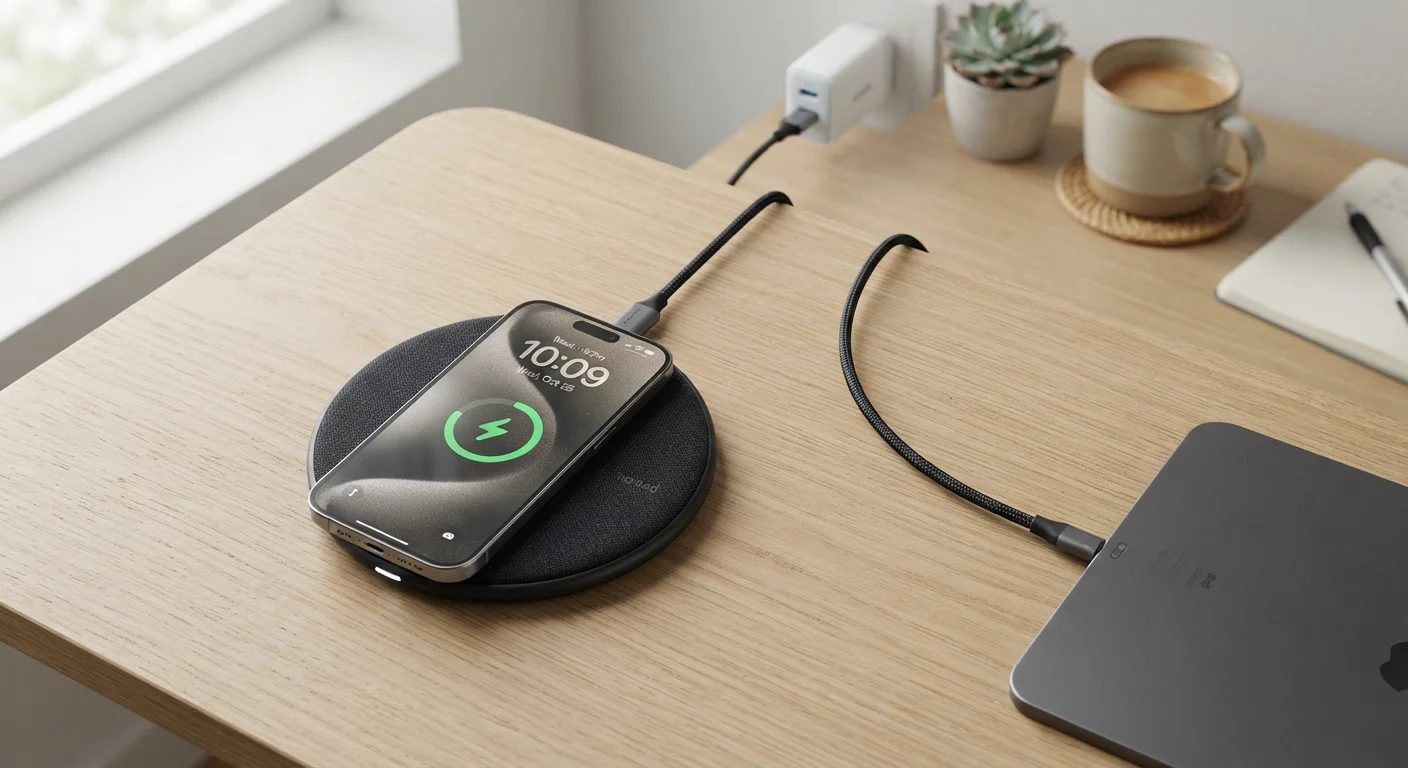
Speed, heat, convenience, and long-term battery health — here's how wired and wireless charging actually compare for everyday use.
Option A
Wired Charging
The fast, dependable workhorse of device charging.
Best for: Anyone who needs a quick top-up, charges overnight regularly, or wants the most efficient energy transfer possible.
Option B
Wireless Charging
The cable-free convenience option with growing capability.
Best for: Users who prioritize ease of use, desk-top accessibility, or charge their device lightly and frequently throughout the day.
Key takeaways
- Wired charging is consistently faster than wireless charging at equivalent wattage ratings.
- Wireless charging generates more heat, which can contribute to gradual battery wear over time.
- Wireless chargers lose some energy as heat during transfer, making them less energy-efficient than cables.
- Modern wireless charging speeds have improved significantly but still lag behind top wired speeds.
- For everyday moderate use, both methods are unlikely to cause dramatic differences in battery lifespan.
- Your charging habits — not just the method — have the greatest influence on long-term battery health.
How Each Method Actually Transfers Power
Wired charging is straightforward: electrical current flows from a power adapter through a cable directly into your device's battery. The path is short, the transfer is direct, and very little energy is lost along the way. That's why wired charging remains the more energy-efficient of the two methods.
Wireless charging — more precisely called inductive charging — works differently. A transmitter coil in the charging pad generates an electromagnetic field, and a receiver coil inside your device converts that field back into electrical current. This conversion process is inherently less efficient because some energy is shed as heat during the transfer rather than being stored in the battery.
For a plain-language breakdown of terms like "inductive" or "coil," see The Everyday Gadget Glossary — a useful reference for non-technical device owners.
Qi: The Wireless Charging Standard Explained
Most wireless charging devices use a standard called Qi (pronounced "chee"), developed by the Wireless Power Consortium. If a device and pad both carry Qi certification, they should work together regardless of brand. Newer versions of the standard support higher wattages and improved efficiency compared to earlier generations. Some manufacturers layer proprietary fast-charging protocols on top of Qi, which only operate at full speed with matched accessories.
Speed: The Numbers and What They Mean Day-to-Day
Charging speed is measured in watts (W) — the higher the wattage, the faster energy enters your battery. Wired fast-charging technology has reached speeds above 100W on some devices, capable of taking a depleted phone to 50% charge in roughly 20 minutes. Consumer wireless charging, by contrast, commonly tops out between 15W and 50W depending on the device and charger combination.
In everyday terms: if you have 30 minutes before leaving the house, a wired connection will consistently deliver more charge than wireless in the same window. The gap narrows if you charge overnight, since both methods will easily top off a phone during a full night's sleep.
| Criterion | Wired Charging | Wireless Charging |
|---|---|---|
| Typical max speed (consumer devices) | 65W–100W+ | 15W–50W |
| Energy efficiency (wall to battery) | High (~90–95%) | Moderate (~60–75%) |
| Heat generated during charging | Lower | Higher |
| Long-term battery impact | Lower risk with normal use | Slightly higher risk from heat |
| Ease of daily use | Requires plugging in each time | Place and go — no connector |
| Device compatibility | Very broad (USB-C, Lightning) | Requires Qi-compatible device |
| Works while using device | Yes, with some cable restriction | Limited — alignment required |
| Data transfer capability | Yes | No |
Speed ratings on packaging can be misleading. A charger advertised at a high wattage only delivers that rate if both the adapter and device support the same fast-charging protocol — mismatched combinations fall back to slower speeds regardless of the method used.
Heat, Battery Health, and What the Evidence Suggests
Heat is lithium-ion batteries' most consistent enemy. Repeated exposure to elevated temperatures accelerates the chemical degradation that reduces a battery's capacity to hold charge. This is relevant to the wired vs. wireless debate because wireless charging generates more heat — both in the pad and in the device — than a wired session at comparable wattage.
However, context matters. The heat difference is most meaningful during long charging sessions or when a case traps heat against the device. For short top-ups throughout the day, the thermal impact is modest. Most device manufacturers design their charging systems with protections that slow charging if temperatures rise too high.
Gadget Myths That Keep Costing People Money covers the nuance around overnight charging and battery wear — worth reading if you have lingering questions about long-term charging habits. For broader device care advice, Keeping Your Gadgets in Good Shape for Longer offers practical, evidence-based guidance.
Energy Efficiency and Your Electricity Bill
Because wireless charging loses energy as heat during transfer, it uses more electricity to achieve the same result as a wired charge. Studies measuring wall-to-battery efficiency have found wireless charging can consume anywhere from 25% to 50% more electricity per full charge cycle compared to a cable.
For a single phone, that difference is small in dollar terms. But if you're thinking about the cumulative energy draw of multiple wireless pads running simultaneously across a household, the inefficiency adds up. Everyday Devices That Quietly Drain Your Energy Bill puts standby power consumption in useful household perspective.
~47%
Extra electricity used per wireless charge cycle
Research published by OneZero/Medium in collaboration with hardware testing found wireless charging can use roughly 47% more energy than a comparable wired session to deliver the same battery charge.
15W–50W
Typical consumer wireless charging range
Most Qi-compatible phones and pads available to consumers operate in this wattage window, with flagship devices reaching the upper end when paired with manufacturer-matched accessories.
~20%
Battery capacity loss threshold for replacement consideration
Apple and other manufacturers generally suggest considering a battery service when capacity degrades to around 80% of original — a threshold reached faster with repeated high-heat charging cycles.
Wired charging, when the adapter draws no power in standby, is among the most efficient ways to keep a device topped up. Many modern adapters are designed to draw near-zero power when not actively charging, minimizing idle consumption further.
Convenience, Compatibility, and Practical Trade-Offs
Wireless charging's main advantage is friction reduction. There's no cable to plug and unplug, no connector wear, and no fumbling in the dark. Placing a phone on a pad — or even near one with newer long-range inductive technologies — is genuinely simpler for daily habits.
The trade-offs are real, though. Wireless charging requires precise alignment on most pads (misalignment can cause slow or failed charging). Cases thicker than a few millimeters may interrupt charging altogether. And unlike a cable, a wireless pad doesn't double as a data-transfer tool.
Wired connections, meanwhile, work across a far broader range of devices and require no ecosystem compatibility. A USB-C cable works with phones, tablets, laptops, and many accessories — a single tool with multiple jobs. The connector itself does wear over time with repeated use, but quality cables are inexpensive to replace.
Neither method is universally superior — the right choice depends on how, where, and how often you charge. Many people find a practical middle ground: wireless for desk and nightstand convenience, wired for travel and fast top-ups when time is short.
All published content on this website is for informational and educational purposes only and should not be taken as professional advice. We recommend that readers seek expert opinion before making any decisions. The website is not responsible for any actions taken based on the information provided on this website. We are not liable for any inaccuracies, modifications, or omissions in information. Moreover, external links or third-party content are provided for convenience; we are not liable for their correctness. Users are advised to verify every piece of information before they use it for any purpose.