
Gadget Myths That Keep Costing People Money

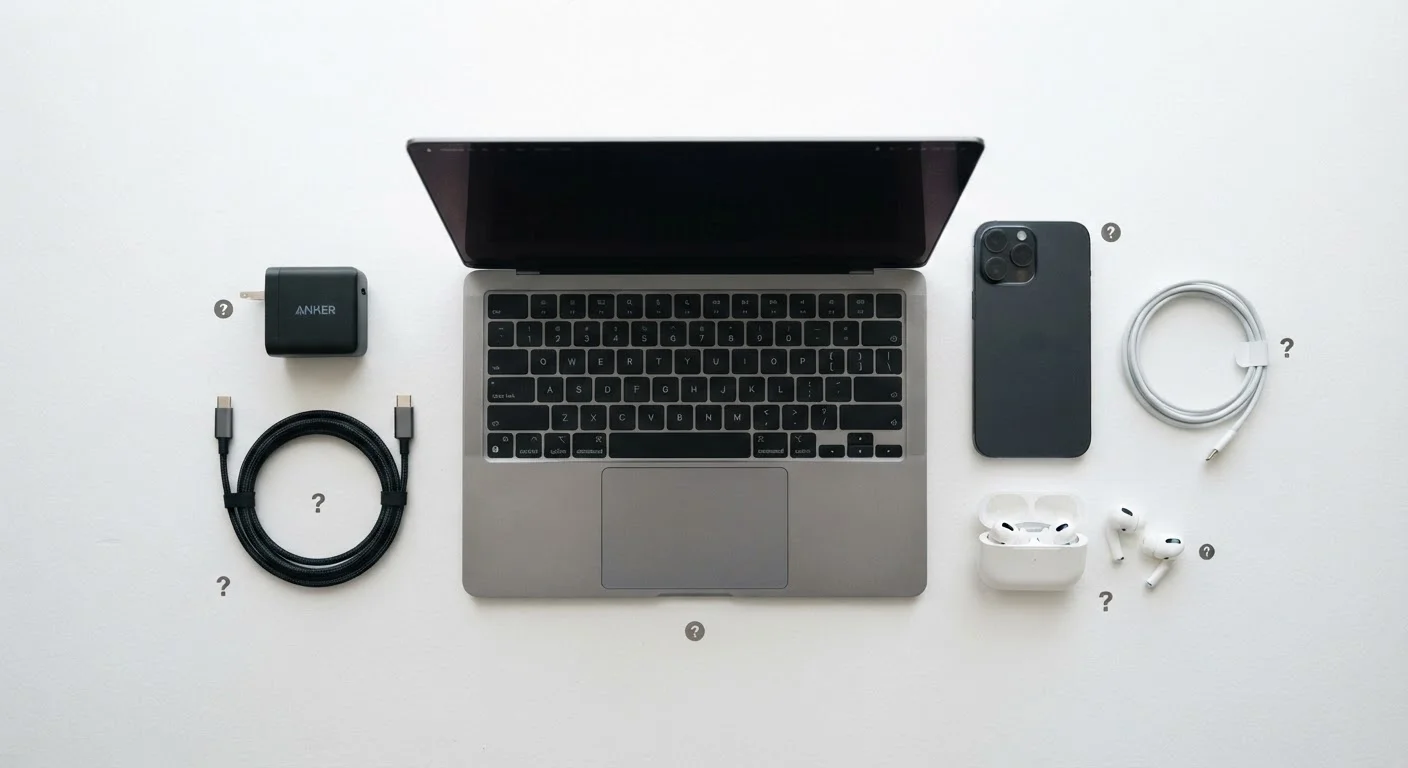
From draining batteries to overnight charging damage — separating widespread gadget myths from what the evidence actually says.
Key takeaways
- Leaving your phone plugged in overnight does not cause the kind of damage most people fear.
- Draining your battery to zero regularly can actually shorten its overall lifespan.
- More megapixels does not automatically mean better photo quality on a camera or phone.
- Closing background apps rarely improves performance and can sometimes slow your device down.
- Private browsing does not make you anonymous online — it only clears local history.
Why Gadget Myths Persist — and What They Cost
Gadget myths are rarely invented out of thin air. Most started as accurate advice for older technology and simply never updated as the hardware underneath changed. Others spread because they sound intuitively logical, even when the underlying engineering says otherwise. The result is a set of widespread habits — draining batteries, closing apps, buying by spec sheet — that waste time, wear out devices prematurely, and cost real money.
Myths like these don't just apply to tech. Similar patterns show up in personal finance — see wealth-building myths that keep people stuck — and even in home maintenance, where home improvement myths cost homeowners time and money. Across all of them, the mechanism is the same: outdated or oversimplified advice gets repeated until it feels like common knowledge.
The gadget myths below are among the most widely believed — and correcting them requires nothing more than understanding how the technology actually works.
Myth
You should always drain your battery to zero before recharging to keep it healthy.
Fact
Modern lithium-ion batteries last longer when kept between roughly 20% and 80% charge, not drained to zero.
This advice dates back to nickel-cadmium batteries, which were common in older devices and genuinely benefited from full discharge cycles to reset so-called "memory effect." Lithium-ion batteries — the type in virtually every smartphone, laptop, and wireless earbud sold today — work on an entirely different chemistry.
Each charge cycle counts against a battery's total lifespan, and a full 0–100% cycle stresses the cells more than a partial top-up. Battery engineers at major manufacturers consistently recommend partial charges as the healthier pattern. Regularly draining to zero can accelerate capacity loss over time. For practical guidance on everyday charging habits, see keeping your gadgets in good shape for longer.
Myth
Leaving your phone or laptop plugged in overnight will overcharge and damage the battery.
Fact
Current smartphones and laptops have built-in charge management that stops active charging once the battery is full.
Modern devices include battery management circuits that halt the charge current at 100% and switch to drawing power directly from the adapter rather than the battery. Some manufacturers take this further with features that intentionally cap overnight charging at around 80% and only top up to 100% just before the user's typical wake time, based on learned patterns.
That said, sustained heat — not the act of being plugged in — is the real battery enemy. Charging while running demanding tasks, or leaving a device in a hot car, degrades cells faster than overnight charging ever would. If you're weighing wired versus wireless overnight charging and wondering about heat differences, wired vs. wireless charging compared covers the practical trade-offs.
Myth
More megapixels always means a better camera.
Fact
Sensor size, lens quality, and image processing software matter far more than raw megapixel count for real-world photo quality.
A megapixel is simply one million pixels — a measure of resolution, not image quality. A 50-megapixel sensor crammed into a tiny phone camera module can produce noisier, less detailed images in low light than a well-designed 12-megapixel sensor with larger individual pixels that capture more light per shot.
Computational photography — the image processing software running after you press the shutter — has arguably become more important than hardware specs for typical everyday shooting. When evaluating any gadget purchase on raw specification numbers alone, it pays to look past the headline figure. Our practical gadget buying checklist outlines a more complete framework for assessing real-world value.
Myth
Closing all your background apps will make your phone faster and save battery.
Fact
On modern iOS and Android, force-closing apps typically wastes battery and can slow down your phone rather than helping it.
Both major mobile operating systems are designed to manage background apps automatically. Suspended apps in the background use negligible memory and essentially no processor time. When you force-close an app and reopen it, the phone has to reload it entirely from storage — a process that uses more power and takes more processor effort than simply resuming a suspended app would.
The exception is a specific app that is genuinely misbehaving — running hot, draining battery visibly, or freezing. In those cases, force-closing or restarting the device is a reasonable targeted step. But as a habitual routine, swiping away every background app is a myth-driven behaviour that costs more than it saves.
Myth
Private browsing (Incognito mode) keeps your internet activity anonymous.
Fact
Private browsing only prevents your local browser from saving history, cookies, and form data — it does not hide your activity from your internet provider, employer network, or the websites you visit.
Incognito and private browsing modes are genuinely useful for what they do: preventing the browser on that device from recording your session locally. That is helpful when using a shared computer or avoiding personalised ad targeting based on a one-off search.
What it does not do is mask your IP address, encrypt your traffic beyond standard HTTPS, or prevent your internet service provider from seeing which sites you visit. Websites themselves can still identify and track you through server-side methods. True anonymity online requires additional tools and understanding — private mode is a useful local privacy feature, not a shield against external observation.
Putting the Facts to Work
Correcting these myths has immediate, practical value. Treating your battery better — partial charges rather than full drain cycles — can meaningfully extend the time before a costly battery replacement or device upgrade becomes necessary. Skipping the background-app-clearing habit saves a small but real amount of power daily. And approaching a camera's spec sheet with informed skepticism protects against overpaying for numbers that don't translate to better photos in your everyday use.
Standby power is a related area where misinformation also circulates — many people assume devices in standby or sleep mode draw almost no power. In practice, some consume more than expected. everyday devices that quietly drain your energy bill offers a grounded look at which gadgets are worth monitoring. And if your budget is part of the picture, budgeting basics can help you weigh gadget running costs in context.
Good gadget habits don't require technical expertise. They just require replacing inherited assumptions with what the evidence actually shows.
All published content on this website is for informational and educational purposes only and should not be taken as professional advice. We recommend that readers seek expert opinion before making any decisions. The website is not responsible for any actions taken based on the information provided on this website. We are not liable for any inaccuracies, modifications, or omissions in information. Moreover, external links or third-party content are provided for convenience; we are not liable for their correctness. Users are advised to verify every piece of information before they use it for any purpose.