
Tech Trends That Arrived Quietly but Changed Everything

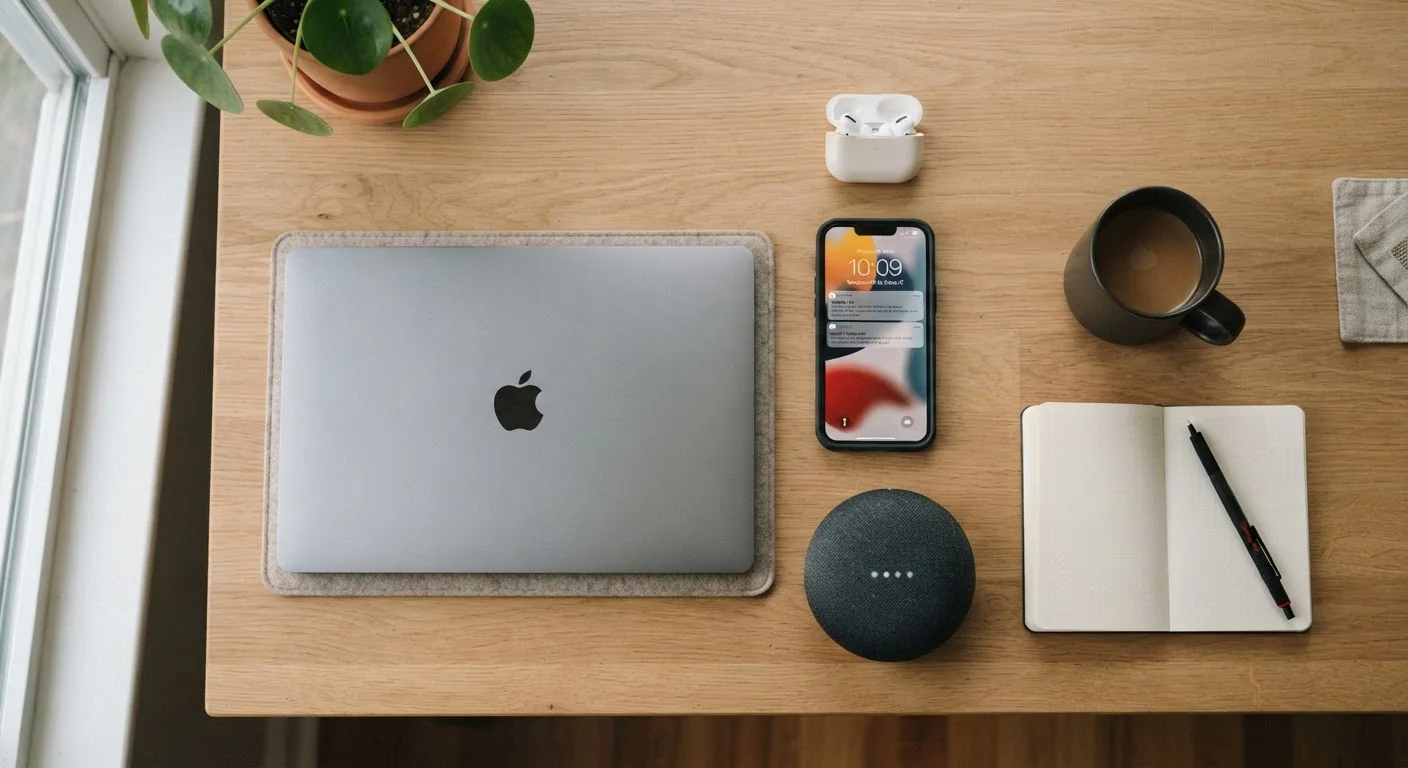
Not every transformative technology announced itself loudly. These shifts crept in gradually — and their cumulative impact on daily life turned out to be enormous.
Key takeaways
- Many of the most impactful tech changes happened gradually, with little public announcement or fanfare.
- Shifts in how we navigate, communicate, and pay for things have fundamentally altered daily routines.
- Understanding these quiet trends helps you make more intentional choices about the technology you use.
- Background technologies — like cloud sync and voice interfaces — often matter more than the devices themselves.
- Recognizing slow-moving trends early gives individuals and small businesses a meaningful practical advantage.
The Shifts You Didn't Notice — Until You Couldn't Imagine Life Without Them
Not every technological revolution announces itself. Some of the most consequential changes in how people live and work crept in through incremental updates, subtle design choices, and behaviors that shifted so gradually they were almost invisible in the moment. No press conference. No launch countdown. Just one day, you realize the world works differently than it did five years ago — and you can't remember exactly when that happened.
This list isn't about flashy product cycles or headline-grabbing announcements. It's about the quieter movements — the ones that turned out to matter most. Whether you're curious about technology or simply trying to understand the world around you, recognizing these shifts is genuinely useful. As our guide on staying critically informed in a fast-moving tech landscape argues, the real skill isn't chasing every new thing — it's knowing which changes have actual staying power.
The cloud made local storage feel optional
For most of computing history, your files lived on your machine. Losing a hard drive meant losing your work. Then, almost imperceptibly, storage migrated upward — photos, documents, music, and messages began living on remote servers accessed over the internet. Today, many people interact with files that never physically exist on their own devices.
This shift wasn't announced as a revolution. It arrived through incremental features — automatic photo backups, shared document folders, sync-across-devices settings. The practical consequence is enormous: people now treat their data as persistent and portable in ways that would have seemed extraordinary a generation ago. It also introduced new considerations around privacy and data ownership that are still being worked through.
When storage moved to the cloud, data became persistent and portable in ways once considered extraordinary.
GPS navigation rewired how people understand space
Turn-by-turn navigation apps did more than replace paper maps. Research in cognitive science suggests that heavy reliance on GPS-guided navigation may reduce the brain's engagement with spatial memory and landmark recognition — a measurable behavioral shift that developed quietly as smartphones became ubiquitous. People began moving through unfamiliar cities with confidence while simultaneously becoming less able to retrace their routes without assistance.
For everyday life, this trade-off is largely practical and benign. But it's worth understanding that the technology didn't just change how we get around — it changed how many people relate to physical space and orientation itself.
GPS navigation didn't just replace maps — it quietly changed how many people relate to physical space.
Contactless payment normalized invisible transactions
The shift from handing over cash to tapping a phone or card happened fast enough to feel unremarkable. But the implications run deep. Contactless payment systems, accelerated significantly by the COVID-19 pandemic, changed the tactile and psychological experience of spending money. Behavioral economists have noted that frictionless payment methods can reduce the psychological salience of transactions — meaning purchases feel less costly in the moment than equivalent cash payments.
For consumers managing everyday finances, this is worth keeping in mind. The convenience is real and the technology is secure. But understanding that the design of payment systems can subtly influence spending behavior is a genuinely useful piece of self-knowledge.
Frictionless payment design can subtly change how significant a purchase feels in the moment.
Voice interfaces moved from novelty to infrastructure
Early voice assistants were treated as parlor tricks — entertaining but not particularly useful. Over time, they became embedded in how people set reminders, search for information, control home devices, and navigate accessibility needs. For users with mobility limitations or visual impairments, voice interfaces have been quietly transformative in ways that rarely receive the attention they deserve.
The technology isn't perfect, and it carries real privacy questions around always-on microphones. But its migration from novelty to everyday infrastructure — in phones, speakers, cars, and appliances — represents one of the more consequential interface shifts in recent consumer tech history.
Voice interfaces migrated from novelty to genuine infrastructure faster than most people recognized.
Software updates became the product, not the upgrade
There was a time when buying software meant buying a version — a disc, a license, a fixed feature set. Today, the most widely used apps, operating systems, and services update continuously, often automatically and silently. The product you use today is meaningfully different from what it was eighteen months ago, even if you never made a deliberate choice to change anything.
This model has clear benefits — security patches happen in the background, features improve without requiring action. But it also means users are increasingly passengers in the evolution of their own tools. For anyone interested in maintaining a thoughtful relationship with technology, that's a dynamic worth being aware of — particularly for small businesses whose workflows depend on software behavior remaining consistent. Entrepreneurs who rely heavily on SaaS tools are especially exposed to this kind of invisible change.
Today's software evolves continuously in the background — users often don't choose the changes that shape their tools.
Recommendation algorithms quietly curated reality
Across streaming platforms, social feeds, search results, and news aggregators, algorithmic curation has become the primary way most people encounter content. This shift happened gradually, as platforms optimized for engagement and personalization. The result is that two people searching for the same term or visiting the same platform often see substantively different results.
Understanding that the information landscape most people navigate is algorithmically shaped — not neutral or universal — is one of the more important pieces of media literacy for any curious adult today. It doesn't make these platforms malicious, but it does make a habit of intentional information-seeking genuinely valuable. That's a theme explored in depth in our piece on navigating a fast-moving tech landscape critically.
Algorithmic curation means most people now navigate an information landscape that is personally shaped, not universal.
Why Quiet Trends Often Matter More Than Loud Ones
Dramatic product launches get the headlines, but incremental changes tend to have the deeper footprint. When a behavior shift or infrastructure upgrade becomes invisible — when you stop noticing it because it just works — that's usually a sign it has become load-bearing in daily life. Understanding this pattern is useful for anyone trying to make smarter decisions about the technology they adopt, the tools they use for work, or even the habits they build around devices. Our guide to evaluating a new tech trend before committing offers a practical checklist for doing exactly that.
Look for what became invisible
A useful rule of thumb for spotting genuinely transformative technology: look for what you no longer notice. When a behavior or tool becomes so embedded in daily life that you stop thinking about it, that's often a sign of deep adoption. Periodically asking 'what would break if this disappeared tomorrow?' is a surprisingly revealing exercise for understanding which technologies have become load-bearing in your life.
The technologies covered here aren't necessarily new — but their cumulative effects are still unfolding. Paying attention to the slow-moving ones, rather than only the spectacular ones, is one of the more underrated habits in a technology-saturated world. You might also find it worthwhile to explore what you've already got: getting more out of the apps already on your phone is a practical place to start.
All published content on this website is for informational and educational purposes only and should not be taken as professional advice. We recommend that readers seek expert opinion before making any decisions. The website is not responsible for any actions taken based on the information provided on this website. We are not liable for any inaccuracies, modifications, or omissions in information. Moreover, external links or third-party content are provided for convenience; we are not liable for their correctness. Users are advised to verify every piece of information before they use it for any purpose.