
Envelope Budgeting in a Digital Age: Does the Old Method Still Hold Up?

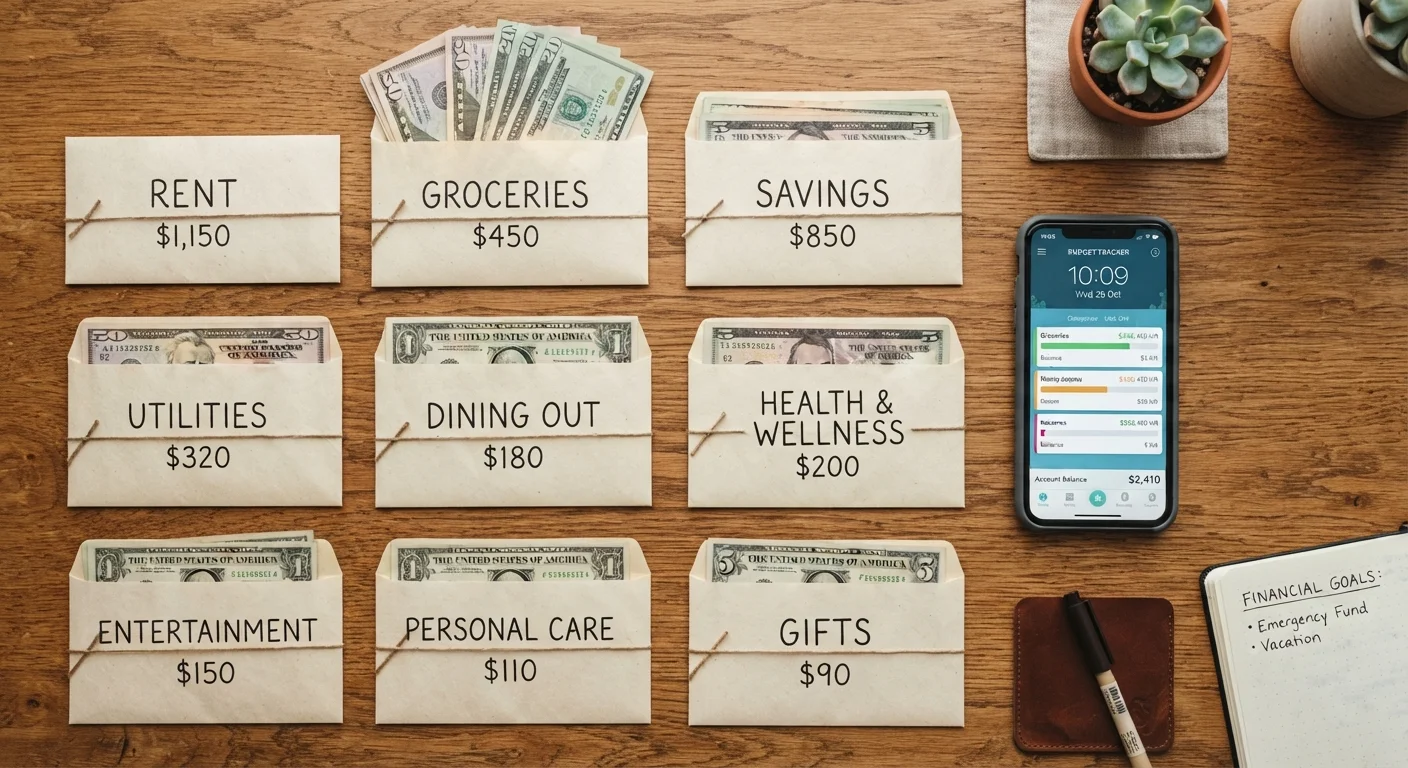
The envelope method predates smartphones, but its core logic is still sound. Explore its strengths, its friction points, and modern adaptations.
Our Verdict
Envelope budgeting remains a sound and psychologically effective framework for managing discretionary spending. Its core principle — pre-committing money to specific categories before the month begins — is as relevant as ever, even if physical cash has become less practical. Whether you use paper envelopes or a digital equivalent, the structure it imposes can meaningfully reduce overspending for those who struggle with looser budgeting approaches.
Best suited to adults who regularly overspend on variable categories and want a structured, visual system that makes budget limits feel concrete rather than abstract.
Key takeaways
- Envelope budgeting allocates cash into labeled categories, making overspending physically impossible within each envelope.
- The method's tactile nature helps some people develop stronger spending awareness than digital-only tracking.
- Digital envelope apps replicate the logic without requiring physical cash, making the system more practical today.
- The system works best for people who overspend on variable expenses like groceries, dining, or entertainment.
- Rigid cash-only systems can struggle with subscriptions, online purchases, and earning interest on idle money.
What Envelope Budgeting Actually Is
Envelope budgeting is a cash-allocation system where you divide your take-home pay into labeled envelopes — one for each spending category. Common envelopes include groceries, gas, dining out, clothing, and entertainment. Once an envelope is empty, spending in that category stops for the month. No borrowing from next month, no mental accounting tricks.
The method dates back decades and was popularized as a straightforward antidote to vague budgeting intentions. Its strength lies not in complexity but in constraint: the money is physically separated, so the limit is tangible, not theoretical.
It belongs to the broader family of zero-based budgeting approaches, where every dollar of income is assigned a purpose before it's spent. For a wider look at how envelope budgeting compares to other frameworks, see budget approaches worth knowing.
The Real Advantages of the Envelope System
The envelope method's durability isn't nostalgia — it solves real behavioral problems that purely digital budgets often don't.
Makes spending limits concrete and impossible to ignore
When cash runs out of an envelope, the limit is self-enforcing — there's no overdraft cushion or credit line to blur the boundary. This physical constraint removes the ambiguity that derails many looser budgeting systems.
Reduces mindless spending through friction
Research in behavioral economics consistently shows that paying with cash feels more "painful" than swiping a card, leading to more deliberate purchasing decisions. Envelope users tend to think twice before spending because the transaction requires physically handling money.
Builds category-level awareness quickly
Seeing exactly how much is left in, say, the dining envelope mid-month creates a clear, real-time picture of pace — something that bank statements and spreadsheets rarely deliver as viscerally.
Simple enough to maintain without financial expertise
The system requires no software, spreadsheet formulas, or financial knowledge beyond basic arithmetic. This low barrier to entry makes it accessible to anyone starting their budgeting journey.
Encourages intentional category planning upfront
Allocating cash at the start of the month forces a deliberate conversation about priorities — you cannot assign money you don't have, which naturally surfaces trade-offs between categories.
~33%
Americans with a formal written budget
Surveys by the National Foundation for Credit Counseling have consistently found that roughly one in three U.S. adults maintains a detailed budget, suggesting most households rely on informal tracking.
18%
More spent using cards vs. cash
Multiple consumer behavior studies have found that people tend to spend meaningfully more when paying by card than with cash, supporting the friction-based logic of envelope budgeting.
For people building a budget from scratch, pairing the envelope method with a structured setup process helps. The monthly budget setup checklist walks through every step, from tallying income to choosing categories.
Where the Method Creates Friction
For all its psychological advantages, the traditional cash-based envelope system has real limitations in a world built around digital payments.
Cash-only approach clashes with digital commerce
Online shopping, subscription services, and contactless payments are now central to everyday spending. A strict cash-only envelope system either excludes these entirely or requires awkward workarounds that undermine the system's simplicity.
Idle cash earns no interest
Money sitting in a physical envelope loses purchasing power over time and misses the modest but real returns available in high-yield savings accounts or money market accounts. In a higher interest-rate environment, this opportunity cost is more meaningful.
Security risk of keeping significant cash at home
Storing a month's worth of discretionary spending in envelopes at home creates exposure to theft or loss that bank deposits don't carry. FDIC-insured bank accounts protect depositors in ways that a drawer full of envelopes cannot.
Difficult to manage irregular or variable income
Freelancers, gig workers, and anyone with fluctuating paychecks struggle to fill envelopes consistently at the start of each month, since the system assumes a predictable income arriving on a fixed schedule.
Fixed categories can feel too rigid for real life
Life doesn't always respect budget boundaries — a car repair might need to pull from multiple envelopes, and the decision about which to raid can create stress rather than clarity. Rigid systems sometimes break entirely when life gets complicated.
These friction points don't invalidate the system — they signal where adaptation is needed. If you're weighing envelope budgeting against other structured approaches, comparing popular budgeting frameworks can help clarify which fits your circumstances.
Digital Envelopes: Same Logic, Less Cash
The modern response to envelope budgeting's physical limitations is the digital envelope — a virtual category within an app or spreadsheet that replicates the allocation logic without requiring cash withdrawals.
Several budgeting apps are built around this exact model, allowing users to assign income to virtual "envelopes" or "buckets" and track spending against those limits in real time. Debit card purchases automatically reduce the relevant category balance, achieving the same psychological boundary as a physical envelope.
Digital Envelopes Still Require Discipline
Switching from physical cash to digital envelopes removes the tactile friction that makes the original method effective for some people. Without the physical act of handing over cash, the psychological spending "pain" is reduced. Users of digital envelope systems may need to build alternative habits — like checking category balances before every purchase — to retain the method's behavioral benefits. The tool matters less than the habit.
Spreadsheets offer another middle path — you can build your own envelope system with full control over categories and rules. For a practical comparison of app-based and spreadsheet-based budgeting, see budgeting by spreadsheet vs. budgeting by app.
Is Envelope Budgeting Right for You?
The honest answer depends on where your budgeting breaks down. If you regularly reach the end of the month unsure where your money went, the envelope system's forced pre-commitment addresses that directly. If your main challenge is irregular income, high fixed expenses, or forgetting to log purchases, a different framework may suit you better.
Envelope budgeting is not a universal solution. It's a strong tool for managing variable, discretionary spending — not an elegant fit for complex financial situations involving multiple income streams, significant investments, or business finances.
If you're comparing envelope budgeting to rule-based alternatives, zero-based budgeting vs. the 50/30/20 rule explores two strong contenders with different philosophical approaches to the same goal.
This article is for general informational and educational purposes only and does not constitute personalized financial advice. Consider consulting a qualified financial professional regarding decisions specific to your situation.
All published content on this website is for informational and educational purposes only and should not be taken as professional advice. We recommend that readers seek expert opinion before making any decisions. The website is not responsible for any actions taken based on the information provided on this website. We are not liable for any inaccuracies, modifications, or omissions in information. Moreover, external links or third-party content are provided for convenience; we are not liable for their correctness. Users are advised to verify every piece of information before they use it for any purpose.