
Zero-Based Budgeting vs. the 50/30/20 Rule: Two Philosophies, One Goal

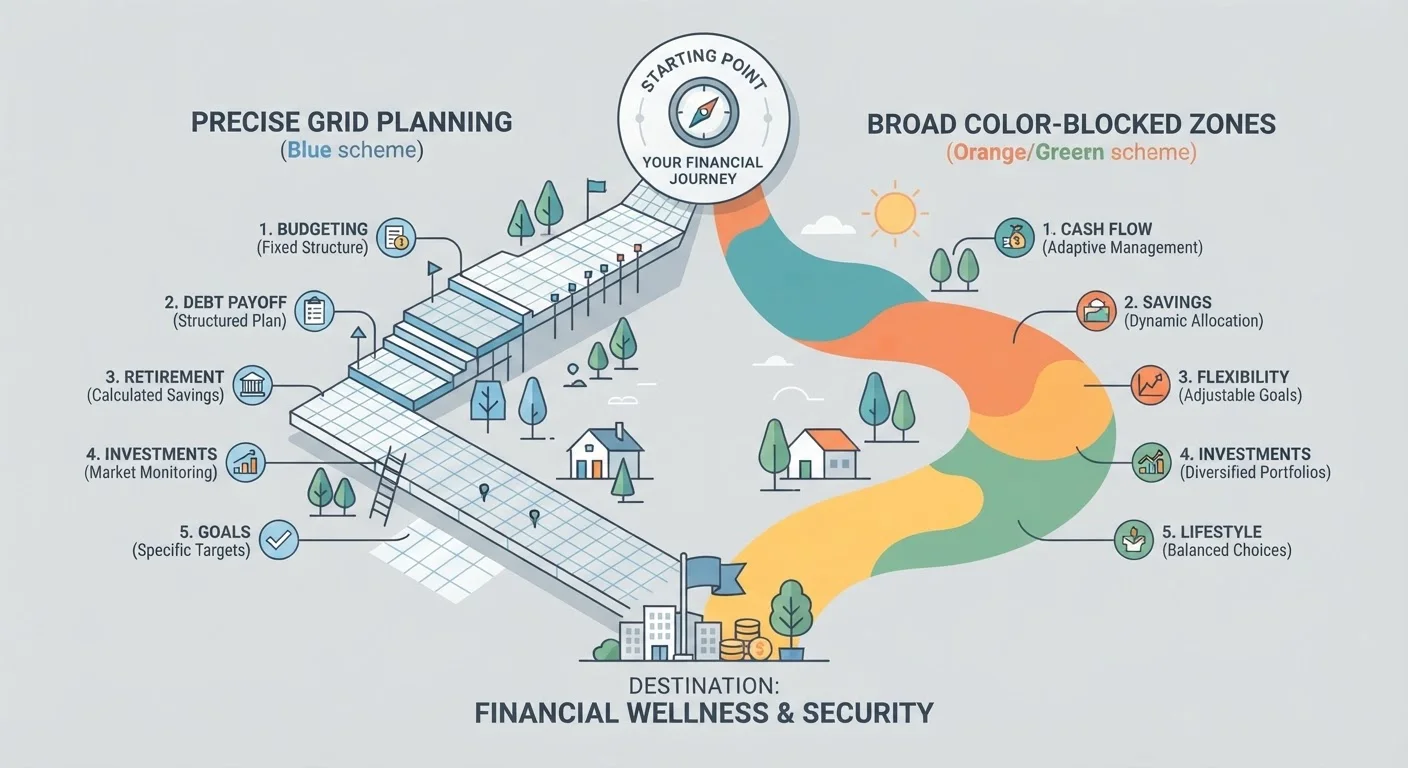
Zero-based and 50/30/20 budgeting both work — but for different people. See how each approach handles income, categories, and leftover money.
Option A
Zero-Based Budgeting
The meticulous, dollar-by-dollar method.
Best for: People who want full control over every spending category and don't mind tracking closely each month.
Option B
The 50/30/20 Rule
The flexible, broad-strokes framework.
Best for: People who want a simple structure that doesn't require tracking individual transactions.
Key takeaways
- Zero-based budgeting assigns every dollar of income a specific job until the balance reaches zero.
- The 50/30/20 rule splits income into three broad categories: needs, wants, and savings or debt repayment.
- Zero-based budgeting demands more time and discipline; the 50/30/20 rule is faster to set up and maintain.
- Both methods work — the better fit depends on your income pattern, personality, and financial goals.
- Neither approach requires a perfect income or debt-free status to begin using effectively.
How Each Method Works
Both zero-based budgeting and the 50/30/20 rule start from the same place: your total monthly income. But they diverge immediately in how they tell you to handle it.
Zero-based budgeting asks you to assign every dollar to a category — rent, groceries, savings, entertainment, debt payments — until income minus all assigned expenses equals zero. That "zero" doesn't mean you've spent everything; it means no dollar is sitting unallocated. Money earmarked for savings is just as purposefully assigned as money set aside for utilities. If your income changes from one month to the next, you rebuild the budget from scratch.
The 50/30/20 rule takes a broader view. Popularized in the early 2000s through consumer finance writing, it divides after-tax income into three buckets: roughly 50% toward needs (housing, food, insurance, utilities), 30% toward wants (dining out, subscriptions, hobbies), and 20% toward savings and debt repayment beyond minimum payments. You're not tracking individual line items — you're monitoring which bucket your spending falls into.
For a practical introduction to structuring either approach, see our first-month budgeting guide for a plain-language walkthrough of the foundational concepts.
A Direct Comparison
Understanding where these two methods agree — and diverge — helps you choose based on how you actually live, not how you think you should.
| Criterion | Zero-Based Budgeting | The 50/30/20 Rule |
|---|---|---|
| Setup time | 1–2 hours per month | 15–30 minutes initially |
| Level of detail | Every dollar categorized | Three broad buckets |
| Best income type | Variable or irregular | Stable, predictable salary |
| Flexibility mid-month | High — rebuild as needed | Moderate — adjust totals |
| Visibility into spending | Very high — line by line | Moderate — category totals |
| Ease for beginners | Steeper learning curve | Low barrier to entry |
| Savings treatment | Named line item each month | Fixed 20% of income |
One meaningful difference: zero-based budgeting is highly responsive to life changes. Lose a client, get a raise, face an unexpected car repair — you re-do the budget that month. The 50/30/20 rule is more static; it works best when your income and major expenses are predictable. For a broader look at how these two methods compare to other frameworks, our budgeting frameworks comparison covers additional options side by side.
The Real Costs: Time, Attention, and Flexibility
Budgeting methods fail not because they're mathematically flawed, but because they don't fit someone's actual habits and lifestyle.
Zero-based budgeting is honest about the effort it requires. You need to know every spending category before the month begins, reconcile your plan against reality, and make adjustments mid-month when life doesn't cooperate. People with freelance income or side earnings often find this structure worth the work because it gives them a clear snapshot of where they stand at any given moment. But for someone managing a hectic schedule alongside a straightforward salary, the time cost can become a reason to abandon the system entirely.
The 50/30/20 rule trades precision for sustainability. You don't need to decide in advance how much goes to coffee versus groceries versus clothing — all of that falls under "wants" or "needs" and you check the total at the end of the month. The tradeoff is visibility: it's possible to consistently overspend on wants without noticing until the damage is done.
~74%
Americans living paycheck to paycheck
A 2023 LendingClub report found roughly three in four Americans describe themselves as living paycheck to paycheck, underscoring the need for sustainable budgeting systems.
1 in 3
Adults with no written budget
Surveys by the National Foundation for Credit Counseling have consistently found that a substantial share of U.S. adults do not use any formal budgeting method.
If the real barrier to starting is psychological rather than practical, our article on common budgeting myths addresses several misconceptions that may be holding you back.
When to Switch, Combine, or Start Fresh
These two methods aren't mutually exclusive forever. Many people start with the 50/30/20 rule to build the habit and then migrate toward zero-based budgeting once they want more control — particularly when saving for a specific goal like a down payment or paying off high-interest debt.
A hybrid approach is also reasonable: use the 50/30/20 rule as your overarching framework, but apply zero-based logic within the "wants" category to stay accountable at a finer level. This layered structure preserves simplicity at the top while adding precision where spending tends to creep.
Building an emergency fund is a priority under either system — but the method affects how you allocate for it. Under zero-based budgeting, your emergency fund contribution is a named line item. Under 50/30/20, it typically lives within the 20% savings bucket alongside any retirement contributions or debt paydown. Our guide on what belongs in an emergency fund clarifies how to size and define that buffer appropriately.
Whatever you choose, the most effective budget is the one you'll actually use consistently. If you're weighing other frameworks alongside these two, a practical overview of budget approaches covers additional methods with honest notes on who each suits best.
This article is for general informational and educational purposes only and does not constitute personalized financial advice. Consider consulting a qualified financial professional for guidance tailored to your specific situation.
All published content on this website is for informational and educational purposes only and should not be taken as professional advice. We recommend that readers seek expert opinion before making any decisions. The website is not responsible for any actions taken based on the information provided on this website. We are not liable for any inaccuracies, modifications, or omissions in information. Moreover, external links or third-party content are provided for convenience; we are not liable for their correctness. Users are advised to verify every piece of information before they use it for any purpose.