
What a Monthly Budget Actually Does (And Why Most People Misunderstand It)

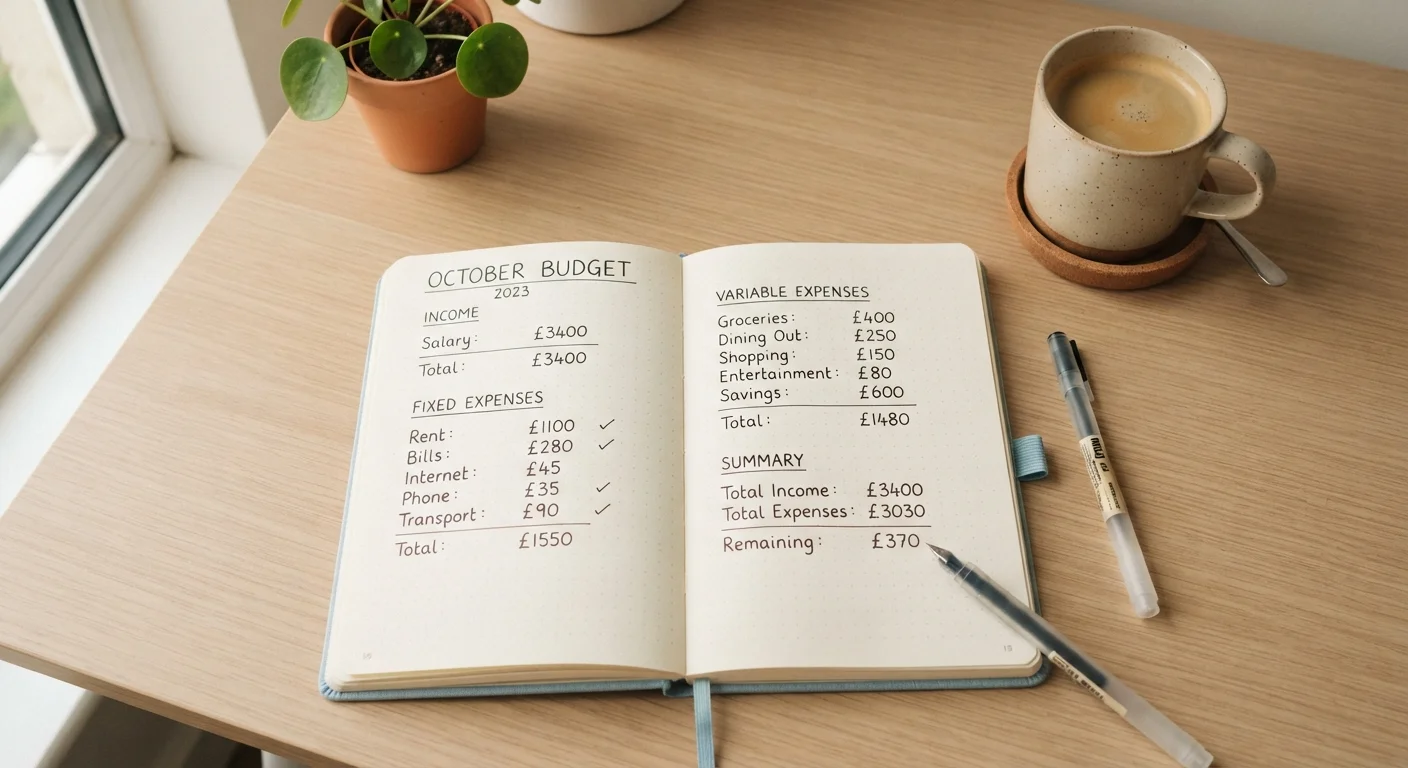
A budget isn't a spending restriction — it's a spending plan. Understand what budgeting really means and why the concept trips so many people up.
Key takeaways
- A budget is a spending plan, not a punishment or a restriction on your lifestyle.
- Most people misunderstand budgeting as tracking past spending rather than planning future spending.
- You don't need a high income or zero debt to benefit from a monthly budget.
- A budget works best when it reflects your real life — including fun, dining out, and personal spending.
- Budgets are meant to be adjusted; imperfection is part of the process, not a sign of failure.
The Core Misunderstanding Most People Carry
Ask someone what a budget is and you'll often hear some version of: "A list of things I'm not allowed to spend money on." That single mental image — the budget as a financial cage — is the reason so many people resist building one in the first place.
In reality, a monthly budget is the opposite of restriction. It's a formal decision-making tool that gives you control before money leaves your account rather than regret after it does. When you budget, you're not told what you can't do. You're deciding in advance what you will do with what you have.
This distinction matters enormously. A plan you design around your real priorities — including things that bring you joy — is something you can follow. A list of prohibitions is something most people quietly ignore by week two. If the concept of budgeting has always felt punishing, it's likely because it was framed that way, not because that's what budgeting actually is. For a closer look at the misconceptions that hold people back, see common budgeting myths that are worth examining before you start.
What a Monthly Budget Actually Does
A monthly budget performs one primary function: it forces a conversation between your income and your intentions. That conversation has three parts.
- It establishes your starting number. You can't plan spending without knowing what's available. A budget begins with your expected take-home income for the month — the actual amount that lands in your account, not gross pay.
- It assigns every dollar a role. Fixed expenses like rent and utilities get claimed first. Then savings goals. Then variable spending like groceries, transportation, and personal expenses. The goal is that every dollar has a designated purpose before the month starts.
- It creates a reference point. Once the plan is set, you compare actual spending against it throughout the month. The plan doesn't change reality — it helps you spot when reality is drifting from your intentions early enough to correct course.
None of these steps require specialized software, a finance degree, or an impressive income. They require knowing your numbers and making deliberate choices — both of which are learnable skills.
~33%
US adults who maintain a household budget
Gallup surveys have historically found that fewer than one in three American adults reports following a detailed monthly budget, despite widespread awareness of its benefits.
Top reason
Why people say they don't budget: "I don't earn enough"
Research by the National Foundation for Credit Counseling has found that perceived low income is frequently cited as a barrier to budgeting, even though lower-income households often benefit most from a structured spending plan.
2–3 months
Time before a budget feels natural
Financial educators commonly note that it typically takes two to three months of active use before a budget stops feeling effortful and becomes a routine part of monthly money management.
Why People Quit — and What That Reveals
The most common reason people abandon a budget isn't lack of willpower. It's that the plan they built didn't reflect their actual life. A budget that allocates nothing for coffee runs, social events, or small impulse purchases is a budget that will be silently violated by the third week. When that happens, many people conclude that they failed — when in fact the plan failed them.
A realistic budget accounts for the messy, human parts of spending: the birthday gift you forgot to plan for, the car repair that arrived unannounced, the Friday night where cooking simply wasn't going to happen. These aren't budget violations waiting to occur; they're predictable variables that belong in the plan.
Building in a small buffer category — sometimes called a "miscellaneous" or "just-in-case" line — isn't cheating. It's honest planning. If you consistently overspend a category, the answer is usually to increase that category's allocation, not to hold the line and feel guilty every month.
Building a Budget That Fits Your Real Life
Sustainable budgeting starts with your actual spending patterns, not an idealized version of them. Pull two to three months of bank or card statements and look at what you genuinely spend before deciding what you should spend. Many people are surprised to discover their real grocery, dining, or subscription totals — and that's exactly the information a useful budget needs to be built on.
From there, the process is straightforward: list your income, list your fixed obligations, allocate toward savings goals, and then distribute what remains across variable categories in a way that reflects both necessity and what matters to you personally. Spending money on things you value isn't a budget failure — it's the whole point of having a plan.
For a step-by-step walkthrough of this process, your first month on a budget is a solid place to begin. If you'd prefer a structured checklist format, the monthly budget setup checklist covers every stage from income tallying to choosing how you'll track spending.
Once a budget is running, the bigger challenge is keeping it running. Small repeatable habits — not sheer discipline — are what make budgeting stick over time.
This article is for general informational and educational purposes only and does not constitute personalized financial advice. For guidance specific to your financial situation, consider consulting a qualified financial professional.
Frequently Asked Questions
All published content on this website is for informational and educational purposes only and should not be taken as professional advice. We recommend that readers seek expert opinion before making any decisions. The website is not responsible for any actions taken based on the information provided on this website. We are not liable for any inaccuracies, modifications, or omissions in information. Moreover, external links or third-party content are provided for convenience; we are not liable for their correctness. Users are advised to verify every piece of information before they use it for any purpose.