
Budget Approaches Worth Knowing: A Practical Overview

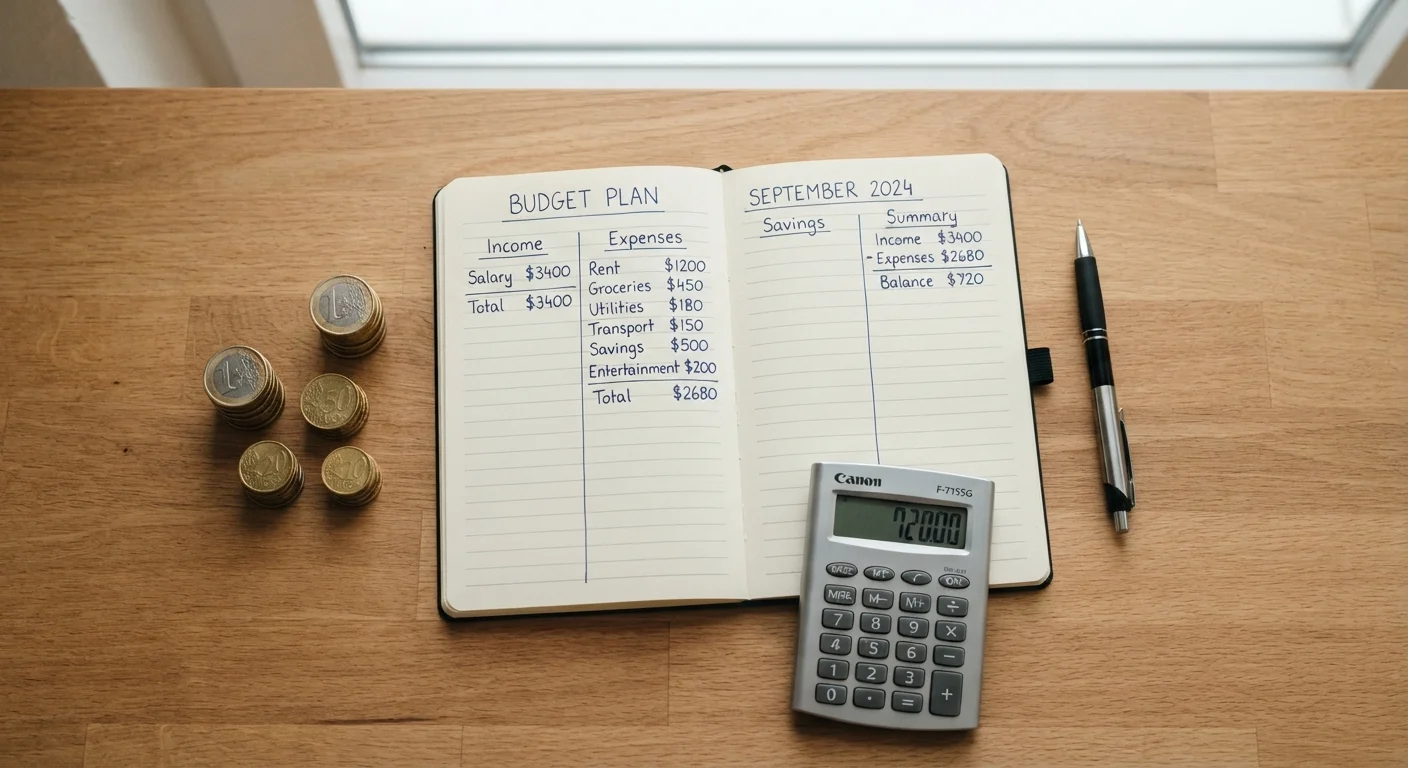
From pay-yourself-first to values-based budgeting, this curated overview covers the most widely used methods with honest notes on who each suits.
Key takeaways
- No single budgeting method works for everyone — the best fit depends on your income type, habits, and goals.
- Simple frameworks like 50/30/20 offer low friction; detailed methods like zero-based budgeting offer more control.
- Pay-yourself-first prioritises saving automatically before spending decisions are made.
- Values-based budgeting aligns spending with personal priorities rather than rigid category percentages.
- Trying a method for 60–90 days before switching gives a fair test of whether it suits you.
- A budget that gets used consistently beats a perfect system you abandon after two weeks.
Why the Method You Choose Actually Matters
Most budgeting advice treats the numbers as the hard part. In practice, the harder challenge is finding a structure you'll actually stick with month after month. A method that fits your income pattern, your tolerance for detail, and your financial priorities will outperform a theoretically superior system you use half-heartedly.
This overview covers the most widely recognised personal budgeting approaches — what each involves, where it tends to work well, and where it tends to fall short. None of these is presented as the single right answer, because there isn't one. What matters is picking a starting point, running it honestly for a couple of months, and adjusting from there.
If you're starting from scratch, this plain-language introduction to your first month on a budget covers the foundational concepts before you choose a specific method. For a side-by-side comparison of the most common frameworks, see The 50/30/20 Rule and Other Budgeting Frameworks Side by Side.
The 50/30/20 Rule
This percentage-based framework divides after-tax income into three broad buckets: roughly 50% toward needs (housing, utilities, groceries, minimum debt payments), 30% toward wants (dining, entertainment, subscriptions), and 20% toward savings and extra debt repayment.
Why it appeals: The simplicity is the point. There are only three categories to track, which makes it accessible for people who find detailed budgeting overwhelming. It also builds savings as a fixed commitment rather than an afterthought.
Where it gets tricky: The 50/30/20 split assumes a cost-of-living situation where 50% of take-home pay genuinely covers essential expenses. In high-cost cities — or for lower-income households — needs may consume a much larger share, leaving the percentages unrealistic without adjustment. The broad categories also don't reveal much about where money is actually going within each bucket.
Best suited to: People with stable, predictable income who want a low-maintenance structure and are comfortable with loose category definitions.
Simplicity is the feature — three buckets replace dozens of categories, making it easy to maintain.
Zero-Based Budgeting
Zero-based budgeting assigns every dollar of income a specific job — expenses, savings, debt payments, or investments — until the balance reaches zero. The goal isn't to spend everything; it's to account for every dollar intentionally so nothing is left unplanned.
Why it appeals: The granularity creates genuine awareness. People using this method often discover spending patterns they hadn't noticed and find it easier to redirect money toward priorities because every category is deliberate.
Where it gets tricky: It requires meaningful upfront setup and regular maintenance. Irregular income — freelancers, gig workers, commission-based earners — adds complexity because the plan must be rebuilt each month around a fluctuating base. It can also feel restrictive if categories are drawn too tightly, leaving no room for real-life variability.
Best suited to: Detail-oriented people who want maximum visibility into their finances, or anyone working to reduce debt aggressively and needing a clear picture of every dollar.
Assigning every dollar a job eliminates the grey zone where unplanned spending quietly happens.
Pay-Yourself-First
Rather than budgeting for expenses first and saving whatever's left, pay-yourself-first reverses the sequence: a set amount is moved to savings (or investments, or an emergency fund) immediately when income arrives, and the remainder covers day-to-day spending.
Why it appeals: Automation does most of the heavy lifting. When savings leave the account before spending decisions happen, the temptation to defer saving is largely removed. It's particularly effective for building an emergency fund or working toward a specific savings goal. For more on what an emergency fund should actually contain, see What Belongs in an Emergency Fund.
Where it gets tricky: The method doesn't manage spending categories — it just protects savings. If the remaining money after saving isn't managed thoughtfully, overspending on day-to-day expenses can still occur, potentially creating cash-flow pressure before the next payday.
Best suited to: People who struggle to save consistently and want a system that removes the decision from the equation. Also works well alongside a secondary spending framework.
Saving before spending removes willpower from the equation — the money is gone before you decide how to use it.
Envelope Budgeting (Cash or Digital)
Originally a cash-based method, envelope budgeting allocates a set amount of physical cash to different spending categories at the start of each period. When the envelope is empty, spending in that category stops until the next cycle. Digital versions replicate this logic using virtual envelopes within apps or separate sub-accounts.
Why it appeals: The tangible limit creates a hard boundary that credit cards and digital payments don't provide. Spending feels more real when a physical envelope empties. Digital adaptations preserve this logic without requiring cash withdrawals.
Where it gets tricky: Managing cash envelopes is logistically awkward in an increasingly cashless world. The digital version requires consistent upfront categorisation and discipline to treat virtual limits as real ones. It can also be rigid when unexpected expenses don't fit neatly into existing envelopes.
Best suited to: People who find that digital spending feels abstract and want firmer psychological limits on specific categories like dining, groceries, or entertainment.
A hard category limit — whether cash or digital — makes overspending an active choice rather than a passive drift.
Values-Based Budgeting
Values-based budgeting doesn't start with categories or percentages — it starts with a question: what do I actually want my money to support? Spending and saving allocations are then built around personal priorities rather than generic frameworks.
Why it appeals: Many people find traditional budgets feel restrictive because the categories don't reflect what they actually care about. A values-based approach allows someone to spend generously on travel or family experiences while cutting aggressively in areas they find less meaningful — without guilt, because the choices reflect deliberate priorities rather than arbitrary rules.
Where it gets tricky: It requires honest self-reflection and a willingness to define priorities clearly. Without some structure, it can become a rationalisation for spending rather than a genuine framework. It also doesn't provide built-in guardrails on total spending.
Best suited to: People who have tried rigid percentage systems and found them demotivating, or anyone whose spending priorities differ significantly from the assumptions built into standard frameworks. It pairs naturally with lifestyle goals — managing work-life balance often intersects with how people want to allocate money for time and wellbeing.
Budgeting around personal values shifts the frame from restriction to deliberate choice.
Anti-Budget (Simplified Savings-First)
The anti-budget is a stripped-down relative of pay-yourself-first. The approach is simple: automate savings and fixed bill payments, then spend the remaining money however you like without tracking individual categories. The idea is that if savings are covered and bills are paid, detailed monitoring of the rest adds friction without proportionate benefit.
Why it appeals: It requires minimal ongoing effort once automated. For people who find detailed category tracking tedious or feel that it creates anxiety without improving outcomes, this approach offers a middle ground between no budget and a full-featured system.
Where it gets tricky: Without any category awareness, it's easy to miss gradual spending creep — small increases across subscriptions, dining, and convenience purchases that individually feel minor but collectively erode the buffer. It also assumes a person's baseline spending won't persistently exceed what remains after savings and bills.
Best suited to: People with relatively stable expenses, solid savings habits, and low tolerance for administrative overhead. Less suitable for anyone actively managing debt or working toward a near-term savings goal that requires precise tracking.
Automate what matters most, then spend the rest freely — the anti-budget trades granularity for sustainability.
Picking a Starting Point and Making It Last
No budgeting method eliminates the need for attention — but some require far less of it than others. If you've tried detailed tracking before and found it exhausting, a simpler percentage-based or automation-first approach may be more sustainable. If you've tried broad categories and found they didn't reveal where money was actually going, a more granular system might be worth the extra effort.
Give Any Method a Fair Trial Period
Switching budgeting methods after two or three weeks rarely gives an accurate picture of whether the approach works. Most financial planners suggest running any new system for at least 60 to 90 days before evaluating it — long enough to encounter irregular expenses, a slower income month, or an unexpected bill. Adjust categories or amounts within the method before concluding the method itself is wrong.
Understanding why budgets commonly break down mid-month can be just as useful as choosing the right framework. Most budget failures follow recognisable patterns — and once you know them, they're easier to prevent. Once your budget is running, tracking its effect on your overall financial picture is worthwhile; understanding your net worth offers a useful longer-term benchmark alongside monthly cash flow. For a comprehensive walkthrough of setup, tracking, and adjustment over time, The Complete Guide to Planning, Tracking, and Adjusting a Personal Budget is a natural next step from this overview.
This article is for general informational and educational purposes only and does not constitute personalised financial advice. Consider speaking with a qualified financial professional about decisions specific to your circumstances.
All published content on this website is for informational and educational purposes only and should not be taken as professional advice. We recommend that readers seek expert opinion before making any decisions. The website is not responsible for any actions taken based on the information provided on this website. We are not liable for any inaccuracies, modifications, or omissions in information. Moreover, external links or third-party content are provided for convenience; we are not liable for their correctness. Users are advised to verify every piece of information before they use it for any purpose.