
Why Budgets Fall Apart Mid-Month — and the Patterns Behind It

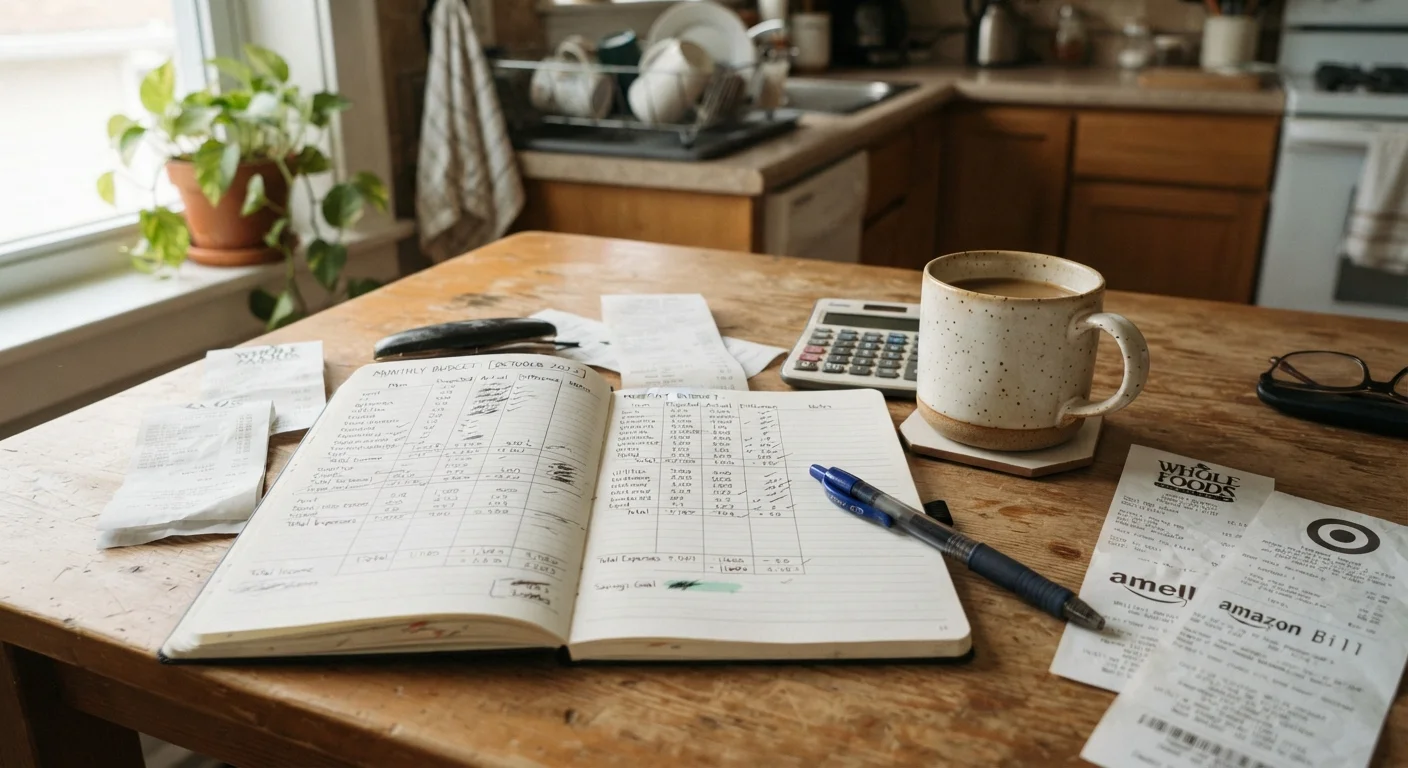
Most budget failures aren't about willpower. They follow predictable patterns that, once recognised, are surprisingly straightforward to address.
Key takeaways
- Budget failures are rarely about willpower — they usually stem from structural design flaws.
- Irregular expenses like annual fees or car repairs catch most budgets off guard every time.
- Tracking spending in real time, not at month's end, is what separates functional budgets from abandoned ones.
- A budget needs built-in flexibility to survive contact with real life.
- Small, consistent check-ins are more effective than monthly marathon review sessions.
The Mid-Month Collapse Is a Pattern, Not a Personal Failure
A surprising number of people who set a budget in good faith find themselves in the same place by the 15th or 20th of the month: the plan has quietly unravelled, they've stopped looking at the numbers, and they're running on intuition until payday. If this sounds familiar, you're not uniquely undisciplined — you're experiencing one of the most documented patterns in personal finance.
Research consistently shows that budget abandonment is rarely caused by a lack of motivation. It's almost always caused by a plan that didn't account for how spending actually works in real life. Most budgets are built around ideal months that don't exist. When reality differs — and it always does — the budget feels broken, so people stop using it.
Understanding the specific mistakes that cause mid-month collapse is far more useful than resolving to try harder. As our overview of what budgets actually do explains, a budget isn't a spending restriction — it's a spending plan. When the plan is flawed, no amount of willpower compensates for the structural gap.
Common Mistakes That Derail Budgets — and How to Avoid Them
The following mistakes appear repeatedly across household budgets of nearly every income level. Each one has a recognisable cause and a practical fix.
Building the budget around average months rather than actual ones.
Why it happens: When sitting down to plan, people mentally picture a 'normal' month — but irregular expenses like annual subscriptions, car repairs, medical bills, and seasonal costs don't appear in that mental model.
Tracking spending at the end of the month instead of in real time.
Why it happens: Reconciling transactions feels like an accounting task, so many people defer it — only to discover at month's end that categories were blown weeks earlier.
Setting category limits so tight there's no room for any variance.
Why it happens: First-time budgeters often set aspirational targets — spending less than they currently do in every category simultaneously — which makes the plan fragile from day one.
Treating a budget overage as a reason to stop budgeting entirely.
Why it happens: Many people hold an all-or-nothing view of financial discipline — if one category goes over, the whole month feels 'ruined,' which removes the motivation to track the rest.
Forgetting to account for irregular income when budgeting.
Why it happens: People with variable pay — freelancers, hourly workers with shifting schedules, those with commission income — often budget based on a hoped-for income figure rather than a reliable baseline.
If several of these patterns feel familiar, it's worth working through a structured setup process before starting your next budget. The Monthly Budget Setup Checklist walks through every foundational step, from tallying income to choosing a tracking method that fits your life.
Building a Budget That Survives the Middle of the Month
Fixing a budget that keeps falling apart isn't about stricter rules — it's about building in realism from the start. A few structural changes make a significant difference.
Review weekly, not monthly. A 10-minute weekly check-in catches drift before it becomes a derailment. Monthly reviews, by contrast, arrive too late to course-correct and often feel like a post-mortem rather than a management tool. Consistent small habits — not periodic discipline — are what keep budgets alive, as explored in habits that keep a budget running month after month.
Match your budget method to your life. A rigid category-by-category system works well for some people and creates friction for others. If your current approach feels like a chore every time you open it, the problem may be the method rather than your commitment. Budget Approaches Worth Knowing offers an honest overview of the most practical systems, including who each tends to suit.
Expect the unexpected, on paper. Build a line item — even a small one — for irregular expenses each month. Over time, patterns emerge: car maintenance tends to cluster around certain seasons, medical costs are higher at year's end once deductibles reset. Mapping these rhythms into your plan removes the element of surprise that kills most budgets mid-month.
~33%
Adults with a written monthly budget
Various surveys have found that roughly one in three U.S. adults maintains a written or detailed monthly budget, suggesting most households manage spending without a formal plan.
Top reason
Unexpected expenses cited for budget failure
Surveys of households that have abandoned budgets consistently rank unplanned or irregular expenses — not overspending on regular categories — as the primary cause of budget breakdown.
This article is for general informational purposes only and does not constitute personalised financial advice. For guidance specific to your situation, consider consulting a qualified financial professional.
All published content on this website is for informational and educational purposes only and should not be taken as professional advice. We recommend that readers seek expert opinion before making any decisions. The website is not responsible for any actions taken based on the information provided on this website. We are not liable for any inaccuracies, modifications, or omissions in information. Moreover, external links or third-party content are provided for convenience; we are not liable for their correctness. Users are advised to verify every piece of information before they use it for any purpose.