
Watching Smarter: Habits That Make Screen Time Feel More Intentional

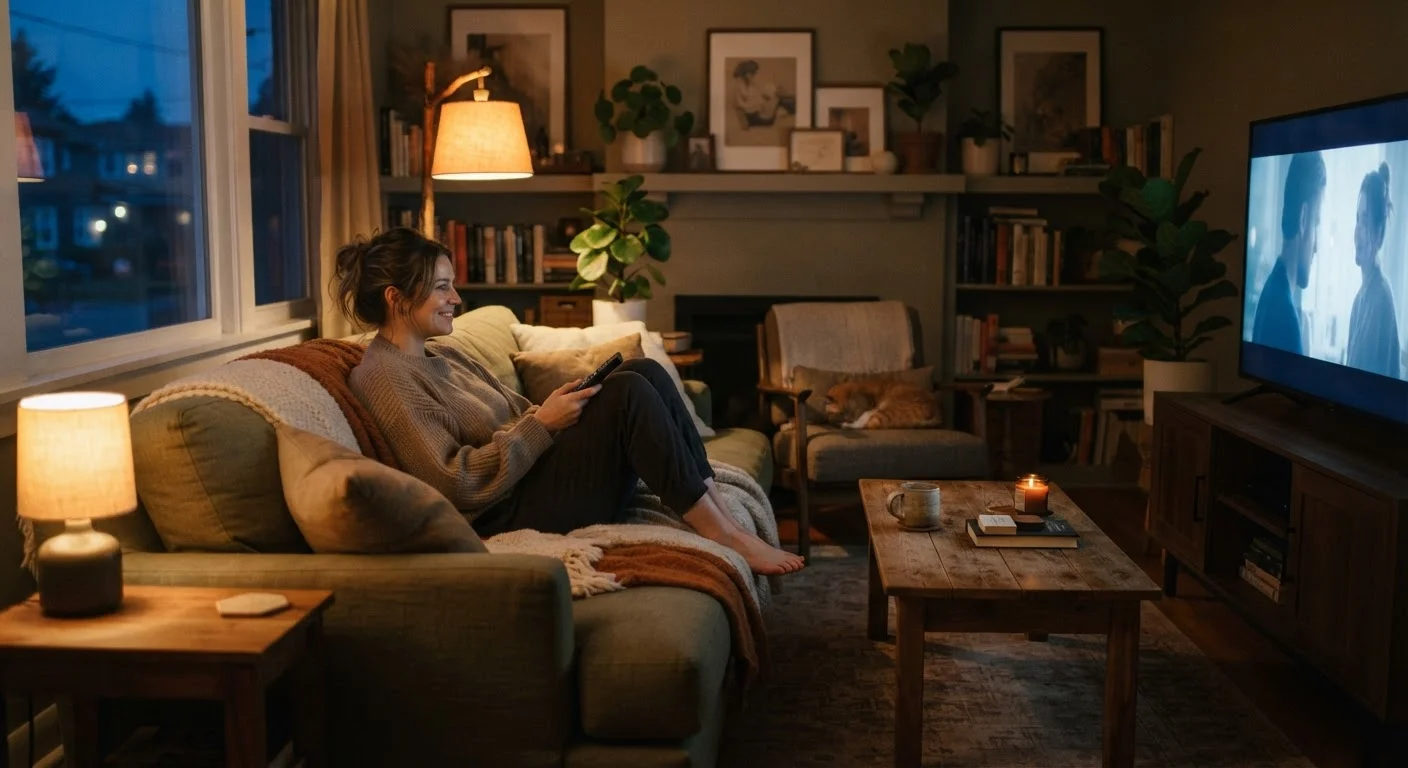
Mindless scrolling and auto-play can turn leisure into exhaustion. These viewing habits help you get more out of your watch time without watching more of it.
Key takeaways
- Deciding what to watch before sitting down prevents mindless scrolling and decision fatigue.
- Disabling auto-play gives you natural pause points to check in with how you're feeling.
- Pairing specific moods or contexts with viewing choices makes screen time feel more purposeful.
- Keeping a loose watch list helps you protect leisure time from filler content.
- Setting a gentle end time for viewing sessions supports better sleep and genuine rest.
Why Intentional Viewing Is Worth the Effort
Streaming libraries have never been larger, recommendation algorithms have never been more persuasive, and our collective watch time has never been higher — yet many viewers report feeling vaguely dissatisfied after an evening in front of a screen. That disconnect is worth paying attention to.
The problem usually isn't watching too much or too little. It's watching on autopilot. When you drift from one auto-played episode to the next without a conscious choice in between, leisure starts to feel strangely tiring rather than genuinely restorative. Research into rest and recovery suggests that passive consumption without any agency involved provides less psychological restoration than activities where we feel even a small degree of intentional choice.
If your evenings often disappear into screens without feeling recharged afterward, our guide to reclaiming your evenings covers the broader recovery picture. And for a deeper look at how screen habits can quietly undermine downtime, see our piece on how people sabotage their own rest. The viewing habits below are a practical starting point for anyone who wants screen time that genuinely feels like a choice.
Best Practices for Smarter Screen Time
These aren't about watching less — they're about watching better. Small structural shifts in how you approach viewing sessions can make a meaningful difference in how satisfied you feel afterward.
Decide what you're watching before you open any streaming app.
Browsing under no particular intention hands the algorithm total control over your evening. The decision fatigue of infinite choice is real and measurable — spending 20 minutes scrolling often leaves viewers less satisfied with whatever they eventually select. Choosing in advance, even loosely, restores a sense of agency.
Disable auto-play on every platform you use regularly.
Auto-play is deliberately designed to remove natural stopping points. Without it, the pause between episodes becomes a genuine check-in moment: am I still enjoying this, or am I just inertially continuing? That small friction is psychologically significant.
Maintain a running watch list and draw from it first.
A curated list of shows and films you've genuinely chosen to watch — based on a recommendation, a trailer, or a review — acts as a buffer against filler content. It means your leisure time reflects your actual taste rather than the week's algorithmic push.
Match your viewing choice to your actual energy level.
Watching a dense prestige drama when you're mentally exhausted is a recipe for half-paying attention and feeling like you wasted the time. Acknowledging your real state — low, medium, or high engagement capacity — and choosing accordingly makes the viewing experience feel satisfying rather than disappointing.
Set a loose stopping time before you start watching.
Without a self-imposed end point, viewing sessions expand to fill available time — and often bleed into sleep hours. Late-night screen exposure is associated with disrupted sleep onset, which compounds the fatigue that makes mindless scrolling so appealing the next evening.
Watch actively at least some of the time — not always as background noise.
Half-watching while doing something else isn't inherently bad, but if it's the default mode every evening, you're rarely getting the full experience the content offers — and you're unlikely to feel genuinely rested. Dedicated, phone-down viewing of something you chose intentionally delivers more satisfaction.
Quick Wins You Can Start Tonight
You don't need to overhaul your entire relationship with television to feel the difference. A few small moves — tried this evening — can shift the dynamic considerably.
For a connected perspective on building intentional habits beyond the screen, our Healthy Habits hub is a useful starting point. And if screens are competing with sleep, the principles in our sleep hygiene explainer apply directly to late-night viewing habits.
Finding the Right Balance for Your Life
Intentional viewing doesn't mean rigidly scheduled viewing. Life is unpredictable, moods shift, and sometimes an unplanned movie marathon is exactly what Saturday needs. The goal isn't discipline for its own sake — it's making sure that when you do sit down to watch, the experience genuinely serves you.
That's also why it helps to know what you're trading screen time against. If you're curious about hobbies that deliver a very different kind of engagement — slower, outdoors, screen-free — our piece on why birdwatching captivates so many people offers a worthwhile contrast. For readers thinking about digital wellness and screen boundaries more broadly, that companion article covers the fuller picture.
Watching smarter is ultimately about returning agency to yourself in a media environment designed to hold your attention indefinitely. A few deliberate habits — a watch list, a set stopping point, auto-play turned off — can quietly but reliably make the difference between leisure that restores and leisure that just passes the time.
All published content on this website is for informational and educational purposes only and should not be taken as professional advice. We recommend that readers seek expert opinion before making any decisions. The website is not responsible for any actions taken based on the information provided on this website. We are not liable for any inaccuracies, modifications, or omissions in information. Moreover, external links or third-party content are provided for convenience; we are not liable for their correctness. Users are advised to verify every piece of information before they use it for any purpose.