
Confusing a Trend for a Movement: The Misreadings That Shape Pop Culture Coverage

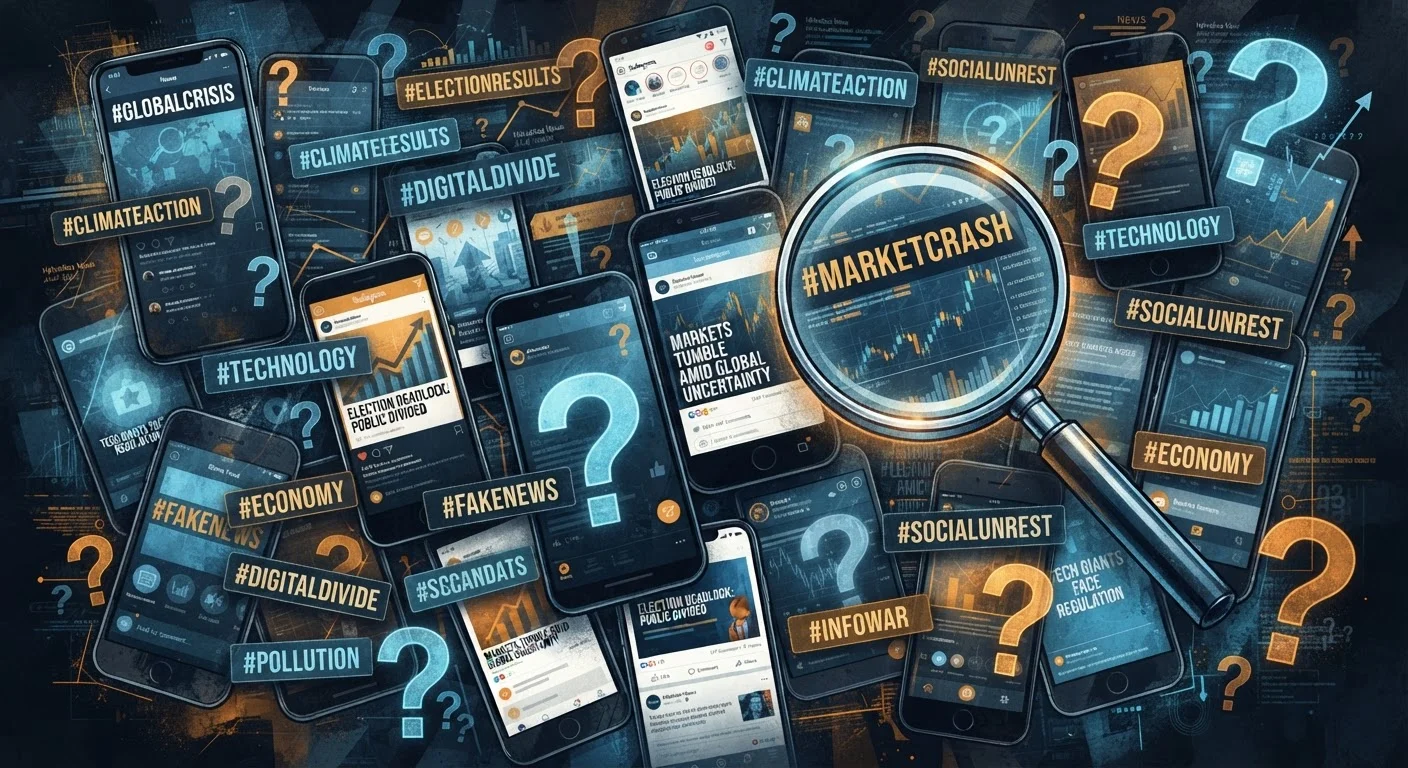
Not every viral wave signals lasting social change. Here are the recurring errors that trip up fans and journalists alike.
Key takeaways
- A viral moment and a cultural movement are meaningfully different things — conflating them distorts coverage.
- Platform algorithms amplify content in ways that can make niche signals look like mass sentiment.
- Engagement metrics measure attention, not agreement, belief, or lasting behavioral change.
- Slowing down to ask 'who is actually doing this, and for how long?' produces more accurate analysis.
- Historical context separates genuine shifts from recycled trends dressed in new language.
Why the Trend-vs.-Movement Confusion Keeps Happening
Pop culture coverage operates under relentless deadline pressure. A moment spikes, feeds fill up, and the analysis has to move fast — sometimes faster than the facts. The result is a predictable set of misreadings that recur across outlets large and small: viral noise gets elevated to social signal, fleeting aesthetic choices get repackaged as generational statements, and a hashtag trending for 48 hours gets declared a movement that 'changes everything.'
The distinction matters. A trend is a pattern of behavior or taste that spreads, often quickly, and may or may not persist. A movement involves sustained collective action, shifting norms, or durable institutional change. Conflating the two flatters the trend and undersells what actual movements require. It also erodes trust in media coverage when the declared 'sea change' evaporates by the following quarter.
For readers trying to make sense of what's genuinely dominating the national conversation, understanding what separates a viral moment from a cultural phenomenon is a useful starting point. The mistakes below are the specific errors that consistently muddy that picture.
The Most Common Misreadings — and How to Spot Them
The errors aren't random. They cluster around a few recurring blind spots: over-reliance on platform metrics, celebrity proximity bias, and the seductive pull of the clean narrative arc. Here's where analysis tends to go wrong — and what a more grounded reading looks like.
Treating a spike in online conversation as evidence of widespread real-world adoption.
Why it happens: Social platforms reward novelty and emotion, so a passionate minority can flood feeds and make their view look dominant. Journalists and fans scrolling the same corners of the internet see the same noise and assume it reflects the broader public.
Conflating a recyclable aesthetic with a meaningful cultural shift.
Why it happens: Visually distinctive trends — a color palette, a fashion silhouette, a specific editing style — are easy to photograph and package into a trend piece. The aesthetic is real; the deeper meaning assigned to it often isn't.
Using celebrity endorsement as a proxy for cultural significance.
Why it happens: Star power generates traffic, and covering what famous people do or say is a reliable engagement shortcut. The assumption that celebrity participation elevates a moment into a movement is baked into much entertainment coverage.
Declaring a trend 'dead' the moment mainstream coverage peaks.
Why it happens: The internet moves fast, and there's social reward for being the first to call something over. Peak press coverage is routinely mistaken for peak cultural saturation — when in reality, broader audiences are often just encountering an idea for the first time.
Assuming that engagement metrics — likes, shares, views — translate directly to genuine sentiment or intention.
Why it happens: Metrics are visible, quantifiable, and feel scientific. Platforms display them prominently, and they travel well in headlines. But a share can signal mockery, curiosity, or outrage just as easily as enthusiasm.
Ignoring platform-specific context when comparing the scale of trends across different channels.
Why it happens: Saying 'this is everywhere' is irresistible shorthand, even when 'everywhere' means one corner of TikTok, a Reddit thread, and three cable segments. Different platforms have radically different user bases and algorithmic logics.
None of this means pop culture analysis should be joyless or hedged into irrelevance. Excitement about what's resonating is part of the job. But pairing that excitement with platform literacy — knowing, for instance, that a sound going viral on one app may be algorithmically invisible on another — keeps coverage honest. Our plain-English glossary of modern pop culture terms is a handy reference for keeping the vocabulary precise while the analysis stays grounded.
Beware the Recency Trap
Pop culture analysis is especially vulnerable to treating whatever happened last week as unprecedented. Many phenomena that get covered as entirely new — fan-driven boycotts, celebrity oversharing, genre blending — have direct precedents stretching back decades. Checking cultural history before filing the 'this changes everything' take saves both credibility and correction notices.
Building Better Habits for Reading the Cultural Moment
Developing a more calibrated sense of what a cultural moment actually means doesn't require becoming a skeptic who refuses to get excited about anything. It requires asking a few consistent questions before amplifying or accepting a claim.
- Who is the primary audience for this trend? Age, geography, and subculture all shape how 'universal' any moment actually is.
- What evidence exists beyond the platform? Offline behavior, purchasing patterns, or policy responses carry more weight than follower counts.
- Has this happened before? Most cultural moments have ancestors. A decade-by-decade look at American entertainment history puts current moments in useful perspective.
- What does disagreement look like? Any trend that generates zero visible pushback should trigger curiosity, not confidence — it probably means the dissenting voices are in different corners of the internet.
Virality Is Not a Mandate
A video accumulating millions of views reflects platform optimization as much as it does genuine public consensus. Reach and resonance are separate metrics. Before declaring that 'everyone' feels a certain way, it's worth asking: who is the algorithm actually showing this to, and are those viewers nodding along or just stopping to stare?
For readers who want to apply this kind of critical lens beyond pop culture — particularly to the technology stories that increasingly shape entertainment itself — the habits described in staying critically informed in a fast-moving tech landscape translate well. Hype cycles in tech and pop culture are cousins; the evaluation tools are largely the same.
The goal isn't to be the person who refuses to believe anything is significant. It's to reserve the word 'movement' for the moments that have actually earned it — and to enjoy the genuine trends for exactly what they are.
All published content on this website is for informational and educational purposes only and should not be taken as professional advice. We recommend that readers seek expert opinion before making any decisions. The website is not responsible for any actions taken based on the information provided on this website. We are not liable for any inaccuracies, modifications, or omissions in information. Moreover, external links or third-party content are provided for convenience; we are not liable for their correctness. Users are advised to verify every piece of information before they use it for any purpose.